Bethel Burying Ground Project

Bethel Burying Ground Project

  • ABOUT THE BETHEL BURYING GROUND PROJECT

Updated Bethel Burying Ground Timeline

Posted by Terry Buckalew on February 20, 2019
Posted in: Archaeology, BBG History, Bethel Burying Ground Name Directory, Bethel Burying Ground Timeline, It's a fact, Uncategorized. Tagged: African American burial grounds, African American cemeteries, African American History, African Methodist Episcopal Church, archaeology, Mother Bethel, Mother Bethel African Methodist Episcopal Church, Philadelphia, Richard Allen. Leave a comment

Check the link below for the updated Bethel Burying Ground Timeline.

Bethel Burying Ground Timeline 2019

Updated Bethel Burying Ground Name Directory

Posted by Terry Buckalew on February 19, 2019
Posted in: Uncategorized. Leave a comment

Please click on the link below for the current BBG Name Directory.

BBG Name Directory

Bethel Burying Ground Archeological Report and Media Articles

Posted by Terry Buckalew on February 18, 2019
Posted in: Uncategorized. Leave a comment

Click on the link below for the full report on the archeological findings at Bethel Burying Ground –

2013 Archeological Study of Bethel Burying Ground

ornamental-borders_23-2147514387

Click on the link below for a collection of media reports on Bethel Burying Ground –

Media articles on Bethel Burying Ground

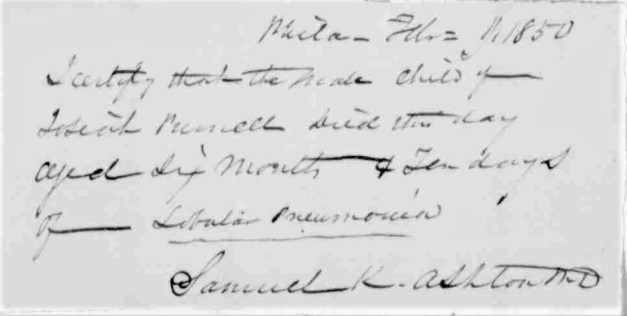
The six-month-old son of Mary and Josiah Purnell died this date, February 11th, in 1850 and was buried at Bethel Burying Ground.

Posted by Terry Buckalew on February 11, 2019
Posted in: On This date. Tagged: African American burial grounds, African American cemeteries, African American History, African Methodist Episcopal Church, archaeology, Bethel Burying Ground, Mother Bethel African Methodist Episcopal Church, Philadelphia, Richard Allen. Leave a comment

PURNELL

The six-month-old son of Mary and Josiah Purnell died this date, February 11th, in 1850 of Lobular Pneumonia and was buried at Bethel Burying Ground.  Mary, twenty-two years old, and Josiah, twenty-nine years old, were both born in Delaware. One of them was born enslaved, according to the 1847 Philadelphia African American Census.* Ms. Purnell was employed as a wash woman. Mr. Purnell worked as a waiter, reportedly earning $10 a month. The Purnells paid $2.50 a month for the rent of a room at 168 Locust Street which was located between 11th and 12th Streets on Locust Street. 

Locust Street

The red arrow indicates the approximate location of the Purnell home on Locust Street between 11th and 12th Streets. The area was known as “Hell’s Half Acre” because of the level of crime and violence in the neighborhood.

The 1847 Census shows that the Purnells regularly attended religious services and owned a total of $75 in personal property. There is some evidence that Mr. and Ms. Purnell suffered the loss of one or two other children, both girls, in 1846 and 1848 respectively. Both girls also are buried at Bethel Burying Ground. 

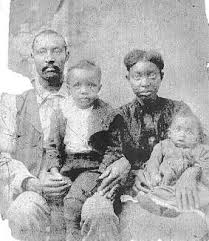
Family Black

Baby Purnell was buried at Bethel Burying Ground on a February day that dawned clear but turned cloudy in the afternoon. The high temperature for the day was thirty-nine degrees. 

Tragically, Mary Purnell would die four years later in 1854 of Tuberculosis and she was buried in the graveyard of the Philadelphia Alms House. Mr. Purnell would live until 1867 and die at age fifty from “Softening of the Brain.” He was buried at Lebanon Cemetery. 

ornamental-borders_23-2147514387

*In 1850, it appears from past census records that approximately four out of ten Philadelphia Blacks formerly had been enslaved. 


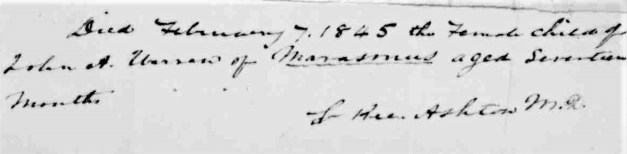
The seventeen-month-old daughter of John A. Warren died this date, February 7th, in 1845 and was buried at Bethel Burying Ground.

Posted by Terry Buckalew on February 7, 2019
Posted in: On This date. Tagged: African American burial grounds, African American cemeteries, African American History, African Methodist Episcopal Church, archaeology, Bethel Burying Ground, Mother Bethel, Mother Bethel African Methodist Episcopal Church, Philadelphia, Richard Allen. Leave a comment

WARREN

The unnamed seventeen-month-old daughter of John A. Warren died this date, February 7th, in 1845 of Marasmus* and was buried at Bethel Burying Ground. I was unable to locate the name of the child’s mother. The 1847 African American Census is the only document where the Warren family is recorded. The reason for this may be that the family or members of the family formerly were enslaved and had escaped their captivity. This group of people did not tend to be receptive to census takers. The 1847 Census does report a total of six members in the family – four males and two females. Four family members were between 15 years and 50 years of age. There was one family member between 5 years and 15 years and one under the age of 5. Four of the family members were not native to the state of Pennsylvania. 

South Street

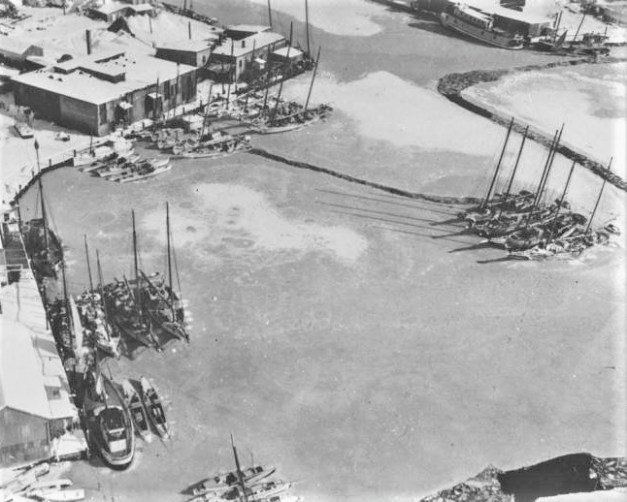
The 1847 Census simply states the family lived on Cedar Street which we now know as South Street. There was no house number given. We do know that they paid $7.50 a month for rent which was a hefty amount and may mean they rented more than just one room. The above photo is of the three hundred block of Cedar which now is only several blocks from the Delaware River docks. Mr. Warren sold oysters for a living, so it is likely that the family lived near the eastern end of Cedar Street. Oysters were the fast food of the 18th and 19th century in Philadelphia. Mr. Warren’s income would not have been steady because of the variability of the weather and the seasonal availability of oysters. Given the high rent, other members of the family beside Mr. Warren also had to be employed.

Oyster boats frozen in

Oyster boats cannot work if they are frozen in the January ice.

∞∞∞

The Warrens’ baby girl died on a day that saw the end of a three-day snow and ice storm that deposited up to twelve inches of snow locally. Traveling within the city was practically impossible. The body at least would have been wrapped in a sheet and kept in the family’s room or apartment. The family may have had a small coffin made.

ornamental-borders_23-2147514387

*Marasmus is caused by starvation or a diet totally absent from necessary nutrition. Apart from weight loss, long-term effects of Marasmus in children include repeated infections. Diarrhea, measles, or respiratory infections are serious complications that can be fatal in a child with this illness. 

Twelve-year-old John Tilton died this date, February 5th, in 1854 and was buried at Bethel Burying Ground.

Posted by Terry Buckalew on February 5, 2019
Posted in: On This date. Tagged: African American burial grounds, African American cemeteries, African American History, African Methodist Episcopal Church, archaeology, Bethel Burying Ground, Mother Bethel, Mother Bethel African Methodist Episcopal Church, Philadelphia, Richard Allen. Leave a comment

john tilton

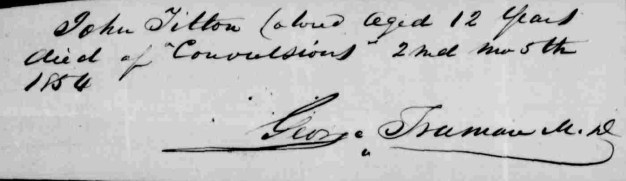
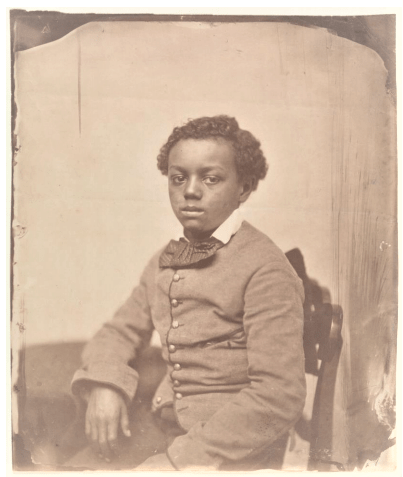
Twelve-year-old John Tilton died this date, February 5th, in 1854 of convulsions and was buried at Bethel Burying Ground. John was buried next to his father Charles Tilton and two sisters, Adelia, seven months old, and a three-year-old whose first name was not recorded. (See below for further information on these.)

At the time of his death, John was being raised by his thirty-four-year-old mother, Matilda Tilton who was born enslaved in Maryland. Her freedom was purchased for $100, according to the 1847 Philadelphia African American Census. Ms. Tilton worked as a wash woman to support her family, according to 1847 and 1850 U.S. Census. 

teenblackboy

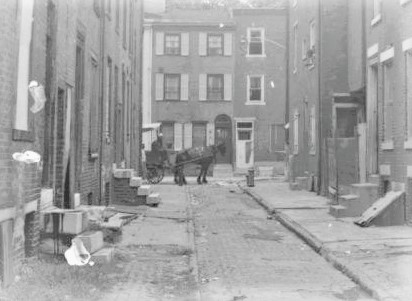
At the time of his death, young John Tilton had a thirteen-year-old brother William. Both boys were born in Pennsylvania. They lived with their mother in a tenement on Eutaw Alley between Rodman and South Streets and between 11th and 12th Streets in the southern part of center city. The short narrow thoroughfare was previously named Wagner’s Alley and currently is called Sartain Street. The Tilton family home was one room for which Ms. Tilton paid monthly the approximate equivalent of what she would earn in a good week of work. 

sartain

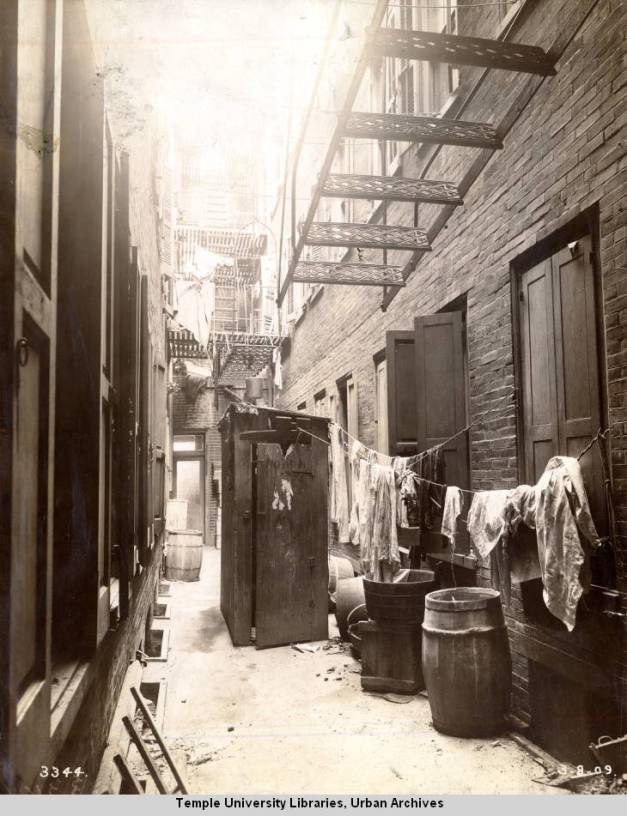
Undated photograph of Sartain Street. (Temple University Urban Archives)

According to the 1847 Census, young John Tilton and his siblings attended the Raspberry Alley School that was established in 1840 through Quaker philanthropy. Ms. Emeline Higgins, a highly respected educator, would teach reading, writing, and arithmetic to approximately thirty boys and girls yearly in Raspberry Alley near the corner of Ninth and Walnut Streets in center city Philadelphia. She was one of several African American women and men that taught in private schools for Black children.

ornamental-borders_23-2147514387

Screenshot 2019-02-01 16.40.52

Twelve-year-old John Tilton died on a cold day in January where the temperature only reached 19 degrees. He was buried next to his father Charles Tilton who died ten years earlier of Tuberculosis at forty-two-years old. John was also laid to rest with his sisters Adelia who also died in 1844 of Cholera at seven months old and an unnamed three-year-old sister who died in 1839 of an unspecified lung disease. 

∞∞


This Day in the Historical Timeline of Bethel Burying Ground.

Posted by Terry Buckalew on February 5, 2019
Posted in: Bethel Burying Ground Timeline. Leave a comment

5 Feb 1890:

According to the official Minutes of the Board of Trustees for Bethel Church, President, D.W. Parvis reported on behalf of the Real Estate Committee that the Bethel Burying Ground has been sold to the City of Philadelphia for $10,000 which is approximately $125,000 in 2019 currency. In addition, Mr. Parvis reported that board member Mr. Charles Jenkins met with the Trustees’ legal representative, Wendell P. Bowman, Esquire. Mr. Bowman was the Church’s representative in negotiating the sale price of Bethel Burying Ground with the City of Philadelphia.

Mr. Bowman conveyed to Mr. Jenkins that he had “difficulties” in securing the high amount for the burial ground. Mr. Bowman’s fee for his services was $1,250 which is 12.5% of the $10,000. President Parvis stated to his fellow trustees that he would be willing to check with “other lawyers” to ascertain if the fee was excessive. Bethel Church pastor Cornelius T Shaffer was in attendance. The Minutes of the Bethel Trustees are available on microfilm at the Historical Society of Pennsylvania and the archives at Mother Bethel A.M.E. Church at 6th and Lombard Streets, Philadelphia, Pennsylvania.

Sixty-five-year-old Flora Anderson died this date, January 31st, in 1844 and was buried at Bethel Burying Ground.

Posted by Terry Buckalew on January 31, 2019
Posted in: On This date. Tagged: African American burial grounds, African American cemeteries, African American History, African Methodist Episcopal Church, archaeology, Bethel Burying Ground, Mother Bethel, Mother Bethel African Methodist Episcopal Church, Philadelphia, Richard Allen. Leave a comment

anderson

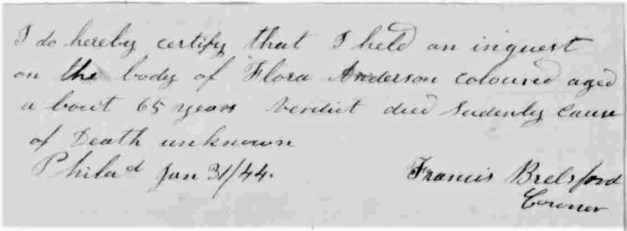
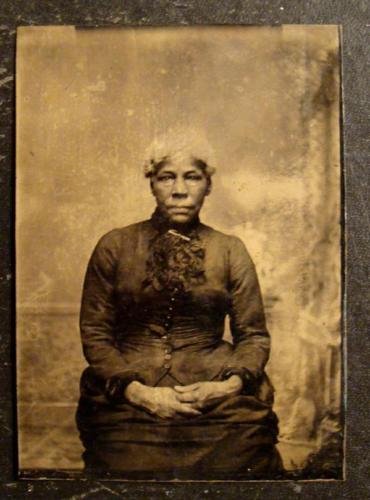
Sixty-five-year-old Flora Anderson died this date, January 31st, in 1844, and was buried at Bethel Burying Ground. According to the City Coroner, she died “suddenly” and the “cause of death unknown.” Eight years before her death, she reported to the 1847 Philadelphia Africa American Census that she was the head of a family that included four other individuals. Two were not native to Pennsylvania and the other two were born in Pennsylvania where Ms. Anderson also was born. There was no delineation between male or female or a recording of their ages.
d19c716a

Ms. Anderson reported in 1836, at fifty-eight-years-old, that she worked as a day worker, performing domestic duties when she could get the work. The family lived on the 1200 block of Bedford Street in a room for which they paid $1.65 a month. This was an extreme poverty existence.

No one lived like this out of choice. Being bitten by rats at night and living half dead during the day, near starvation, seeing your children suffer and die are nightmares, not dreams. Enduring arduous working conditions, chronic medical conditions, and infections and daily threats of physical violence were a horrible part of these Black citizens’ everyday life. Every day. 
anderson map 1

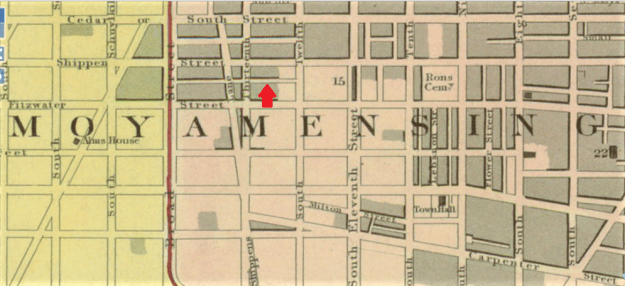
In 1836, Ms. Anderson lived on Bedford Street (now Kater St.), a block and a half over the southern boundary of the city into the district of Moyamensing. The red arrow above indicates the approximate location of the Anderson home. “Moyamensing became known for its penitentiary, violent hose company [volunteer firemen], cemeteries, wretchedly poor inhabitants, and crime. ” (Harry C. Silcox, author of Philadelphia From the Bottom Up.)
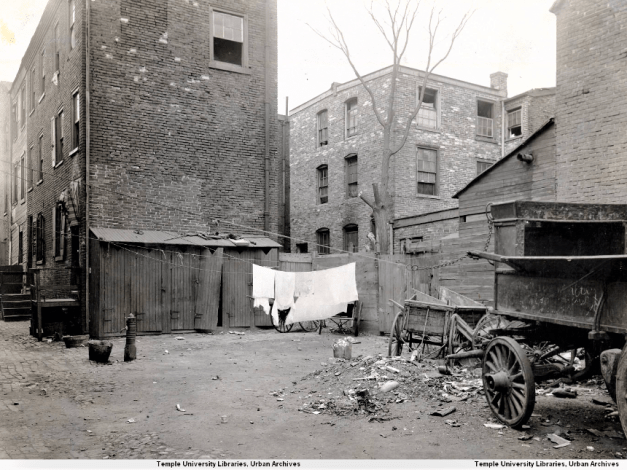
1242 kater streetThe undated photo above shows 1242 Kater Street with outhouses and the water spigot for the block. Notice how close the raw sewage pits or “sinks” (as they were called) are to the water source. If the sinks were not built properly and lined with brick or concrete, the sewage could leak into the water supply and likely cause deadly illnesses such as Cholera.

ornamental-borders_23-2147514387

Ms. Anderson died on a “cold and clear” day in late January with light snow falling. The city was in the middle of a deep freeze that led to the death from exposure of a significant number of the poor. 


Twenty-four-year-old William Sewall died this date, January 27th, in 1850 and was buried at Bethel Burying Ground.

Posted by Terry Buckalew on January 27, 2019
Posted in: On This date. Tagged: African American burial grounds, African American cemeteries, African American History, African Methodist Episcopal Church, archaeology, Bethel Burying Ground, Mother Bethel, Mother Bethel African Methodist Episcopal Church, Philadelphia, Richard Allen. Leave a comment

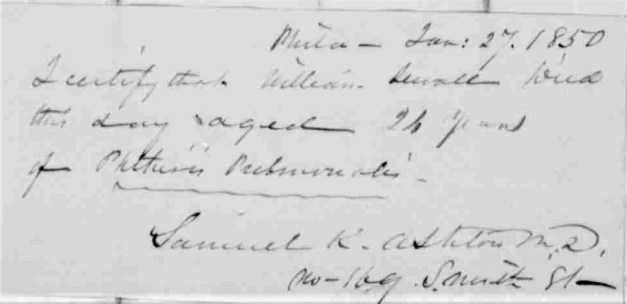
sewall

Twenty-four-year-old William Sewell* died this date, January 27th, in 1850 of Tuberculosis and was buried at Bethel Burying Ground. He was employed as a seaman while Ms. Sewell was employed as a wash woman. Her first name is not recorded. They lived in a 13’x13′ room at 45 Quince Street for which they paid $2.25 a month for rent. The Sewells reported they owned $250 in personal property, according to the 1847 Philadelphia African American Census. 

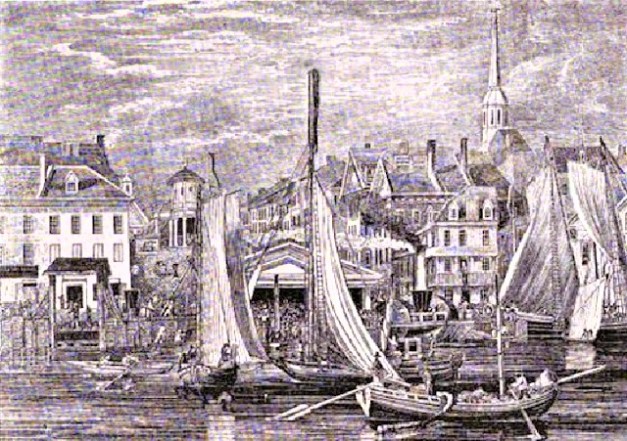
market street wharf 1830

19th Century Market Street Wharf

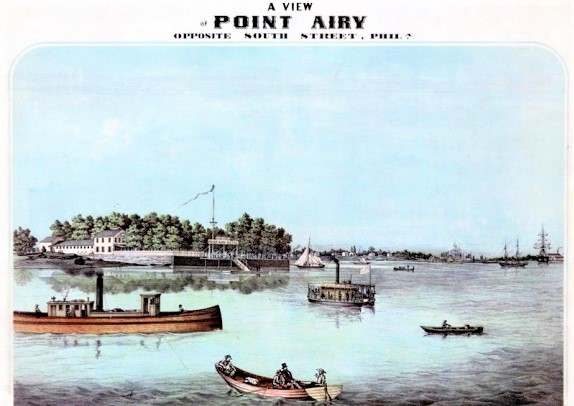
a-view-of-point-airy-c.-1855-575x476

Mr. Sewell could have been a river seaman/sailor. Perhaps he was working on a ferry, excursion boat or the different types of fishing or oyster boats that were seen up and down the Delaware River.  Or he could have been a “Black Jack,” a “blue water” sailor that traveled the globe working as an able-bodied seaman aboard the big three-masted ships that carried merchants goods around the world and back to Philadelphia docks. The 1847 Philadelphia African American Census shows that 192 Black men reported their occupation as “seaman.”**

QUINCE“

The map above shows the approximate location of the Sewells’ home at 45 Quince Street located between Lombard and Walnut Streets and 11th and 12th Streets in center city Philadelphia. 

mediastream

Above is a photo of Quince Street in 1917. The thoroughfare no longer exists and is now part of the modern Thomas Jefferson University Medical Campus.


In 1847, there were forty-three African American families on Quince Street with a total of one hundred thirty-six members. There were two other Black men on Quince Street that also reported their occupation as seamen.

faithfulness star

Mr. Sewell was buried at Bethel Burying Ground on a “clear and very fine” day where the temperature reached a high of 59 degrees.

—————————————————————————————————————————————–

*The spelling of the last name also has appeared as “Seawall.”

* *For further information on African American sailors and seamen see Black Jacks: African American Seamen in the Age of Sail, by W. Jeffrey Bolster.


Eighty-year-old Ms. Skinner died this date, January 26th, in 1848 and was buried at Bethel Burying Ground.

Posted by Terry Buckalew on January 26, 2019
Posted in: On This date. Tagged: African American burial grounds, African American cemeteries, African American History, African Methodist Episcopal Church, archaeology, Bethel Burying Ground, Mother Bethel, Mother Bethel African Methodist Episcopal Church, Philadelphia, Richard Allen. Leave a comment

skinner

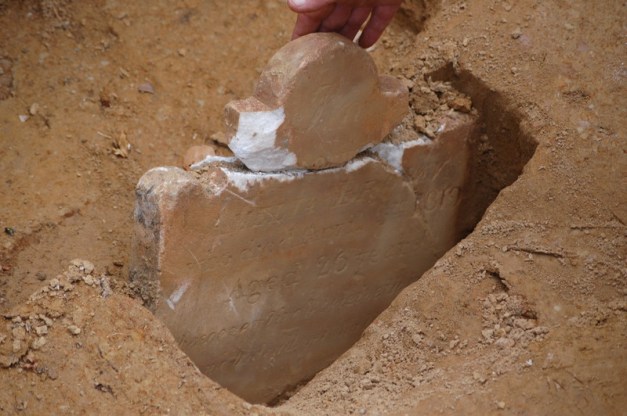
skinner boh

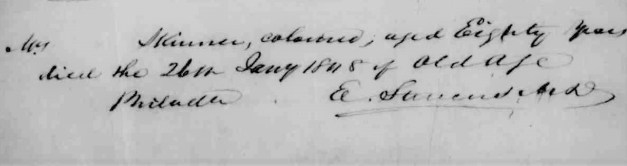
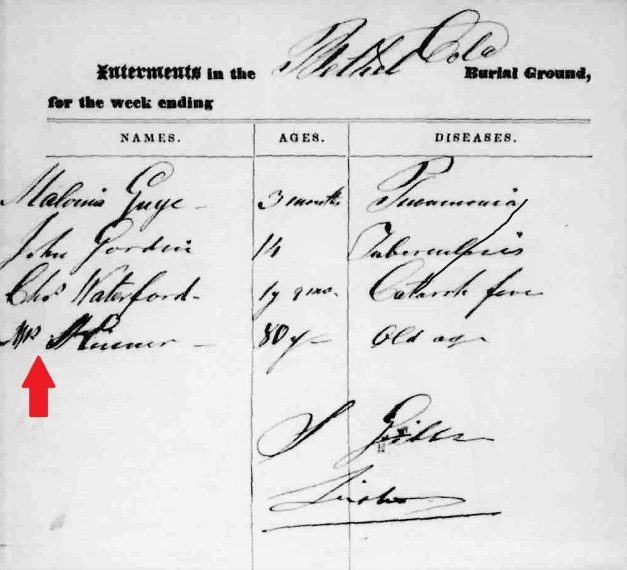
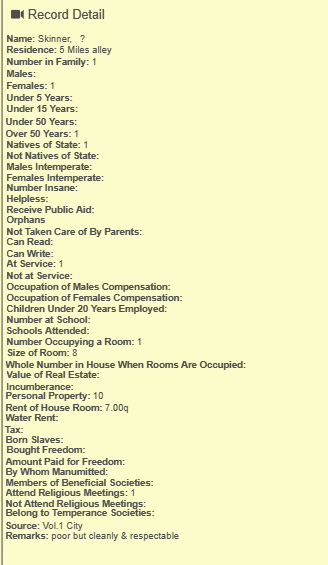
Eighty-year-old Ms. Skinner died this date, January 26th, in 1848 of “old age” and was buried at Bethel Burying Ground. Both original documents (above) related to her death and burial omit her first name for some unknown reason. However, I believe that the document below from the 1847 Philadelphia African American Census represents Ms. Skinner. Amazingly, there is no first name recorded on this document either.* 

1847 copy

Ms. Skinner lived in a small 8’x8′ room at #5 Miles’ Alley for which she paid $1.75 a month for rent. She reported that she owned personal property worth $10. It is hard to explain why Ms. Skinner reported herself as “in service.” It may be that she had previously been employed as an indentured domestic worker. The census worker went on to report that Ms. Skinner regularly attended religious services and, despite being poor, Ms. Skinner’s small home was tidy and she was thought of as “respectable.”

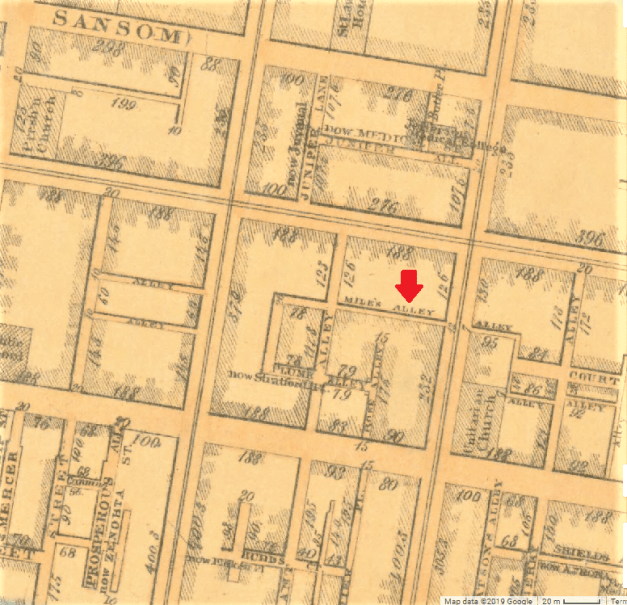
miles alley

Miles’ Alley was located just off 10th and Walnut Streets in center city Philadelphia.

Ms. Skinner was buried at Bethel Burying Ground on a late January day that was “overcast, damp, and partly foggy with light rain occasionally falling.” 

Peace

In a letter to The Philadelphia Register in 1829, a white man describes a funeral procession and burial at Bethel Burying Ground of an unnamed Black man who was employed as a woodsawyer. The procession was led by the deceased’s professional society.

“The society walked by the grave and were followed by many whose dress was comfortable, and whose appearance was neat. When we entered the burial ground of Bethel church, they commenced singing a hymn appropriate to the occasion, which was continued round the grave and had a very solemn and impressive effect. When it was finished the preacher (a “coloured” man) delivered a discourse. . . One sentence I particularly remember: ‘The greatest text is an open sepulcher, and the loudest voice that can be addressed to you will soon be heard on the boards of the coffin.’ “(The Philadelphia Register and National Recorder, vol. 1; January to June 1819, p. 84-85.)

05-dsc_0014


*Searching through city directories and local and federal censuses, the name of a ‘Barbara Skinner’ appears. Although possible, there presently is not enough evidence to state that is our Ms. Skinner.

Posts navigation

← Older Entries
Newer Entries →
  • Recent Posts

    • Three dead as church wall falls on this date, May 1st, in 1841.
    • The ten-month-old Baby Colgate died this date, June 20th, in 1847, and was buried at Bethel Burying Ground.
    • Fifty-eight-year-old Rachel Dawson died this date, May 3rd, in 1839, and was buried at Bethel Burying Ground.
    • Twenty-eight-year-old Robert Swails died on this date, March 31st in 1849, and was buried at Bethel Burying Ground.
    • Forty-year-old Jacob “Jesse” Howard died on this date, January 29th, in 1840, and was buried at Bethel Burying Ground.
  • Archives

    • May 2024
    • June 2023
    • May 2023
    • March 2023
    • January 2023
    • December 2022
    • November 2022
    • October 2022
    • September 2022
    • August 2022
    • May 2022
    • April 2022
    • March 2022
    • February 2022
    • January 2022
    • December 2021
    • November 2021
    • October 2021
    • September 2021
    • August 2021
    • July 2021
    • June 2021
    • May 2021
    • April 2021
    • March 2021
    • February 2021
    • January 2021
    • December 2020
    • November 2020
    • October 2020
    • September 2020
    • August 2020
    • July 2020
    • June 2020
    • May 2020
    • April 2020
    • March 2020
    • February 2020
    • January 2020
    • December 2019
    • November 2019
    • October 2019
    • September 2019
    • August 2019
    • July 2019
    • June 2019
    • May 2019
    • April 2019
    • March 2019
    • February 2019
    • January 2019
    • December 2018
    • November 2018
    • October 2018
    • September 2018
    • August 2018
    • July 2018
    • June 2018
    • May 2018
    • April 2018
    • March 2018
    • February 2018
    • January 2018
    • December 2017
    • November 2017
    • October 2017
    • September 2017
    • August 2017
    • July 2017
    • June 2017
    • May 2017
    • April 2017
    • March 2017
    • February 2017
    • January 2017
    • December 2016
    • November 2016
    • October 2016
    • September 2016
    • August 2016
    • July 2016
    • June 2016
    • May 2016
    • April 2016
    • March 2016
    • February 2016
    • January 2016
    • December 2015
    • November 2015
    • October 2015
    • September 2015
    • August 2015
    • July 2015
    • June 2015
    • May 2015
    • April 2015
    • March 2015
    • February 2015
    • January 2015
    • December 2014
    • November 2014
    • October 2014
  • Categories

    • Archaeology
    • BBG History
    • Bethel Burying Ground Name Directory
    • Bethel Burying Ground Timeline
    • Burial services
    • Diseases
    • Documents
    • Freemasonry
    • Ignatius Beck
    • It's a fact
    • Maps
    • Neighborhood
    • Newspaper Articles
    • On This date
    • Photographs
    • Uncategorized
    • Videos
  • Meta

    • Create account
    • Log in
    • Entries feed
    • Comments feed
    • WordPress.com
Blog at WordPress.com.
Bethel Burying Ground Project
Blog at WordPress.com.
  • Subscribe Subscribed
    • Bethel Burying Ground Project
    • Join 48 other subscribers
    • Already have a WordPress.com account? Log in now.
    • Bethel Burying Ground Project
    • Subscribe Subscribed
    • Sign up
    • Log in
    • Report this content
    • View site in Reader
    • Manage subscriptions
    • Collapse this bar
 

Loading Comments...