Bethel Burying Ground Project

Bethel Burying Ground Project

  • ABOUT THE BETHEL BURYING GROUND PROJECT

Seventy-two-year-old Joseph Lancaster died this date, October 19th, in 1847 and was buried at Bethel Burying Ground.

Posted by Terry Buckalew on October 19, 2019
Posted in: On This date. Tagged: African American burial grounds, African American cemeteries, African American History, African Methodist Episcopal Church, archaeology, Bethel Burying Ground, Mother Bethel, Mother Bethel African Methodist Episcopal Church, Philadelphia, Richard Allen. Leave a comment

Joseph Lancaster

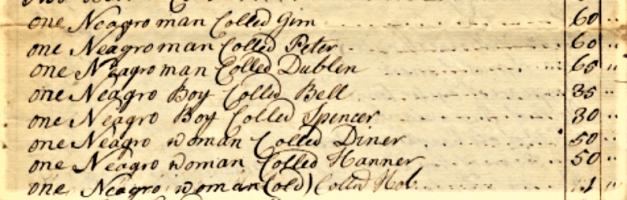
Seventy-two-year-old Joseph Lancaster died this date, October 19th, in 1847 of Apoplexy (stroke) and was buried at Bethel Burying Ground. Mr. Lancaster worked as a porter during his life. He was married to Hester Lancaster who was fifty-nine years old at the time of her spouse’s death. She worked as a washwoman. Both were born in Delaware. The 1838 Philadelphia African American Census reports that one of them was born enslaved and gained his or her freedom when the father paid the enslaver $135 dollars. In Delaware, the average price for an enslaved field hand in 1800 was $350. This was much higher than just fifteen years before in 1785. (1)

$$$$$$

Above is the 1785 probate inventory of Robert Burton, a Delaware enslaver. (2)

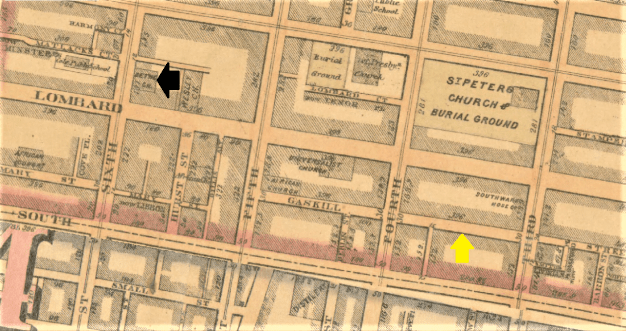
The Lancasters lived at 100 Gaskill Street for many years for which they paid $3 a month in rent. That amount is approximately what Ms. Lancaster might earn in two weeks of washing clothes and bedsheets.

Gaskill Street was only an eight-foot-wide narrow cartway that often was clogged with garbage and ashes from stoves and fireplaces. Heavy rains and overflowing cesspools would flood the basements which would then filter down to the water level and contaminate the drinking water at the local hand pump, causing illness and often death. 

The 1847 Philadelphia African American Census shows the Black families on Gaskill Street were employed as mariners, chimney sweeps, porters, wood sawyers, shopkeepers, sailmakers, harnessmakers, shoemakers, laundresses, and waiters.

Lancaster map

The yellow arrow illustrates the approximate location of the Lancaster’s home at #100 Gaskill Street. The black arrow illustrates the location of Bethel AME Church which the Lancasters attended, according to the 1838 Philadelphia African American Census. In 1859, the name of Gaskill Street was changed to Naudain.

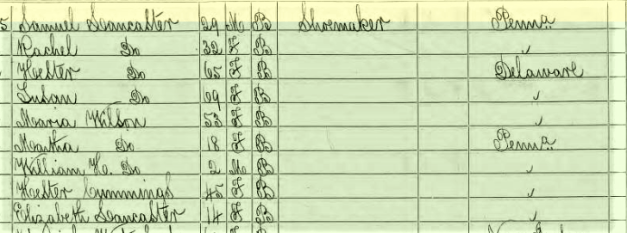
Shortly after Mr. Lancaster died and was buried at Bethel Burying Ground, the 1847 African American Census reported that Samuel Lancaster is living with Ms. Lancaster. Presumably, Samuel is her son. He is twenty-nine-years old and is employed as a bootmaker. However, by the 1850 U.S. Census, the Lancaster home looks very different. It includes 6 additional females, ages 14 – 65, and one additional male, age 2.

Thee 1850 Lancaster

In 1850, the Philadelphia city directories start listing Hester Lancaster as a shopkeeper at her home address. It may be that she is now working with her son and they have opened a boot and shoe business.

HESTER LANCASTER

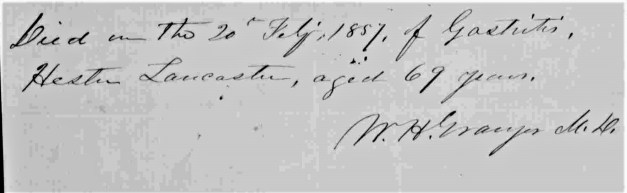
Hester Lancaster died in July of 1857, at sixty-nine-years-old, and was buried at Olive Cemetery.

Official Border

(1) Slavery in Delaware – available at http://www.ssam.org/wp-content/uploads/2018/12/SlaveryInDelaware.pdf

(2) https://archives.delaware.gov/one-hundred-stories-exhibit/other-stories/the-human-cost-of-slavery/

Twenty-eight-year-old Rev. Joseph M. Corr died this date, October 18th, in 1835 and was buried at Bethel Burying Ground.

Posted by Terry Buckalew on October 18, 2019
Posted in: On This date. Tagged: African American burial grounds, African American cemeteries, African American History, African Methodist Episcopal Church, archaeology, Bethel Burying Ground, Mother Bethel, Mother Bethel African Methodist Episcopal Church, Philadelphia, Richard Allen. Leave a comment
SIGNATURE #1

15 October 1828: “Bethel Church Minute & Trial Book” 

Twenty-eight-year-old Rev. Joseph Corr died this date, October 18th, in 1835 of Tuberculosis and I assume that he was buried at Bethel Burying Ground. The death certificate no longer exists for Rev. Corr. However, he was a preacher and class leader at Bethel AME Church and also served as the Church’s Secretary. Given the year he died, his involvement with the Church and the personal relationship he enjoyed with Bishops Richard Allen and Morris Brown, I believe it is safe to assume that Rev. Corr was interred in Bethel Burying Ground. The information we have on Rev. Corr comes from historical African Methodist Episcopal Church documents and newspapers of the era.

“A WATCHMAN OF ZION DIES”

Rev. Joseph Corr’s father, Charles, was also a well respected AME minister.
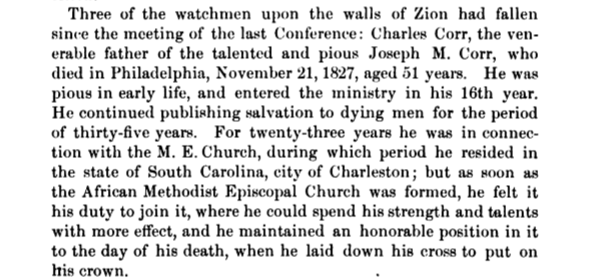
Charles M. Corr obit

Rev. Charles Corr was among those that fled Charleston, South Carolina to Philadelphia after the enslaved Denmark Vesey plotted a revolt in 1822. The uprising failed and the petrified white leadership of the city saw the local Black clergy as potential rebellion leaders and ordered them to leave the state under penalty of death. Joseph M. Corr would have been fifteen or sixteen years old when he fled north with his family to Philadelphia and the relative safety of Bishop Allen’s Bethel Church. (1)

“MOST GIFTED PREACHER”

Joseph M. Corr was sixteen-years-old when he started preaching at Bethel Church. He soon was hailed by the senior leadership as the “most gifted preacher.” He was the youngest member in the Church’s Conference which included Philadelphia, New York City, and Baltimore. Bishop Richard Allen chose the young man (“the best-educated”) to be the Secretary for the whole Conference and also Secretary specifically for Bethel Church. (2)

The young man supplemented his church income by working as a tailor. (3) He eventually would marry a woman named Emeline and start a family. Ms. Corr was employed as a laundress. (4)

“WRETCHED SPOT”

There were many streets, courts, and alleys in Philadelphia where living conditions were so bad that words almost fail to describe the human misery that existed therein. Small Street was one of those places. Reverend Corr chose to live on Small Street. He and his spouse both worked at occupations that would allow them to live somewhere better than Small Street. Two and one-half years after Rev. Corr’s death, Ms. Corr reported her personal wealth of $600 or $16,200 in present-day currency.

Corr Map

Small Street’s location is indicated by the red oval. The black diamond illustrates the location of the “Commons.” (See quote below.)

The skeletons of many horses lay bleaching in the sun, while lame horses were limping about, and others which but lately died were half devoured by dogs and crows. . . . it was on this common that long rows of sheds, weatherboarded, partitioned, and with a door to each compartment, were erected to accommodate the miserable inmates of Small street and St. Mary street with healthy summer residences during the great cholera season of 1832. Small street and St. Mary street were cleaned out, and fences were put across to prevent persons from going into them. . . . men, women, and children, black and white, barefooted, lame, and blind, half-naked and dirty, carrying old stools, broken chairs, thin-legged tables, and bundles of beds and bed clothing to their summer retreat on the common! (5) (Note: A “common” is open land belonging to the community.)

⊕⊕⊕⊕⊕⊕⊕⊕

Signature #2

3 July 1834: “Bethel Church Minute& Trial Book.”

The city and surrounding districts suffered epidemic-after-epidemic of Cholera in the 1830s. No one in the medical community knew how infectious diseases were spread. We now know the cause of the disease was drinking water fouled with human feces. However, most of the population believed the cause of the disease was miasma or poisonous vapors. White racists believed African Americans naturally gave off these vapors, especially in overcrowded neighborhoods. The editor of the most popular newspaper in Philadelphia called Small Street “a wretched place” and a “crowded sink [cesspool] of filth.” He went even further to warn white city leaders that Small Street likely would be the epicenter of a plague on the scale that destroyed London in 1666. He was raising the fear of the Black Death caused by the African Americans on Small Street. The home of Rev. Corr and his family. 
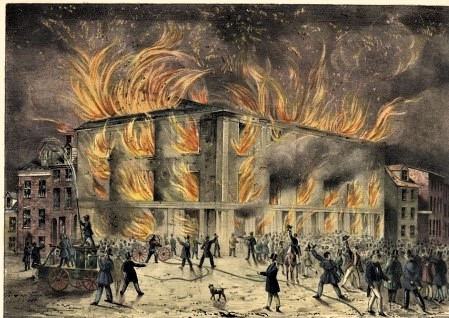
Penn Hall

“TO SMALL STREET TO SMALL STREET!!”

After the demonization of Small Street as the devil’s den, it is no surprise what happened next. On the second night of the “Flying Horse” rioting in July of 1834, the frenzied white mob of thousands turned its attention to the homes of Rev. Corr and his neighbors, chanting “To Small Street, To Small Street” as they advanced. 

The mob tore into the homes pillaging, breaking windows and destroying everything in the tenements including furniture and bedding. Most of the residents already had fled, probably into the adjoining fields and marshes of Moyamensing. Those that remained were severely beaten and an unknown number killed and their bodies mutilated. At one point, the mob captured a Black man and surrounded him, chanting “Kill him – beat him – place him under the pump.” The last call was for the water torturing of a human being. 

⊕⊕⊕⊕⊕⊕⊕

” . . another gap was made in the ranks of the early pioneers.”

Signature #3

5 August 1835 “Bethel Church Minute & Trial Book.” This was two months before his death.

We know that the Corr family survived the invasion and assault. We don’t know what they came back to at #75 Small Street. Sadly, Rev. Corr would succumb to Tuberculosis fourteen months later on October 18th in 1835. He was only twenty-eight-years-old.

Rev. Corr’s funeral service was preached in Bethel Church by Bishop Morris Brown. He quoted from Revelations 14-13: 

“And I heard a voice from heaven saying unto me, Write, Blessed are the dead which die in the Lord from henceforth: Yea, saith the Spirit, that they may rest from their labours; and their works do follow them.” (7)

“EMELINE CORR”

Shortly after burying her husband at Bethel Burying Ground, Ms. Corr moved to the 600 block of South Street on the southern border of the city, according to the 1838 Philadelphia African American Census. It appears that Joseph Corr left four children fatherless, three of whom were attending school in 1838. The Census also reveals that Ms. Corr formerly had been enslaved and gained her freedom for $100. All the children were born in Pennsylvania. 

The 1838 census reported that Ms. Corr was a “dealer.” In my experience, this usually means a baker or a dealer in cakes, pies or confectionary when it refers to a woman. On occasion, it also has meant a proprietor of a used clothing store. Whatever she was “dealing,” it appears that Ms. Corr was very successful. As mentioned above, she reported her personal wealth in 1838 at $600 or $16,200 in present-day currency. A small fortune for a single Black woman during this time.   

The last mention in the public record of Ms. Corr that I can locate is in the 1870 Philadelphia City Directory.

1870 Emeline

wid = widow

Official Border

REFERENCES

(1) “History of the African Methodist Episcopal Church” by Daniel A. Payne, p. 59.

(2) Ibid., 43.

(3) Ibid., v.

(4) 1870 Philadelphia City Directory.

(5) Annals of Philadelphia, and Pennsylvania in the olden time; being a collection of memoirs, anecdotes, and incidents of the city and its inhabitants, and of the earliest settlements of the inland part of Pennsylvania by John F. Watson, v.3, p 3.

(5) Poulson’s American Daily Advertiser, 22 August 1832.

(6) Daily Pennsylvanian, 15 August 1834. 

(7) An outline of our history and government for African Methodist Churchmen, ministerial, and lay: in catechetical form: two parts by Rev. Benjamin T. Tanner, p. 159. Below is Rev. Tanner’s full entry on Rev. Cox.
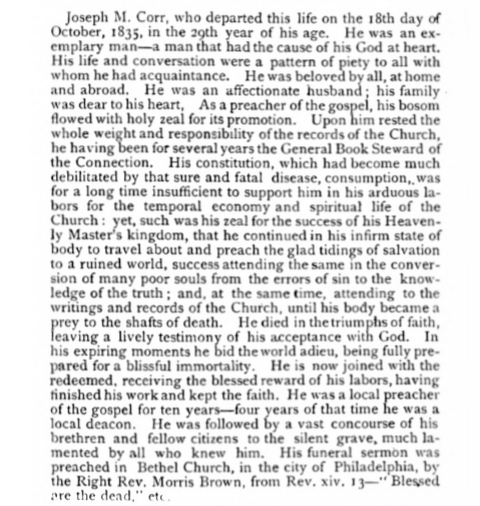
Screenshot 2019-10-15 16.32.35


The ten-month-old son of Thomas Miller died this date, October 14th, in 1849 and was buried at Bethel Burying Ground.
Posted by Terry Buckalew on October 14, 2019
Posted in: On This date. Tagged: African American burial grounds, African American cemeteries, African American History, African Methodist Episcopal Church, archaeology, Bethel Burying Ground, Mother Bethel, Mother Bethel African Methodist Episcopal Church, Philadelphia, Richard Allen. Leave a comment

THOMAS MILLER

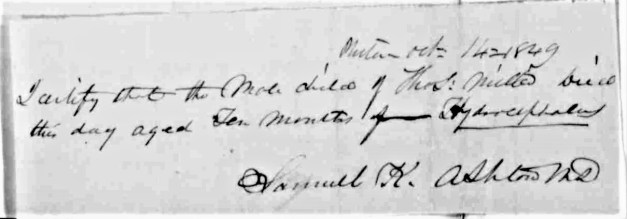
The ten-month-old son of Thomas Miller died this date, October 14th, in 1849 of Hydrocephalus and was buried at Bethel Burying Ground. Mr. Miller worked as a hod carrier, now known as a brick carrier. The 1847 Philadelphia African American Census is the only census information we have on the Miller family. It appears the deceased child had two brothers under five-years-old.


Washing-Clothes
Laundress - ironing

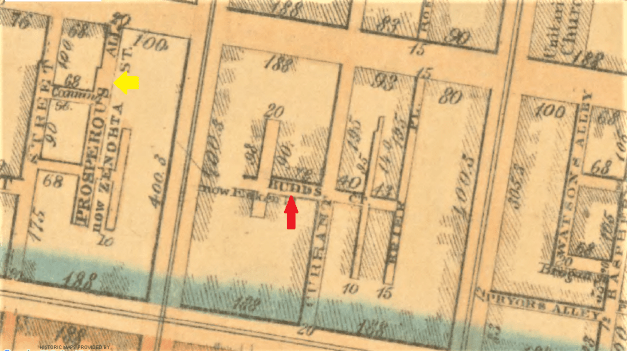
We don’t know Ms. Miller’s first name because the family is not recorded in the 1850 U.S. Census. The reason for this may be that the family changed residences during this period from #25 Prosperous Alley to #18 Burd’s Court. Both were near the southern border of the city. The 1847 Census reported Ms. Miller was employed as a washerwoman. Undoubtedly, the Black families in 19th century Philadelphia would have “been reduced to utter destitution had it not been for the labor of the mother as a washerwoman.” Almost 50% of the working Black women in 1849 were “engaged in washing and ironing or day work.”*

Washing clothes for a living was a job that taxed body and spirit. Water had to be drawn and carried from the nearest hydrant, firewood had to be obtained, fires had to be started and heavy bundles of clothes had to be picked up and returned to her customers after the clothes and sheets were hung up, dried and folded. All this in the wilting heat and freezing cold, while taking care of children, shopping for and preparing the family’s meals, and, on occasion, while pregnant. It was an undertaking for only the strong and strong-willed. 

BURD'S COURT

At some time during 1850, the Miller family moved from Prosperous Alley (yellow arrow) to Burd’s Court (red arrow).

A survey of Philadelphia newspapers of the era shows that Prosperous Alley had become a high crime rate area and also had more incidents of death from contagious diseases. While Burd’s Court, only a city block away, appeared to be a more stable living environment. This may have influenced the family’s move.

alder-street (3)

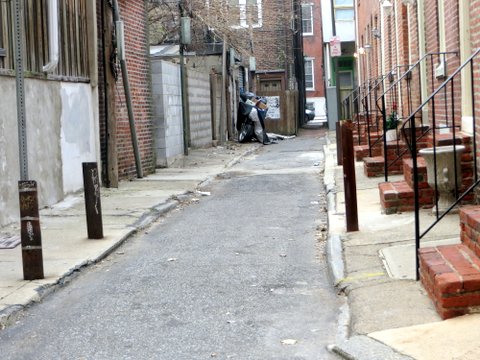
The above is a current view of Burd’s Court now Adler Street looking south. It runs from Locust Street to Spruce Street between 10th and 11th Streets. That is Spruce Street in the distance. (Photo by T. Buckalew)

 The Millers lost their son on a sunny Autumn day with the temperature in the low 50s with a light northern breeze. He was buried at Bethel Burying Ground.  

Official Border

*The Negro Wage Earner by Lorenzo J. Greene and Carter G. Woodson, p.4.

The five-year-old Roberts’ child died this date, October 13th, in 1828 and was buried at Bethel Burying Ground.

Posted by Terry Buckalew on October 13, 2019
Posted in: On This date. Tagged: African American burial grounds, African American cemeteries, African American History, African Methodist Episcopal Church, archaeology, Bethel Burying Ground, Mother Bethel, Mother Bethel African Methodist Episcopal Church, Philadelphia, Richard Allen. Leave a comment
ROBERTS OBIT

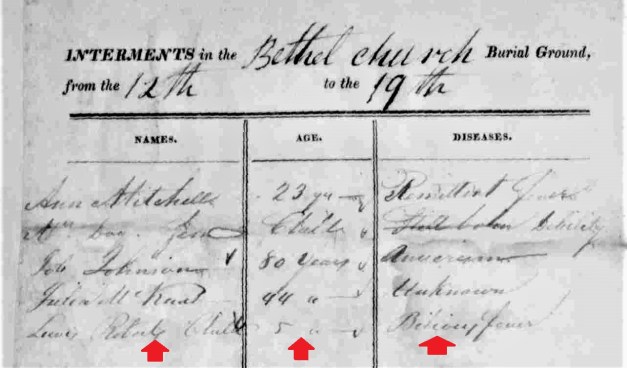
The original death certificate for the child no longer exists. The above is the Board of Heath weekly summary.

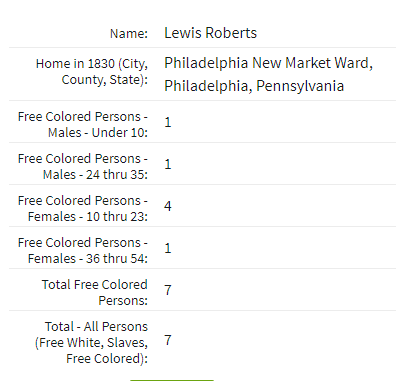
The five-year-old child of Lewis and Elizabeth Roberts died this date, October 13th, in 1828 of Bilious Fever.* The child’s first name and gender are not recorded. Nine years later, the 1830 U.S. Census (below) reports that there is a total of seven individuals in the Roberts family and all were not native to Pennsylvania. Mr. Roberts did not appear in the Philadelphia city directories until 1837. 

1830

The 1830 U.S. Census

In 1837, according to the African American Census, Mr. Roberts was employed as a porter while Ms. Roberts was employed as a dressmaker. There was another adult woman in the household who worked as a milliner or a women’s hatmaker. The family lived at #29 Currant Alley, for which they paid $5.50 a month. That amount would be close to what Mr. Roberts would earn in a week. 

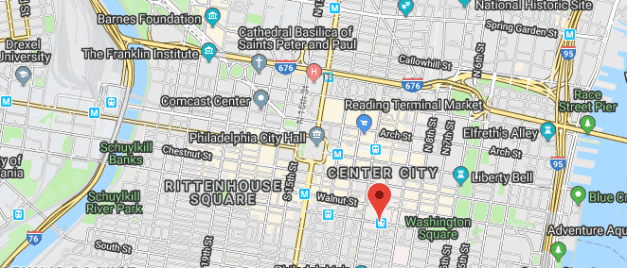
Currant alley

Currant Alley (red pin) was located between Spruce and Locust Streets and 10th and 11th Streets.

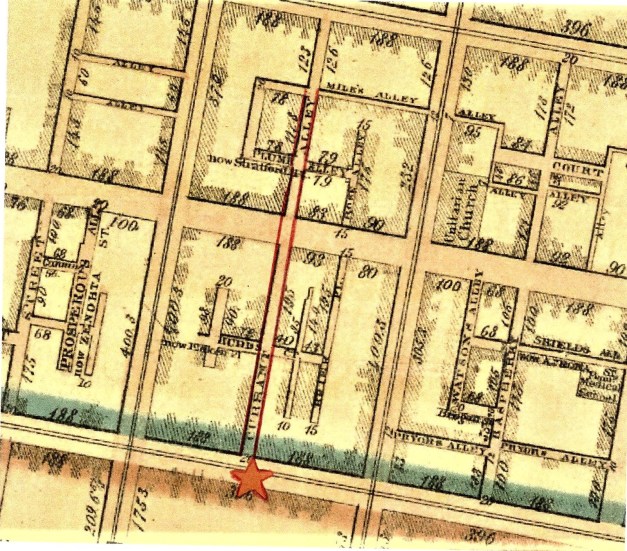
Scan

The star indicates the two-block long Currant Alley.

Ninety-six Black families lived in the densely packed Currant Alley, with a staggering total of three hundred twenty-one Black family members, according to the 1847 Census. The Census also showed that the Currant Alley adults were solidly working class, having a wide range of laboring and domestic jobs to which African American men and women were restricted.

Philadelphia Board of Health records show that the Roberts family child was one of 119 Philadelphians to die of Bilious Fever in 1828. Lewis and Elizabeth Roberts buried their child on an Indian Summer day at Bethel Burying Ground.

Official Border

*Bilious Fever was a medical diagnosis of fever associated with excessive bile or bilirubin in the bloodstream and tissues, causing jaundice. 

The 12-hour-old Webber twins died this date, October 10th, in 1824 and were buried at Bethel Burying Ground.

Posted by Terry Buckalew on October 10, 2019
Posted in: On This date. Tagged: African American burial grounds, African American cemeteries, African American History, African Methodist Episcopal Church, archaeology, Bethel Burying Ground, Mother Bethel, Mother Bethel African Methodist Episcopal Church, Philadelphia, Richard Allen. Leave a comment

WEBBER TWINS

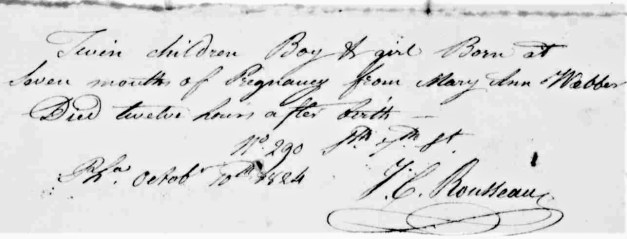
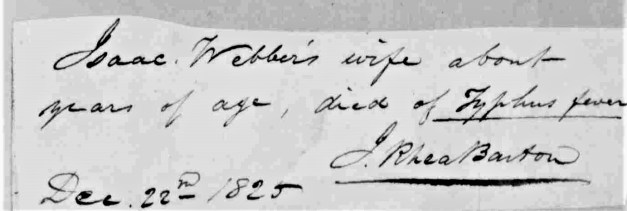
The 12-hour-old twins of Mary Ann and Isaac Webber were born and died on this date, October 10th, in 1824 and were buried at Bethel Burying Ground. Ms. Webber delivered a boy and girl after only seven months of pregnancy. Sadly, Ms. Webber would die fourteen-months later of Typhus Fever. She was buried at Bethel Burying Ground with her children – see below.

Webber's Wife 1

Webber's Wife

Mary Ann Webber was twenty-five-years-old at the time of her death. Mr. Webber was twenty-eight-years-old. The family lived at 290 South 7th Street.

It appears from census records that Mr. Webb remarried a woman whose first name was also “Mary.” The 1837 Philadelphia African American Census shows this couple living in a room on Osborne’s Court with four other individuals. The family paid approximately $2.85 per month in rent. Mr. Webber worked as a porter, likely making $3-$5 a week. Ms. Webber was employed as a seamstress, likely making around $2 a week.

Only two of the six family members were born in Pennsylvania. There were three children, two of whom were attending school. The family worshipped at Bethel A.M.E. Church.

Although working poor, it appears that Mr. Webber had fought back from filing for “Insolvency” (bankruptcy) in 1830.*

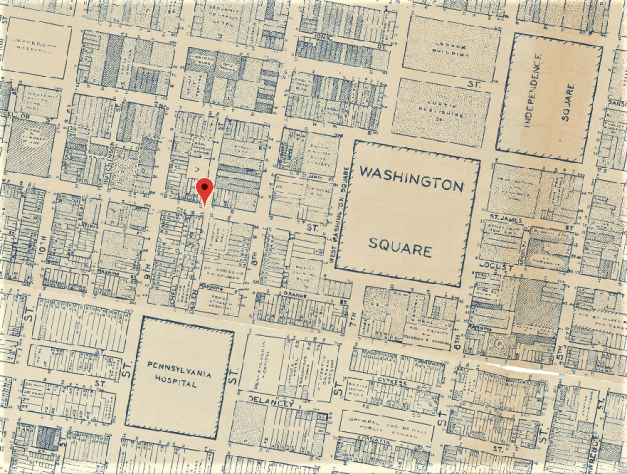
darien-map-2

The red pin in the map above shows the location of Osborn’s Court located near both Pennsylvania Hospital and Washington Square. Osborn’s Court is now named Darien Street.

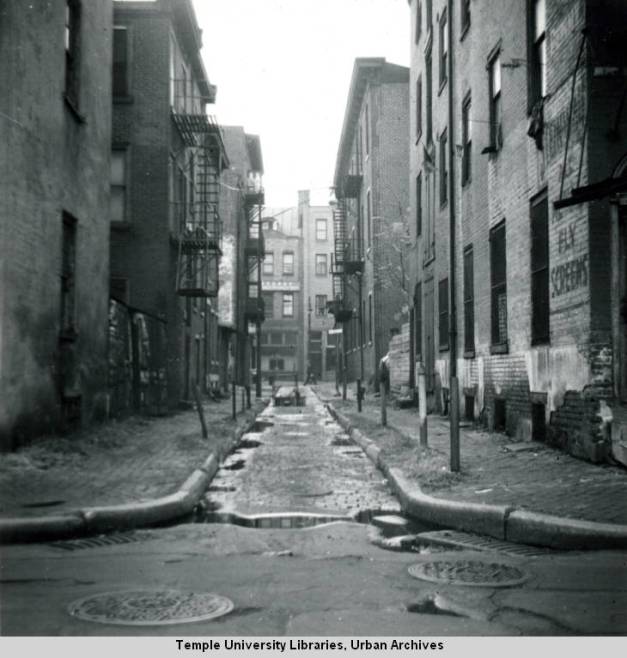
Darien #1

A 1945 photograph of Darien Street.

The 1850 U.S. Census shows Isaac and Mary Webber in their early 50s with six-year-old Mary A. Watson. The child may be a grandchild, named after her deceased maternal grandmother.

1850

I was unable to find death certificates for either Isaac or Mary Webber.

The graves of Mary Ann Webber and her children still exist in the Bethel Burying Ground.

Official Border 

*Philadelphia Inquirer, 12 January 1830.

The two-year-old daughter of Patrick Butler died this date, October 4th, in 1848 and was buried at Bethel Burying Ground.

Posted by Terry Buckalew on October 5, 2019
Posted in: On This date. Tagged: African American burial grounds, African American cemeteries, African American History, African Methodist Episcopal Church, AME Zion, archaeology, Bethel Burying Ground, Mother Bethel, Mother Bethel African Methodist Episcopal Church, Philadelphia, Richard Allen. Leave a comment

BUTLER

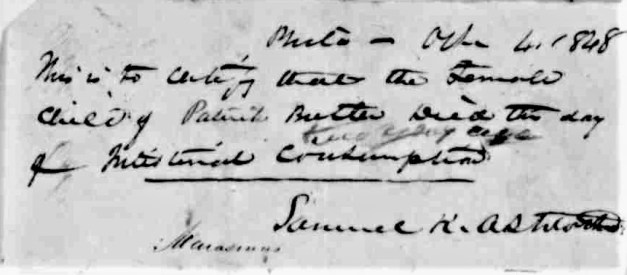
The two-year-old unnamed daughter of Patrick Butler died this date, October 4th, in 1848 of Intestinal Tuberculosis and was buried at Bethel Burying Ground. The 1847 Philadelphia African American Census reports that the Butler family consisted of two males and three females. There were two children under five years old and three individuals between the ages of 15 and 50 years of age. 

Mr. Butler was employed as a waiter, earning $4 a week, while Ms. Butler worked as a laundress, likely earning between $.50 and $1.50 a week. Her first name is not known to us because it appears the family may have left the city by the time of the 1850 U.S. Census. 

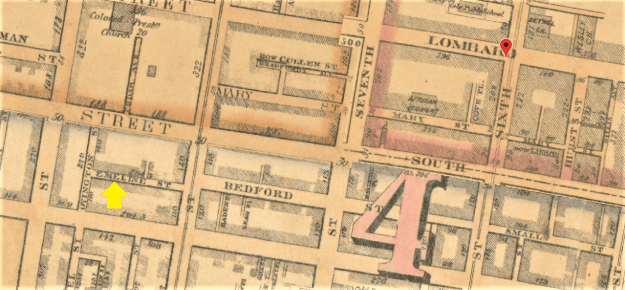
Emeline Map

The yellow arrow illustrates the Butler home on Emeline Street. The red pin illustrates the location of Bethel A.M.E. Church at 6th and Lombard Streets.

The Butler family lived at #8 Emeline Street for which they paid approximately $5.75 a month in rent. This amount is very high for one room so it appears they either rented several rooms or the whole house. Emeline Street was located between South and Bainbridge Street and 8th and 9th Streets in the Moyamensing District of the county. 

Emeline Street was a short, narrow thoroughfare that was crowded beyond its limits with African American families. The street was home to forty-six families, totaling one hundred seventy-one men, women and children. The adults were employed in jobs that serviced the well-off white families in the area and at the stores they frequented. Emeline Street was the address of carpenters, coachmen, private waiters, barbers, dressmakers, seamstresses and “Ladies Maids.” Half of the families lived in shelters in the rear of the houses that faced the street. Interestingly, the census taker for the 1847 Philadelphia African American Census commented that the families that did not live in the shanties were “doing well.” He or she had no comment on those in the shacks and the converted animal stables in the backyards.

Emeline Street has an awful place in Philadelphia history. It is stated that there was never a lynching of an African American in Philadelphia. That is because the white mobs would either shoot or beat to death their Black victims. This was the case on October 10, 1871. Musician Isaac Chase, thirty-four, had the gall to try to vote at his polling place when a gang of Irish thugs chased the young man back to his home at 811 Emeline Street. Chase made it inside but his front door was kicked opened. In front of his spouse and children, Samuel was shot in the head and killed. Teacher and civil rights activist O.V. Catto was also murdered later that day near the home of the Butlers.

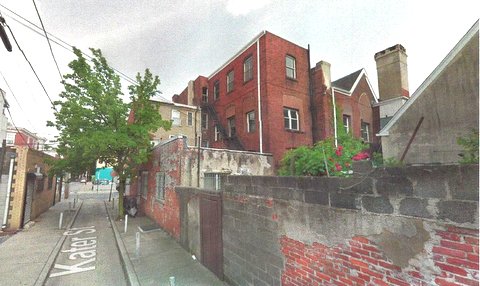
kater-st

Present-day photo of Kater Street formerly Emerline Street.

The Butler’s two-year-old daughter died on a “fair” October day where the temperature rose to 66 degrees from a sunrise temperature of 56 degrees. Her parents buried her at Bethel Burying Ground.

Official Border

Thirty-nine-year-old James Johnson Richmond died this date, October 3rd, in 1853 and was buried at Bethel Burying Ground.

Posted by Terry Buckalew on October 3, 2019
Posted in: Uncategorized. Leave a comment

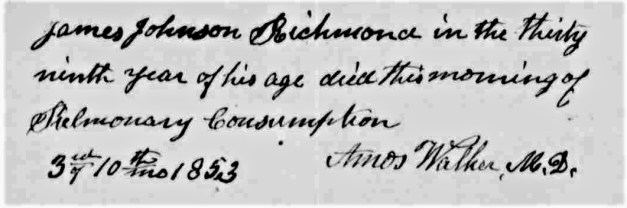
James Johnson Richmond

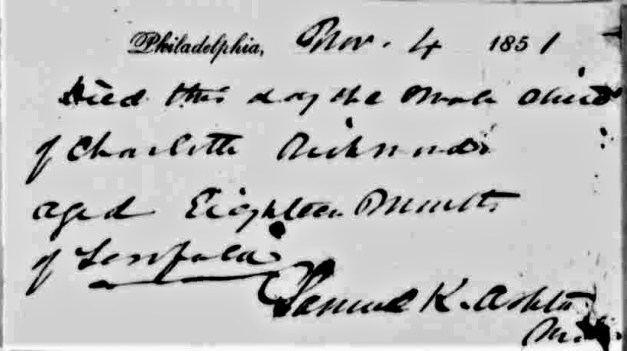
Thirty-nine-year-old James Johnson Richmond died this date, October 3rd, in 1853 of Tuberculosis and was buried at Bethel Burying Ground. Mr. Richmond was married and the father of two boys. He was employed as a shoemaker, according to the 1850 U.S. Census. The mother of the boys was Charlotte Richmond who was thirty-four years old at the time of her husband’s death. She worked as a laundress. The boys were John, who was ten years old, and Peter, who was eight-years-old, when their father passed away. All of the family members were born in Pennsylvania. Sadly, the Richmonds lost an eighteen-month-old son, Robert, in November of 1851 to Tuberculosis.*

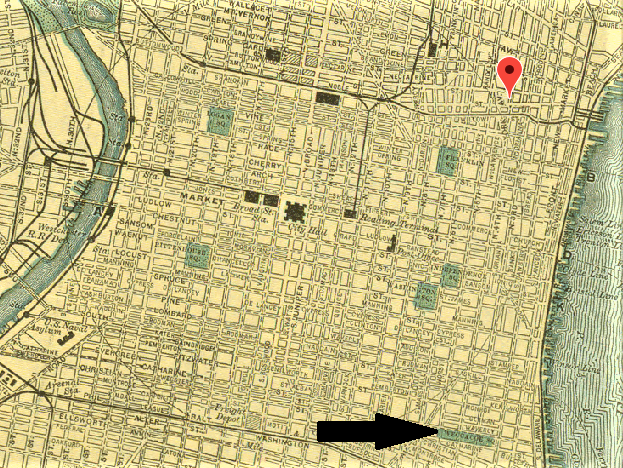
Richmond Map

The red pin illustrates the location of the Richmond home at 417 North 4th Street in the Northern Liberties District of Philadelphia County. The black arrow illustrates the location of Bethel Burying Ground in the southern Southwark District.

The family of six lived in one room in a four-story tenement on North 4th Street. Six years before Mr. Richmond’s death, the 1847 Philadelphia African American Census reports that the family paid $1.75 a month in rent. In 1847, Mr. Richmond worked as a waiter, reportedly earning $7.50 a week which is above average for a Black man in 1847 Philadelphia. This is the last information we have on Mr. or Ms. Richmond’s income and monthly rent. The Richmonds’ neighborhood was dominated by livery stables and warehouses. 

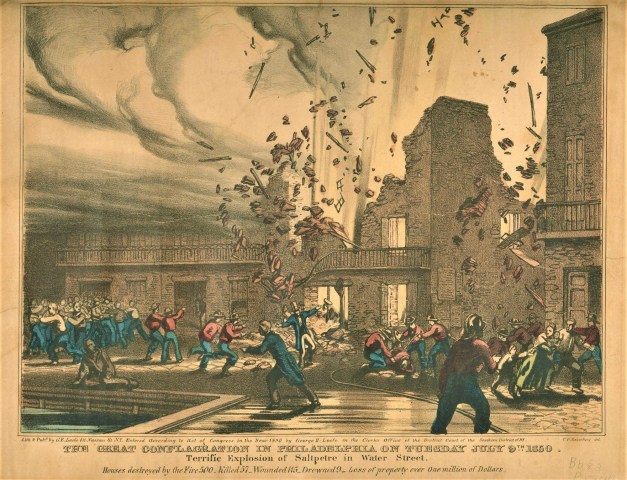
The-Great-Conflagaration-in-Philadelphia-on-Tuesday-July-9th-1856

Library of Congress

To say that the Richmond family was lucky on July 9, 1850 would be an understatement. On the afternoon of that day, a fire broke out in a large warehouse at the intersection of Vine and Water Streets. Volunteer fire companies rallied to the site and the firefighters started putting water on the blaze. Firemen climbed to the roofs of adjoining buildings to try and get an advantage. In an instant, everything changed. A large quantity of gunpowder and saltpeter in the warehouse ignited and caused a massive explosion. Firemen and spectators were incinerated. The volunteers on the roofs burst into flames and were thrown to the ground four stories below. A metal bean was hurdled 100 feet into the air. The hot ambers flew for six blocks in every direction, ultimately destroying three-hundred and fifty-four buildings – homes, businesses, schools, food markets, and public buildings. Men and women whose clothes were on fire jumped into the Delaware River to extinguish the flames. Many drowned.

Dozens were killed and hundreds horribly injured. However, the Richmond home, which was just over six blocks away, survived. 


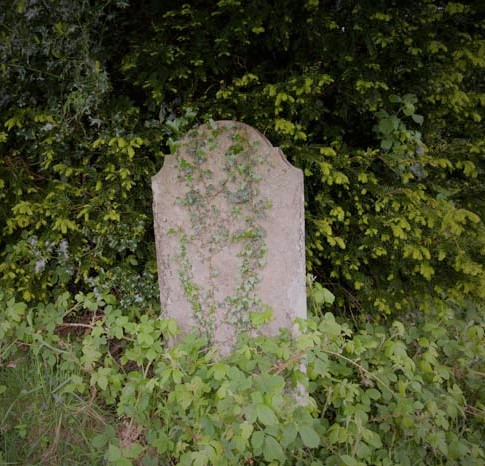
abandonedcemetery

Mr. James Johnson Richmond died on an Autumn day in early October of 1853. His family buried him at Bethel Burying Ground.  

Official Border

*

Charlotte (2)

We know the child’s name was Robert because of the 1850 U.S. Census.

The nine-month-old unnamed Fleming daughter died this date, September 29th, in 1854 and was buried at Bethel Burying Ground.

Posted by Terry Buckalew on September 29, 2019
Posted in: On This date. Tagged: African American burial grounds, African American cemeteries, African American History, African Methodist Episcopal Church, archaeology, Bethel Burying Ground, Mother Bethel, Mother Bethel African Methodist Episcopal Church, Philadelphia, Richard Allen. Leave a comment

Fleming

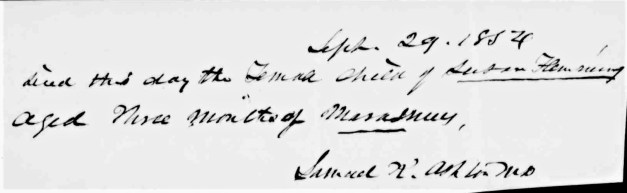
The nine-month-old unnamed daughter of Susan and Horatio Fleming died this date, September 29th, in 1854 of Marasmus* and was buried at Bethel Burying Ground. Ms. Fleming was thirty-two years of age at the time of her child’s death while Mr. Fleming was thirty-nine-years-old, according to the 1850 U.S. Census. She was born in Pennsylvania while he was born in Delaware. They had another child, Elizabeth, who was born in Pennsylvania and was four-years-old at the time of her sister’s death.

Fleming map

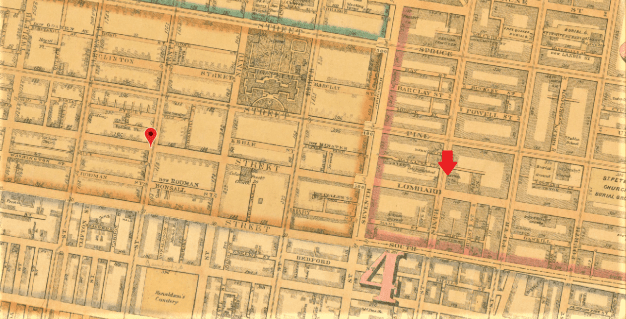
The red pin illustrates the location of the Fleming home in Joy Alley. The red arrow illustrates the location of Bethel A.M.E. Church at 6th and Lombard Streets.

The Fleming family lived in one room on very small Joy Alley, located just off Lombard Street between 10th and 11th Streets. Mr. Fleming worked as a waiter and Ms. Fleming in the home. In 1854, Philadelphians were in the fourth year of a Cholera epidemic. In that year alone, 1,446 adults and children would die from the disease.** It is likely that the Fleming child died from this awful illness.

BOY 2

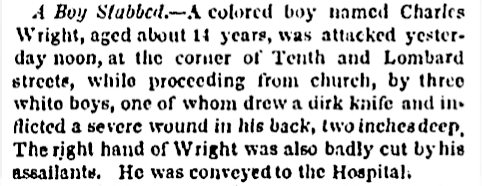
Philadelphia Inquirer, 24 January 1848

In addition to the wave of deadly disease threatening the Black community, there was the ever-present racial violence. There was organized violence in the form of the large white mobs marauding through the Black neighborhoods, killing and burning Black people’s homes, churches and halls. And then there were neighborhood gangs. The vicious white gangs with the names of ‘Killers’ and ‘Stingers’ who would randomly target Blacks walking home from church, work, or the market. The Flemings’ neighborhood was infamous for the latter. In addition, the 10th and Lombard intersection was the site of numerous pitched battles between the notoriously violent white volunteer fire companies that the police couldn’t or wouldn’t break up. If you are an African American man or women in 1854 with gangs of white men outside your door, knifing and shooting each other, you had to fear for your life and the safety of your family every day.***

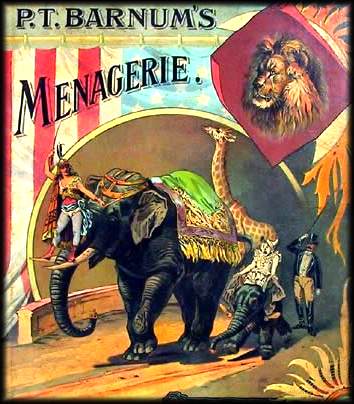
The Flemings buried their daughter at Bethel Burying Ground on a fair-weather day in late September 1854. And bizarrely, on the same day, the P.T. Barnum Circus Menagerie paraded through the city, passing through the 10th and Lombard neighborhood. (Philadelphia Inquirer, 30 September 1854)

barnum1

Official Border

*Marasmus was a general term for not being able to take in and/or utilize nutrition. 

**A Documentary and Bibliographic Study of Philadelphia’s Growth by Susan E.            Klepp.

***Philadelphia Inquirer, 2 May 1849; Public Ledger, 7 October 1850.

One-year-old Levi Palmer died this date, September 28th, in 1849 and was buried at Bethel Burying Ground.

Posted by Terry Buckalew on September 28, 2019
Posted in: On This date. Tagged: African American burial grounds, African American cemeteries, African American History, African Methodist Episcopal Church, archaeology, Bethel Burying Ground, Mother Bethel, Mother Bethel African Methodist Episcopal Church, Philadelphia, Richard Allen. Leave a comment

LEVI PALMER.jpg

One-year-old Levi Palmer died this date, September 28th, in 1849 from “inward weakness of the lungs” and was buried at Bethel Burying Ground. Doctor Stikes, an herbalist, misspelled the last name. He has it as ‘Pamer.’ Census records have it as ‘Palmer.’ 

The child’s father also was named ‘Levi,’ according to the death certificate. Mr. Palmer was born in Delaware and was in his early 30s at the time of his son’s death, according to the 1860 U.S. Census. There is no record of Mr. Levi participating in the 1850 U.S. Census, so we do not have the name of the child’s mother. In the 1860 Census, Mr. Levi is single. I could find no death certificate for the child’s mother.

Palmer map

The red pin illustrates the location of the Palmer home that is next to the vast open-air Second Street Market.

In 1847, the Palmer family lived in a small room at 162 Lombard Street for which they paid $3.33 a month. Mr. Palmer was employed as a hog (brick) carrier for which he may have earned $4-$5 a week. Ms. Palmer worked as a domestic and may have made $1-$2 a week at the most. Little Levi was their only child. 

old-second-street-market1

The Second Street Market was a vital part of the community. The street-wide two-block long structure ran from Pine Street to South Street. The structure contained designated stalls for everything from fresh produce, meats, bread, cakes, and seafood to household items such as brooms and soaps. However, when the sun went down and the vendors closed up shop, the giant shed turned into a clubhouse for violent criminals and savage white gangs determined to eradicate Blacks from the city. This was occurring at their front door. Law enforcement was irrelevant. The Black community was on its own. 

One-year-old Levi Palmer died on a late day in September where the weather was “fair” with a “drying wind.” The temperature rose to 77 degrees in the afternoon from a low of 57 degrees at sunrise. 

Official Border

One-hundred-year-old Rebecca Miller died this date, September 23rd, in 1847 and was buried at Bethel Burying Ground.

Posted by Terry Buckalew on September 23, 2019
Posted in: On This date. Tagged: African American burial grounds, African American cemeteries, African American History, African Methodist Episcopal Church, archaeology, Bethel Burying Ground, Mother Bethel, Mother Bethel African Methodist Episcopal Church, Philadelphia, Richard Allen. Leave a comment

REBECCA MILLER

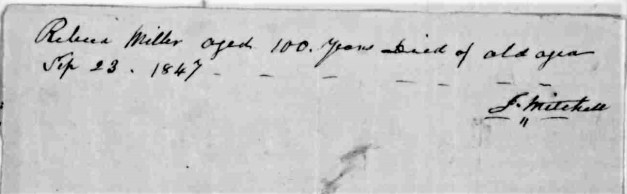
One-hundred-year-old Rebecca Miller died this day, September 23rd, in 1847 of “old age.” The 1837 African American Census shows that she was a widow and worked as a laundress. Ms. Miller was freeborn and worshipped at Bethel A.M.E. Church. There is no indication, from surviving records, that Ms. Miller’s deceased spouse was interred at Bethel Burying Ground. 

Thee Miller Map

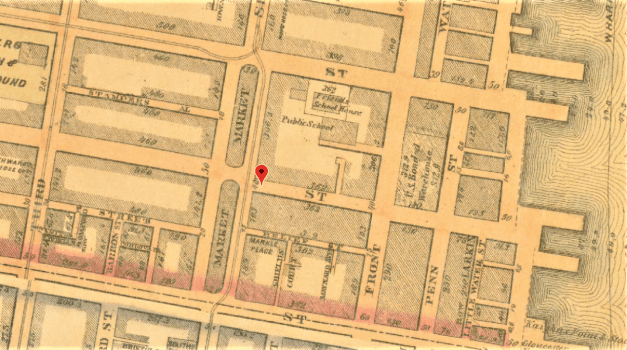
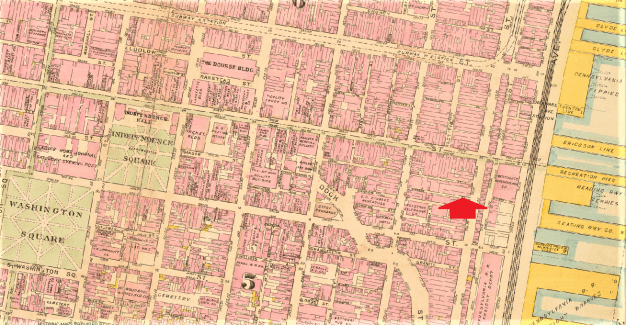
Ms. Rebecca Miller lived at #3 Gray’s Alley (red arrow) located near the intersection of 2nd and Walnut Streets very near the Delaware River. 

For many years, Ms. Miller lived in the rear of #3 Gray’s Alley near 2nd and Walnut. The building was the business address of Samuel Moss and Son, a very prosperous import business. Ms. Miller lived in the back of this building in a converted horse stall or pig pen with dirt floors. Ms. Miller is not listed by name in the 1847 Philadelphia African American Census. However, an educated guess puts her sharing a 10′ x 10′ room at #3 Gray’s Alley with Ms. Anna Brown who was employed as a domestic. It appears that, with the addition of Ms. Brown, Ms. Miller started residing in the building after it had been transformed into a tenement. The 1847 Census shows that the women paid $1.45 a month in rent for their room – that was probably more than Ms. Brown earned in a week. There is no evidence that Ms. Miller was still employed at the time of her death.

PIC One
PIC TWO

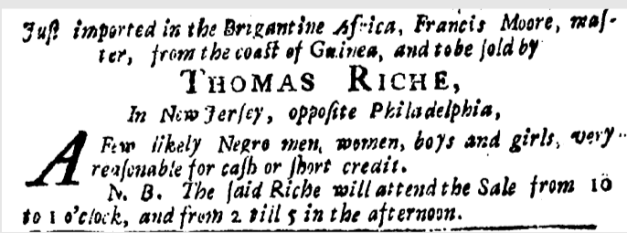
Rebecca Miller was born in Philadelphia in 1747, forty-two years before George Washington was sworn in as president of the new United States of America. To understand what Ms. Miller experienced is unfathomable. In 1763, when she was twenty-six-years-old, did she see or smell the slave ship Africa with its cargo of one-hundred kidnapped Black men, women, and children from the coast of Guinea sail up the Delaware River? Slaver Thomas Riche of Philadelphia would yearly “import” a quantity of rum, Madeira, sugar, and humans. *

Thomas Riche

Pennsylvania Journal, 4 October 1763

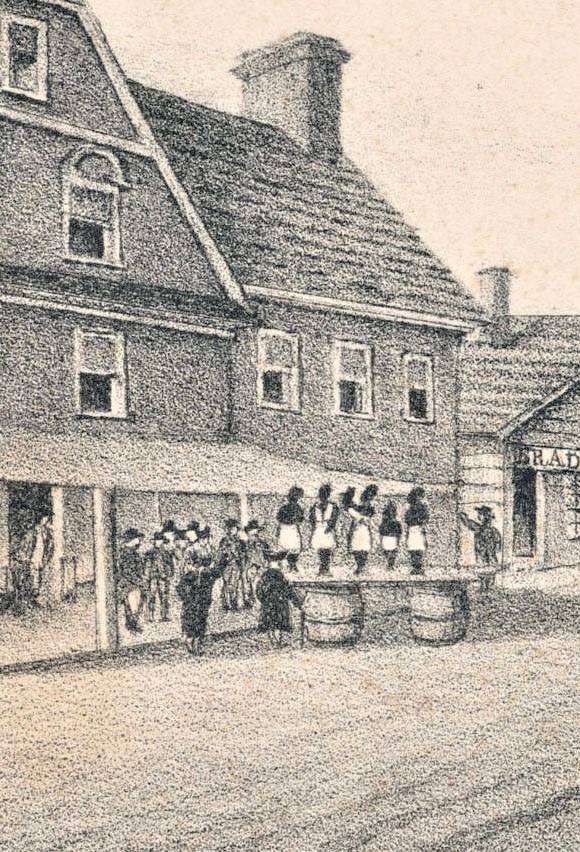
In 1806, when she was sixty-nine years old, did she see the twelve-year-old enslaved Black boy that was “lightly dressed and barefoot” walking in Philadelphia with a locked iron collar around his neck “and from each side of it an iron bow passed over his head?” Did their eyes meet? As a child, did she pass John Coats’ brickyard in the Northern Liberties District and see all the enslaved Black men locked in iron collars with shackles to keep them from escaping? She surely witnessed the slave auctions at the London Coffee House, only several blocks from her home.**

Slavery_London-Coffee-House-e1354626430171

Philadelphia’s slave market

Rebecca Miller, in her 101st year, died on a late September day in 1847 and was buried at Bethel Burying Ground. The day started out chilly and foggy but, as the day went on, the sun came out and the temperature rose to a comfortable seventy-four degrees.

Official Border

*Freedom by Degrees: Emancipation in Pennsylvania and its Aftermath by G. Nash and J. Soderlund, p. 26; Pennsylvania Journal, 4 Oct 1764.

**In 1761-1762, the colonial government of Pennsylvania decided to levy a duty on all kidnapped Africans coming into Port Philadelphia. This was done to stymie the trade. To avoid the extra cost, the slave traders would unload their human cargo in Camden, New Jersey, across the Delaware River from Philadelphia. Those who desired to buy the Africans would travel across and then transport the men, women, and children by ferry to Philadelphia’s slave market. In doing this, they would incur the duty themselves. (Documents Illustrative of the History of the Slave by Elizabeth Donnon, vol. III, pp. 453-455.)

Posts navigation

← Older Entries
Newer Entries →
  • Recent Posts

    • Three dead as church wall falls on this date, May 1st, in 1841.
    • The ten-month-old Baby Colgate died this date, June 20th, in 1847, and was buried at Bethel Burying Ground.
    • Fifty-eight-year-old Rachel Dawson died this date, May 3rd, in 1839, and was buried at Bethel Burying Ground.
    • Twenty-eight-year-old Robert Swails died on this date, March 31st in 1849, and was buried at Bethel Burying Ground.
    • Forty-year-old Jacob “Jesse” Howard died on this date, January 29th, in 1840, and was buried at Bethel Burying Ground.
  • Archives

    • May 2024
    • June 2023
    • May 2023
    • March 2023
    • January 2023
    • December 2022
    • November 2022
    • October 2022
    • September 2022
    • August 2022
    • May 2022
    • April 2022
    • March 2022
    • February 2022
    • January 2022
    • December 2021
    • November 2021
    • October 2021
    • September 2021
    • August 2021
    • July 2021
    • June 2021
    • May 2021
    • April 2021
    • March 2021
    • February 2021
    • January 2021
    • December 2020
    • November 2020
    • October 2020
    • September 2020
    • August 2020
    • July 2020
    • June 2020
    • May 2020
    • April 2020
    • March 2020
    • February 2020
    • January 2020
    • December 2019
    • November 2019
    • October 2019
    • September 2019
    • August 2019
    • July 2019
    • June 2019
    • May 2019
    • April 2019
    • March 2019
    • February 2019
    • January 2019
    • December 2018
    • November 2018
    • October 2018
    • September 2018
    • August 2018
    • July 2018
    • June 2018
    • May 2018
    • April 2018
    • March 2018
    • February 2018
    • January 2018
    • December 2017
    • November 2017
    • October 2017
    • September 2017
    • August 2017
    • July 2017
    • June 2017
    • May 2017
    • April 2017
    • March 2017
    • February 2017
    • January 2017
    • December 2016
    • November 2016
    • October 2016
    • September 2016
    • August 2016
    • July 2016
    • June 2016
    • May 2016
    • April 2016
    • March 2016
    • February 2016
    • January 2016
    • December 2015
    • November 2015
    • October 2015
    • September 2015
    • August 2015
    • July 2015
    • June 2015
    • May 2015
    • April 2015
    • March 2015
    • February 2015
    • January 2015
    • December 2014
    • November 2014
    • October 2014
  • Categories

    • Archaeology
    • BBG History
    • Bethel Burying Ground Name Directory
    • Bethel Burying Ground Timeline
    • Burial services
    • Diseases
    • Documents
    • Freemasonry
    • Ignatius Beck
    • It's a fact
    • Maps
    • Neighborhood
    • Newspaper Articles
    • On This date
    • Photographs
    • Uncategorized
    • Videos
  • Meta

    • Create account
    • Log in
    • Entries feed
    • Comments feed
    • WordPress.com
Blog at WordPress.com.
Bethel Burying Ground Project
Blog at WordPress.com.
  • Subscribe Subscribed
    • Bethel Burying Ground Project
    • Join 48 other subscribers
    • Already have a WordPress.com account? Log in now.
    • Bethel Burying Ground Project
    • Subscribe Subscribed
    • Sign up
    • Log in
    • Report this content
    • View site in Reader
    • Manage subscriptions
    • Collapse this bar
 

Loading Comments...