Bethel Burying Ground Project

Bethel Burying Ground Project

  • ABOUT THE BETHEL BURYING GROUND PROJECT

Fifty-four-year-old Dinah Johnson died this date, May 2nd, in 1854, and was buried at Bethel Burying Ground.

Posted by Terry Buckalew on May 2, 2020
Posted in: On This date. Tagged: African American burial grounds, African American cemeteries, African American History, African Methodist Episcopal Church, archaeology, Bethel Burying Ground, Mother Bethel, Mother Bethel African Methodist Episcopal Church, Philadelphia, Richard Allen. 3 Comments

Dinah Johnson

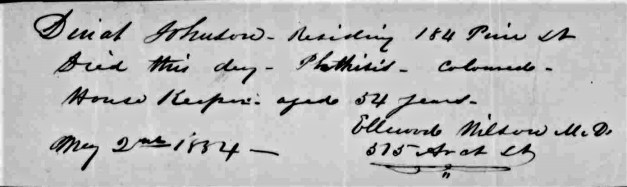
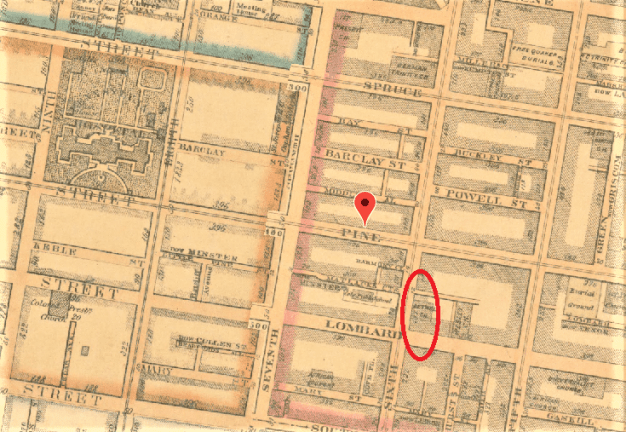
Fifty-four-year-old Dinah Johnson died this date, May 2nd, in 1854 of Tuberculosis and was buried at Bethel Burying Ground. (1) She worked as a laundress and was a native of New Jersey, according to the 1850 U.S. Census. Ms. Johnson lived in a building at 184 Pine Street which was between 6th and 7th Streets. For this, she paid $4 a month in rent. (2) This was a hefty amount for rent. However, the 1847 Census shows that she was living with two other female adults and a female child at this address. Their relationship was not documented. One of the other women worked as a laundress while the other as a seamstress. Three members of this family were not native to Pennsylvania. Four could read and three could write. All the women regularly attended church services and belonged to a beneficial society. 
Screenshot (90)

The red pin illustrates the location of Ms. Johnson’s home. The red circle marks the nearby location of Bethel AME Church.

It is not known how long Ms. Johnson was sick with Tuberculosis. There was generally known to be two types of the illness: “chronic” that could go on for years or “galloping consumption” which would kill in a matter of weeks. No matter which one plagued Ms. Johnson, she probably went to Mr. Zolhekoffer’s drug store on her street corner to purchase the medicines that would help with the violent coughing, diarrhea, and blood-spitting that accompanied the disease. She also may have purchased a compound that would help her sleep for a few hours. According to the Philadelphia Board of Health, Ms. Johnson was one of the 1,394 citizens to die in 1854 due to Tuberculosis of the lungs.
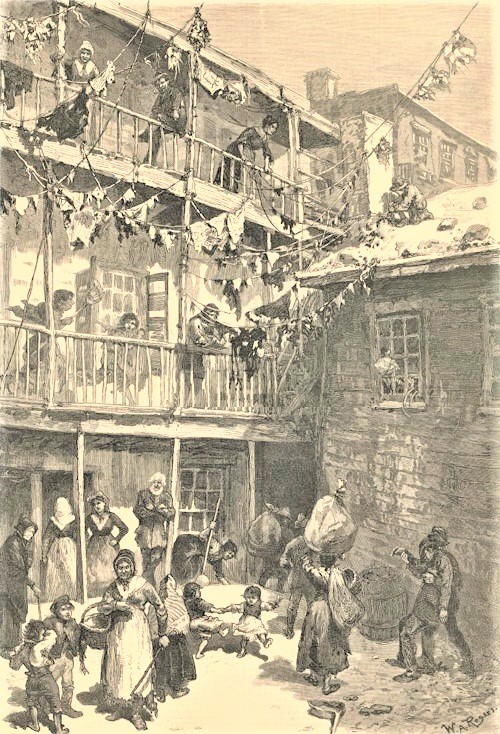
Rear of tenement 6 (2)

With families packed into one or two poorly ventilated rooms, the Tuberculosis bacteria could infect and kill an entire family.

Ms. Johnson died on a early day in May in 1854 and was buried at Bethel Burying Ground.

Official Border

(1) The spelling of Ms. Johnson’s first name was also reported as “Diana.”

(2) The social worker interviewing Ms. Johnson in 1847 reported that “She (Ms. Johnson) probably gains her rent by letting out houses.” I take this to mean she acted as a representative of the tenement owner and managed the rentals for the owner.
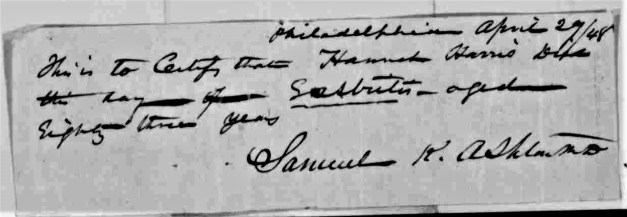
 

Eighty-three-year-old Hannah Harris died this date, April 27th, in 1848 and was buried at Bethel Burying Ground.

Posted by Terry Buckalew on April 27, 2020
Posted in: On This date. Tagged: African American burial grounds, African American cemeteries, African American History, African Methodist Episcopal Church, archaeology, Bethel Burying Ground, Mother Bethel, Mother Bethel African Methodist Episcopal Church, Philadelphia, Richard Allen. Leave a comment

Hannah Harris

Eight-three-year-old Hannah Harris died this date, April 27th, in 1848 of a stomach ailment (Gastritis) and was buried at Bethel Burying Ground. The 1847 African American Census shows that Ms. Harris lived alone in a room at 17 Barley Street for which she paid $2 a month. 

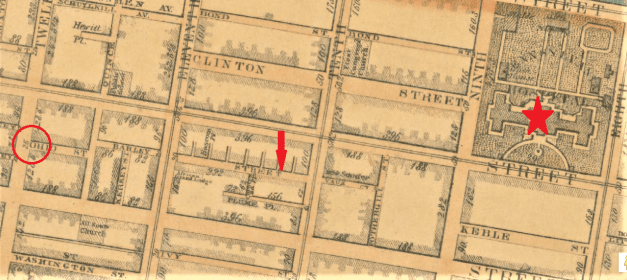
Barley Street was a narrow two-block long thoroughfare. It was home to 57 Black families with a total of 245 individuals, according to the 1847 Census. These individuals were employed in 25 different occupations. The street was located near 10th and Pine Streets. 

BARLET STREET A

The red arrow in the above map illustrates the location of Ms. Harris’ home. The red star indicates the location and proximity of Pennsylvania Hospital, the country’s first hospital. The red circle indicates the future location of the first public school for Black children in Philadelphia.

Also, according to the 1847 Census, Ms. Harris was no longer employed (“past work”). It was also reported she received aid from a private charity and wood for her stove from another charity. The charities likely were the Union Benevolent Association and the Guardians of the Poor, respectively. (1)

Pennsylvania_Gazette_1765-01-17_3

                                                                               TO BE SOLD                                                                                                      “A Likely Negroe Girl, about twelve Years old; she is sold for no Fault” Philadelphia Gazette , June 1, 1765

Pennsylvania_Gazette_1765-06-06_5

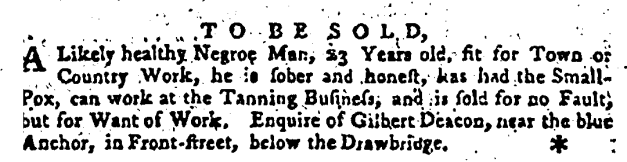
                                                                          TO BE SOLD                                                                                              “A Likely healthy Negroe Man, 23 Years old, fit for Town or Country Work, he is sober and honest, has had the Smallpox . . . he is sold for no Fault but for Want of Work.”        Pennsylvania Gazette , June 6, 1765

Ms. Harris was born in Philadelphia in 1765. As the above advertisements illustrate, slavery plagued the city at that time. Black men, women, and children were being sold on Market Street and Front Street in taverns and coffee houses. Two years after Ms. Harris was born, the importation of enslaved Blacks into the colony was prohibited. Was Ms. Harris born to enslaved parents or parents who were free of bondage? 

Ms. Harris died on a clear day in late April after a long illness and was buried at Bethel Burying Ground.

Official Border

(1) “Sixteenth Annual Report of the Benevolent Association,” Philadelphia Inquirer, 28 Oct 1847.

Thirty-four-year-old William Carr died this date, April 12th, in 1847 and was buried at Bethel Burying Ground.

Posted by Terry Buckalew on April 12, 2020
Posted in: On This date. Tagged: African American burial grounds, African American cemeteries, African American History, African Methodist Episcopal Church, archaeology, Bethel Burying Ground, Mother Bethel, Mother Bethel African Methodist Episcopal Church, Philadelphia, Richard Allen. Leave a comment

WILLIAM CARR

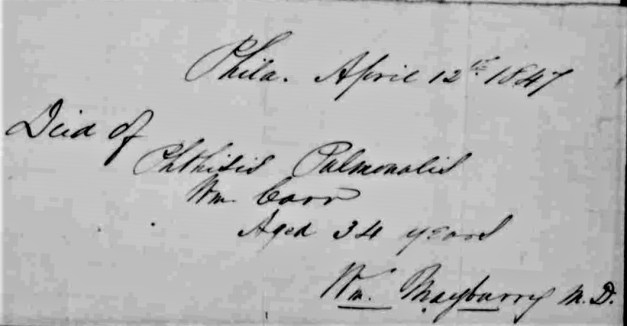
Thirty-four-year-old William Carr died this date, April 12th, in 1847 from Tuberculosis and was buried at Bethel Burying Ground. Mr. Carr was employed as a waiter earning $3 a week, according to the 1847 Philadelphia African American Census. His spouse, Patience Carr, worked as a day worker. They had a daughter, Ellen Carr, who was 17 years old at the time of her father’s death. She was employed as a seamstress. (1)

The Carr family lived in one room at 55 Currant Alley for which they paid $3.75 a month. Ninety-six Black families lived in the densely packed alley. These families had a staggering total of three hundred twenty-one family members, according to the 1847 Census. The Census also showed that the adults living on Currant Alley were solidly working class, having a wide range of laboring and domestic jobs to which African American men and women were restricted. 

There are eleven other biographical sketches on this website for Currant Alley residents who are buried at Bethel Burying Ground.

warnock-street

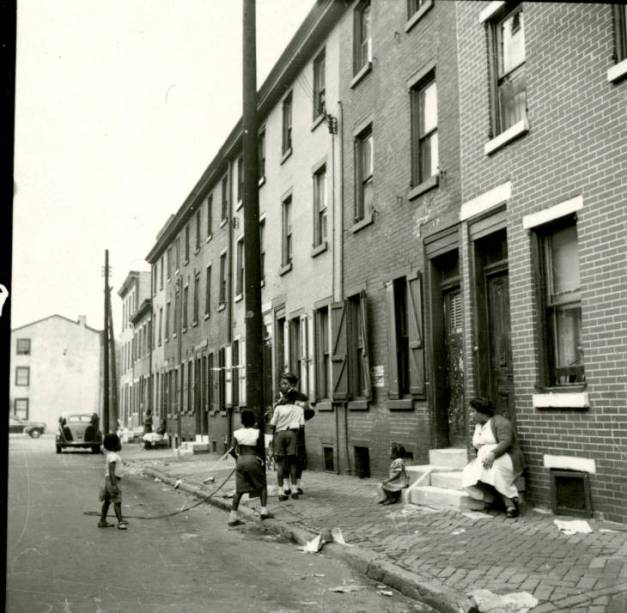
Currant Alley in 1926, now named Warnock Street.

Mr. Carr may have worked for the caterer located only two doors away from his home at #11 Currant Alley. Mr. William Davis operated “one of the most fashionable & largest Ice Cream houses in the city.” In addition to ice cream, the menu included “Jellies, Blancmange, Cakes, Tarts, and Pies of every variety.” Also offered were “The services of several good waiters for Balls, Picnics, and Private Parties . . . ” (2)
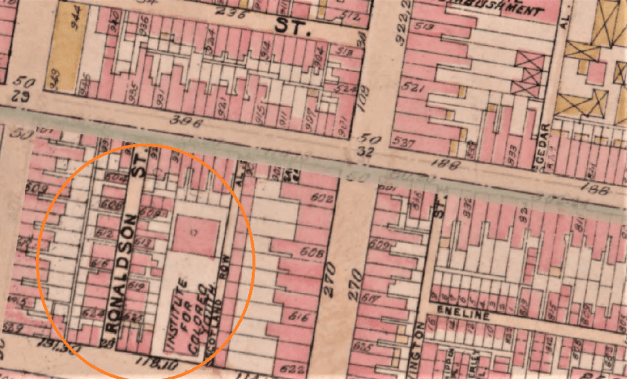
Mr. Davis was following in the footsteps of another Philadelphia Black man, Augustus Jackson, who invented a way for ice cream not to melt so quickly – he added salt! Before coming to Philadelphia, he served as a White House cook in the 1820s for President James Madison. Mr. Jackson lived on Goodwater Street, now St. James Place, between 7th and 8th Streets, adjacent to Washington Square. When Mr. Jackson died his daughter took up the business. (3)

abb7bf0d9cda11408cc25bbc085acfe7

Augustus Jackson

Mr. Carr was one of the 876 Philadelphians who succumbed to Tuberculosis in 1847. He died on an early Spring day and was buried at Bethel Burying Ground. 

Official Border

(1) Ellen Carr-Harris died in July of 1861 of Bronchitis and was buried at Olive Cemetery.

(2) Public Ledger, 9 June 1845.

(3) https://en.wikipedia.org/wiki/Augustus_Jackson

The four-year-old child of Hezekiah and Henrietta Hooper died this date, April 11th, in 1853 and was buried at Bethel Burying Ground.

Posted by Terry Buckalew on April 11, 2020
Posted in: On This date. Tagged: African American burial grounds, African American cemeteries, African American History, African Methodist Episcopal Church, archaeology, Bethel Burying Ground, Mother Bethel, Mother Bethel African Methodist Episcopal Church, Philadelphia, Richard Allen. Leave a comment

Hooper

The four-year-old child of Hezekiah and Henrietta Hooper died this date, April 11th, in 1853 of Tabes Mesenterica and was buried at Bethel Burying Ground. Tabes Mesenterica is a progressive wasting of the intestines marked by anemia, dramatic swelling of the abdomen, diarrhea, fever, and pain. Tabes Mesenterica is a form of Tuberculosis.

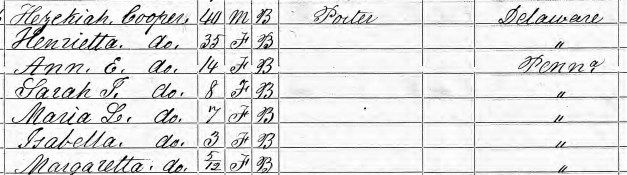
After studying several censuses, multiple city directories, and death certificates, I believe Dr. Ashton’s note contained an error. I believe that the child that died was four-year-old Margaretta Hooper. Below is the family’s entry for the 1850 U.S. Census. The census taker also was in error by entering the family’s last name as “Cooper” instead of “Hooper.” This error appears in other documents. It happened enough to make me wonder if Mr. Hooper did it on purpose for some unknown reason. 

Hooper 1850

The seven members of the Hooper family lived in one room at #7 Hurst Street for which they would have paid $3 – $4 a month. Mr. Hooper, a porter, may have earned between $3 – $5 a week, depending on the volume of work. It appears that Ms. Hooper had her hands full with five children at home. It is also a possibility that she lost a child or two, given the years between Ann and Sarah. There are no surviving records that indicate that they were buried at Bethel Burying Ground.

HURST STREET

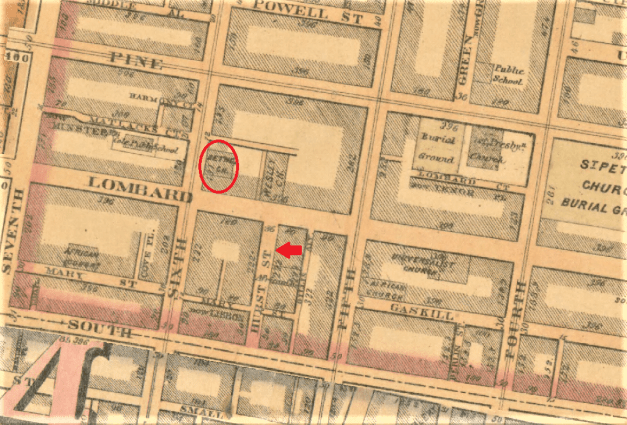
In the above map, the red arrow illustrates the location of the Hoopers’ home on Hurst Street. The red circle indicates the Bethel AME Church and its close proximity to the Hoopers’ residence.  In the early 1850s, the Hoopers would have found the church was not only the center of worship for the religion founded by Richard Allen, but it was also a community center. In addition to being the home of a school for children and adults, it provided space for lectures on abolition, the Fugitive Slave Law, and classes for women by women on the importance of female anatomy, physiology, and health. It was also home to temperance societies, beneficial societies, and fundraisers for political prisoners.

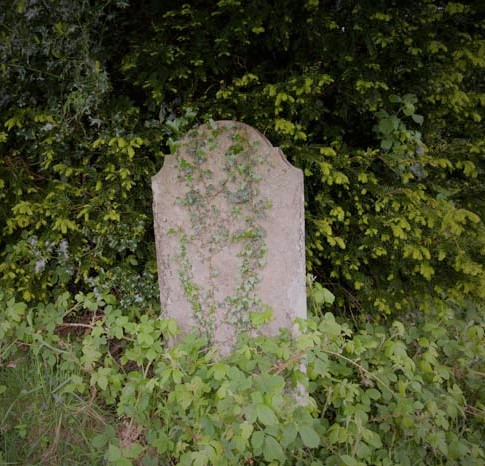
abandonedcemetery

Henrietta and Hezekiah Hooper lost their four-year-old daughter Margaretta on an early Spring day in April of 1853. They buried her at Bethel Burying Ground.

Official Border


Fifty-two-year-old Rachel Todd died this date, April 6th, in 1852 and was buried at Bethel Burying Ground.

Posted by Terry Buckalew on April 6, 2020
Posted in: On This date. Tagged: African American burial grounds, African American cemeteries, African American History, African Methodist Episcopal Church, archaeology, Bethel Burying Ground, Mother Bethel, Mother Bethel African Methodist Episcopal Church, Philadelphia, Richard Allen. Leave a comment


R. TODD

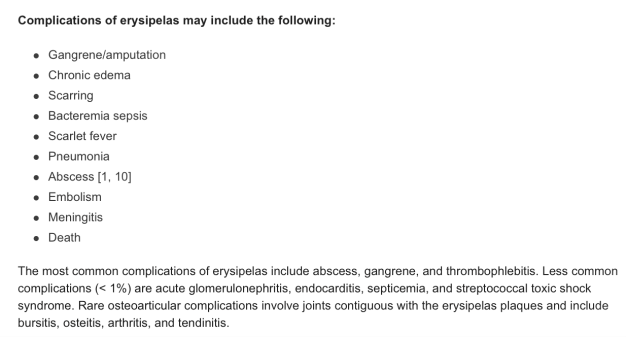
Fifty-two-year-old Rachel Todd died this date, April 6th, in 1852 of Erysipelas and was buried at Bethel Burying Ground. Dr. Chamberlain wrote that Ms. Todd was “about 60 years old.” However, Ms. Todd reported to the 1850 U.S. Census taker that she was fifty-years-old. Her cause of death, Erysipelas, is a bacterial infection of the skin. It is the same bacteria that causes strep throat. As you can see from the information below, Ms. Todd’s suffering was very painful. Today the disease is simply treated with antibiotics and can be completely cured.

IMG-8193

The 1847 Philadelphia African American Census and the 1850 U.S. Census both show that Ms. Todd lived at 23 Middle Alley with two males. Aaron Todd was twenty-nine-year-old at the time of Ms. Todd’s death. Both he and Ms. Todd were born in Maryland. In addition, twenty-one-year-old John Todd lived at the address. He was born in Pennsylvania. The two men both were employed as waiters. Ms. Todd reported that she took in laundry when she was physically able. This statement was made three years before her death. The relationship of the men to Ms. Todd was not reported.

Ms. Todd reported that she was born enslaved and $50 was paid for her liberation. The average value of an enslaved Black man in Maryland between the ages of 15 and 45 in the early 1800s was $400-$450. The value of a Black woman was $200-$250. One logically could conclude that Ms. Todd was an infant (circa 1800) if only $50 was paid for her freedom. (1)

The three members of the Todd family lived in one room at 23 Middle Alley for which they paid $2.00 a month in rent. Middle Alley ran from 6th to 7th Streets between Spruce and Pine Streets. It is now called Panama Street. Middle Alley had a long history of violence, brothels, speakeasies and crushing poverty. 

middle-alley-2

The red arrow illustrates the location of Middle Alley right above Pine Street.

panama-street

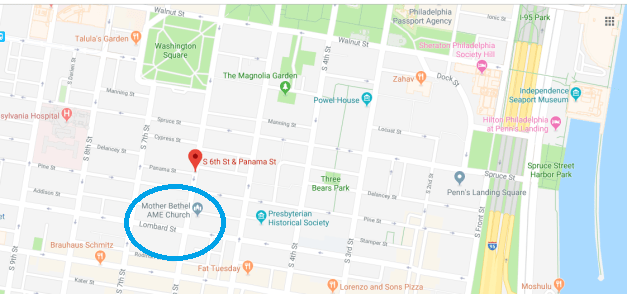
The red pin illustrates the location of Middle Alley now Panama Street. The blue circle illustrates the close proximity of Bethel AME Church.

Although a neighborhood plagued with many negatives, the African American residents of Middle Alley were, for the vast majority, industrious working-class families. In 1847 there were seventy-six families for a total of a staggering 239 individuals living on the small narrow thoroughfare. Those who were able to work were employed in twenty different occupations including nurse, barber, seaman, muffin baker, dressmaker, seamstress, pastry cook, and musician. There were a remarkably high number of sick individuals and elderly widows recorded by the census taker living along the alley. 

Negro woman-NY Pu Li Digital collection

From the New York Public Library Digital Collection

Ms. Todd died on an early Spring day in April of 1852. Her family buried her at Bethel Burying Ground.

Official Border

(1) “Estimates of the value of slaves, 1815.” Available at https://babel.hathitrust.org/cgi/pt?id=loc.ark:/13960/t1wd3zp99&view=1up&seq=3.

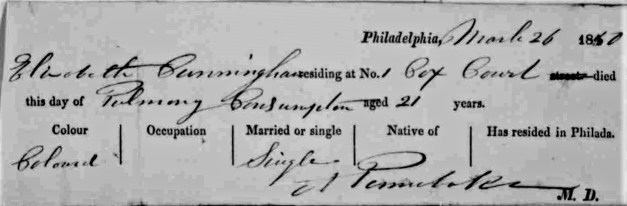
Twenty-one-year-old Elizabeth Cunningham died this date, March 26th, in 1850 and was buried at Bethel Burying Ground.

Posted by Terry Buckalew on March 26, 2020
Posted in: On This date. Tagged: African American burial grounds, African American cemeteries, African American History, African Methodist Episcopal Church, archaeology, Bethel Burying Ground, Mother Bethel, Mother Bethel African Methodist Episcopal Church, Philadelphia, Richard Allen. 2 Comments


Cunningham

Twenty-one-year-old Elizabeth Cunningham died this date, March 26th, in 1850 of Tuberculosis and was buried at Bethel Burying Ground. She was a single woman who was employed as an in-service domestic, according to the 1847 Philadelphia African American Census. Elizabeth lived with her widowed mother, Mary Cunningham, who was forty-five-years-old at the time of her daughter’s death. It appears that Mary was born enslaved in Maryland, according to the 1847 Census. She had been widowed since at least 1840-1841, as described in city directories.

Screenshot (75)

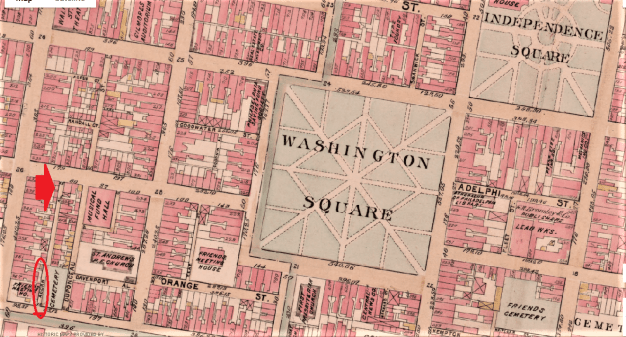
Elizabeth and Mary Cunningham rented a room at #1 Cox Alley (red arrow above) for $2 a month which may have taken the women a couple of weeks to earn. There were not a lot of residences on Cox Alley. The majority of the structures were the back of businesses that fronted other streets.

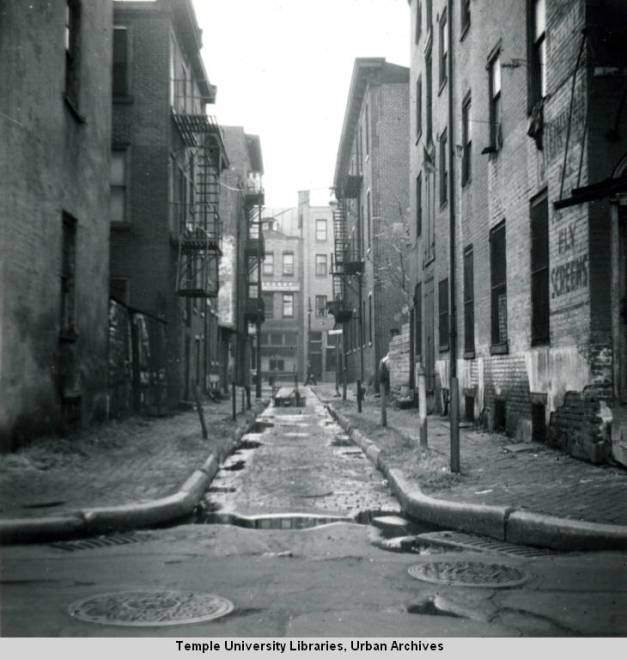
darien-1

In this 1925 photograph, you can see the residences at the other end of the street. The thoroughfare is now called South Darien Street.

In early October 1849, Elizabeth and Mary Cunningham endured a terrifying life-threatening experience that few of us can imagine. It was the third day of a major organized anti-Black riot by Irish gangs with the goal of running all Blacks out of the city of Philadelphia. The Cunninghams, from their home in Cox Alley, would have seen the towering flames and smelled the suffocating smoke from the torching of the California House, only three blocks away. The California House was a Black-owned tavern and hotel that posed a threat to Irish gang rule in that part of the Moyamensing District. 

The murderous thugs set a wagon on fire and rammed it into the front of the hotel. Immediately, bullets and stones came flying from the upper windows down on the arsonists. The police and fire companies supposedly were driven away by the guns, knives, and clubs of the surging white crowd. With this, the Black community struck back and a crowd of Black men and women engaged in a running battle and fought with fists, sticks, and cobblestones. 

During the battle, the terrorists cut gas lines in the hotel to speed up the blaze which had engulfed the upper floors of the hotel and adjoining buildings that included a Black church. The neighborhood was on fire. The bell atop Independence Hall began to “ring violently” and people throughout the city believed the city was “doomed.”

The fighting and fires lasted all night. The white mob put two fire companies “out of business.” Their equipment was destroyed and the firemen were seriously injured. With the city policemen overmatched, U.S. Army soldiers were eventually brought in to restore order. It helped that they brought two cannons with them. But the damage was already done. The official count was five dead and possibly hundreds injured. A Black neighborhood was in ashes and the Philadelphia Black community terrorized and put in fear of their lives – again. (1)

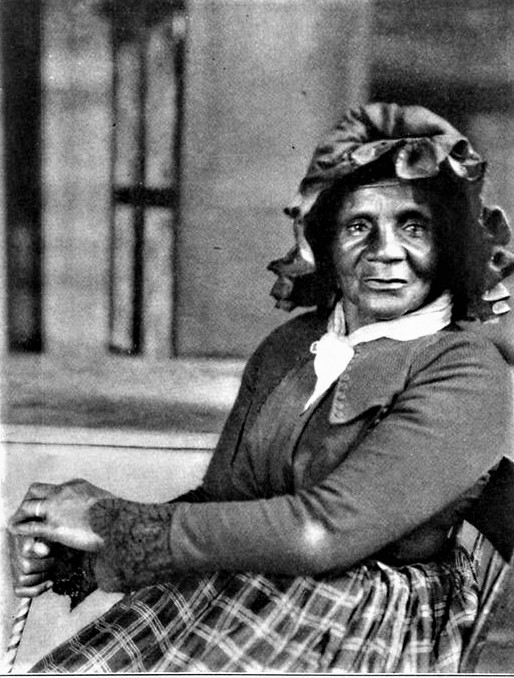
Young negro woman

Elizabeth Cunningham died on a clear March day where the temperature rose to 42 degrees. Her mother buried her at Bethel Burying Ground.

Official Border

(1) Evening Public Ledger, 10 August 1917.


Two-year-old John Conner died this date, March 14th, in 1853 and was buried at Bethel Burying Ground.

Posted by Terry Buckalew on March 14, 2020
Posted in: On This date. Tagged: African American burial grounds, African American cemeteries, African American History, African Methodist Episcopal Church, archaeology, Bethel Burying Ground, Mother Bethel, Mother Bethel African Methodist Episcopal Church, Philadelphia, Richard Allen. Leave a comment

JOHN CONNOR

JOHN CONNER

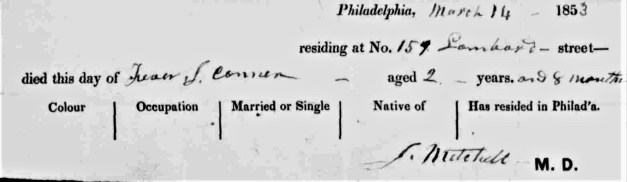
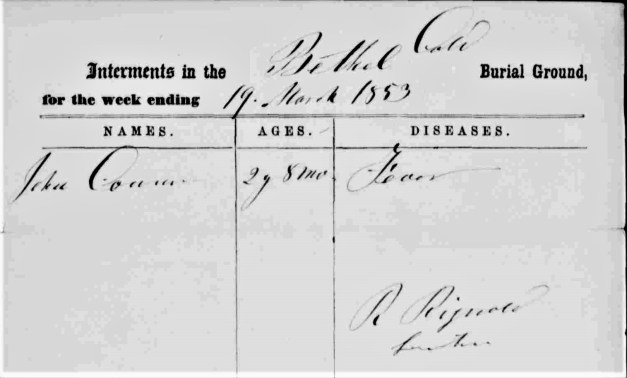
Two-year-old John Conner died this date, March 14th, in 1853 of “Fever” and was buried at Bethel Burying Ground. After researching census records, city directories, and death certificate records, I believe that the child’s parents may have been fugitives who were given shelter at a Bethel Church property. There are certainly other possibilities but a self-liberated Conner family is a likelihood. 

Screenshot (70)

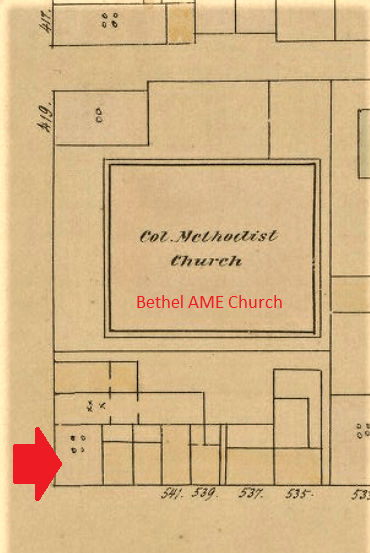
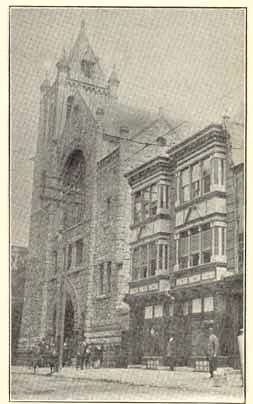
The address on the child’s death certificate is a four-story tenement on the northeast corner of 6th and Lombard Streets, adjacent to the Bethel African Methodist Episcopal Church. The red arrow indicates the location of the building.

bethel pic

The above 1916 photograph of Bethel Church starts to show the adjacent buildings. The photograph does not show the corner property where the Conner family resided. According to newspaper advertisements, there were businesses on the ground floor. One of them was a popular cigar and tobacco shop. 

Official Border

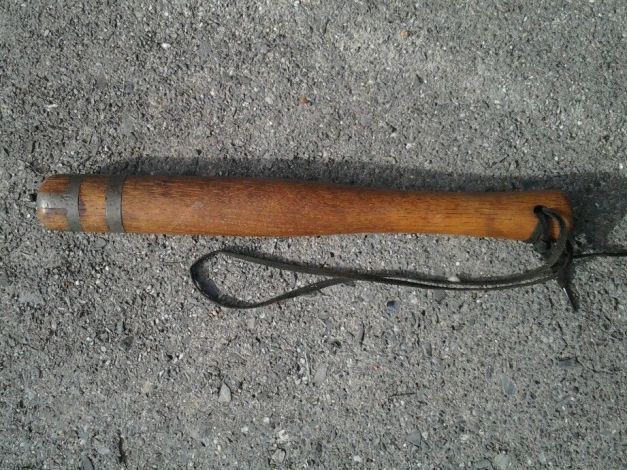
mace1

Three months after the death of two-year-old John Conner, the remaining members of the Conner family may have been alarmed at what was happening outside their building. The whacking thud of a mace (photo above) against a human skull was echoing in the street. A city watchman, Joseph Glenn, had dragged an unidentified Black man from his home at 6th and Lombard into the street and proceeded to beat him with a mace. The newspapers reported that there was no known reason for the “cruel and inexcusable . . . unprovoked and outrageous” deadly assault. The victim was not identified by name. 

Joseph Glenn was arrested and, at his trial, he was found guilty. However, the judge, citing “former good character,” only gave the racist thug a small fine. There was no mention of the medical condition of the “colored man.”

The judge knew all about Glenn’s “character.” Only several weeks previous to this sentencing, Glenn was in his courtroom. He was a member of a gang that beat another Black man unmercifully. Glenn also got off for that offense. It appears that he was a professional thug/enforcer for the city. After years of being a constable, he was rewarded by receiving the cushy patronage position as the manager of Rittenhouse Square. (1)

A Black man was dragged out of his home in broad daylight in the center of the Black business, religion and culture hub of the city. He is beaten close to death by a racist thug who is someone that is supposed to be protecting the community. 

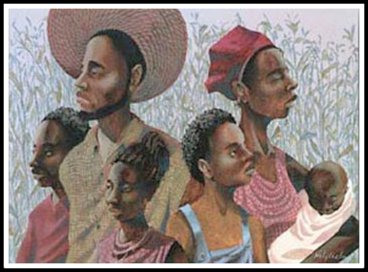
black-family

It is impossible to imagine what the Conner family is feeling after just losing their baby son and then having to endure the terror from the level of violence and threat right outside their window. One can only hope that the memory of Baby John was a blessing.

Official Border

(1) Philadelphia Inquirer, 16 June 1853; Sunday Dispatch, 3 July 1853; Philadelphia Inquirer, 2 March 1865.

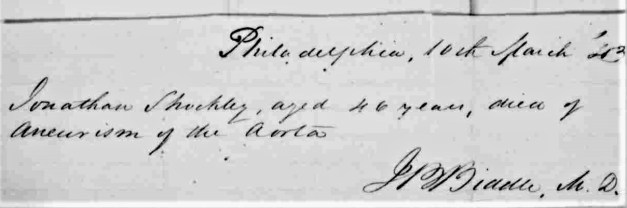
Forty-six-year-old Jonathan Shockley died this date, March 10th, in 1843 and was buried at Bethel Burying Ground.

Posted by Terry Buckalew on March 10, 2020
Posted in: On This date. Tagged: African American burial grounds, African American cemeteries, African American History, African Methodist Episcopal Church, archaeology, Bethel Burying Ground, Mother Bethel, Mother Bethel African Methodist Episcopal Church, Philadelphia, Richard Allen. Leave a comment

SHOCKLEY

Forty-six-year-old Jonathan Shockley died this date, March 10th, in 1843 of a heart attack and was buried at Bethel Burying Ground. Mr. Shockley was employed as a waiter and his spouse Catharine Shockley worked as a cook after her husband’s death. Previously, she was self-employed as a laundress. She was twenty-nine or thirty-years-old at the time of her husband’s death, according to her death certificate in 1877. Jonathan and Catharine Shockley both were born enslaved in Maryland. Both were liberated through manumission, according to the 1838 Philadelphia African American Census. 

In the 1847 Philadelphia African American Census, Ms. Shockley was identified as a single mother with three daughters. Two of them were in service and lived at their employers’ homes. The third daughter was living with her mother and was working as a waitress. Ms. Shockley was earning $2 a week as a cook. She paid $2 a month for their room on Emerline Street. All the women could read and write and they attended church services regularly.

Prosperous Alley

At the time of Mr. Shockley’s death, the family lived at 23 Prosperous Alley, illustrated by the red circle above. They paid between $2.50 – $3.50 a month for the rental of one room. Mr. Shockley would have earned approximately $3 – $5 a week while Ms. Shockley may have earned $0.50 – $1.00 a week, depending on the amount of business he had each week.

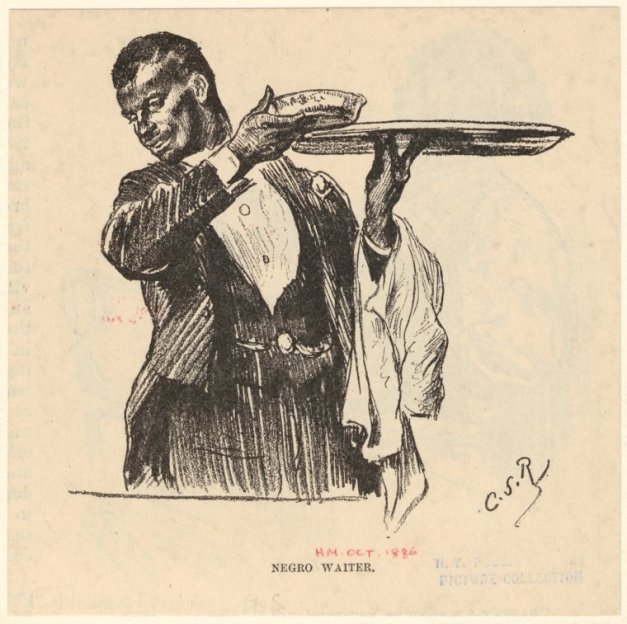
Negro Waiter

“Negro waiter,” The New York Public Library Digital Collections.

There were approximately five hundred Black men employed as a waiter in Philadelphia, according to the 1847 Philadelphia African American Census. They occasionally were categorized as “public” or “private,” with the latter referring to those who were employed in a private home.  

The Shockley family physically survived the deadly anti-African American riots of the Summer of 1842. The murders, assaults, and the destruction of Black homes and churches led to a large percentage of African American to just pack up and leave the most racist city in the north. One estimate of the loss was close to 25% of the Black population.

large

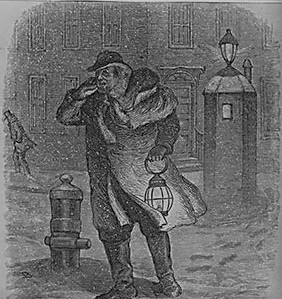
Mr. Shockley died on a cold day in March. “It commenced snowing early in the morning and continued till it was about half an inch when it turned to rain which became the order of the day for the remainder of it.” (1) Mr. Shockley was buried at Bethel Burying Ground.

Official Border

(1) North American, 1 April 1843.

Eighty-seven-year-old Amelia Turpin died this date, March 8th, in 1851 and was buried at Bethel Burying Ground.

Posted by Terry Buckalew on March 8, 2020
Posted in: On This date. Tagged: African American burial grounds, African American cemeteries, African American History, African Methodist Episcopal Church, archaeology, Bethel Burying Ground, Mother Bethel, Mother Bethel African Methodist Episcopal Church, Philadelphia, Richard Allen. Leave a comment

AMELIA TURPIN

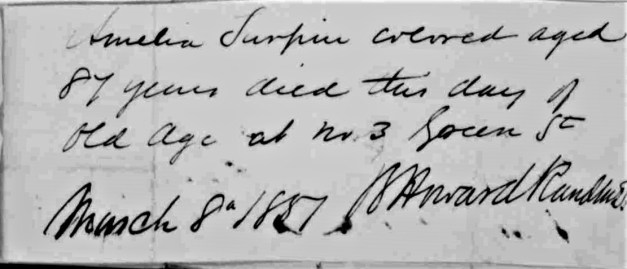
Eighty-seven-year-old Amelia Turpin died this date, March 8th, in 1851 of “old age” and was buried at Bethel Burying Ground. The 1850 U.S. Census shows that Ms. Turpin had a roommate. She was Hannah Baker who was fifty-four-years-old at the time of Ms. Turpin’s death. She was born in Pennsylvania, while Ms. Turpin was born in South Carolina. There was no occupation/employment mentioned for either woman.

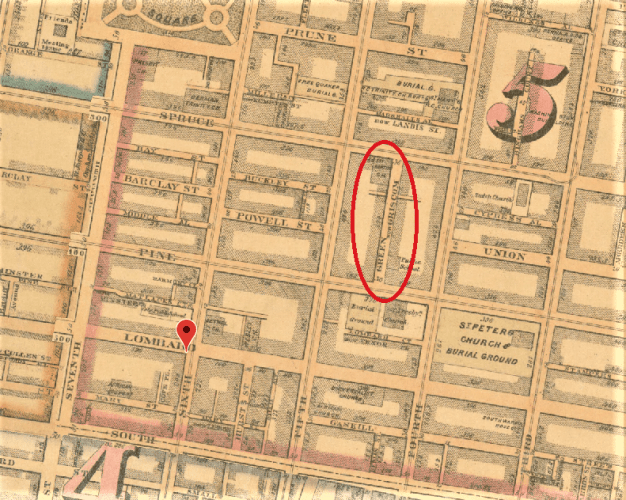
GREEN STREET

Ms. Turpin lived at #3 Green Street, near the intersection of 4th and Spruce Streets. In the above map, Green Street is circled in red. The red pin illustrates the location of Bethel A.M.E. Church at 6th and Lombard Streets. 

Green Street was a crowded neighborhood of Black working-class and poor. The 1847 African American Census registered forty-two families on Green Street with a total of 145 individuals who were employed in the following occupations: Barber, Dressmaker, Domestic, Laborer, Seamstress, Steward, White Washer, Laundress, Hat Dryer, Seaman, Coal Heaver, Porter, Waiter, Clothes Dealer, Cake Maker, and Boot Maker. There were many large families, some with three generations living under the same roof. The 1847 Census reported that up to 50% of Black Philadelphians were formerly enslaved!

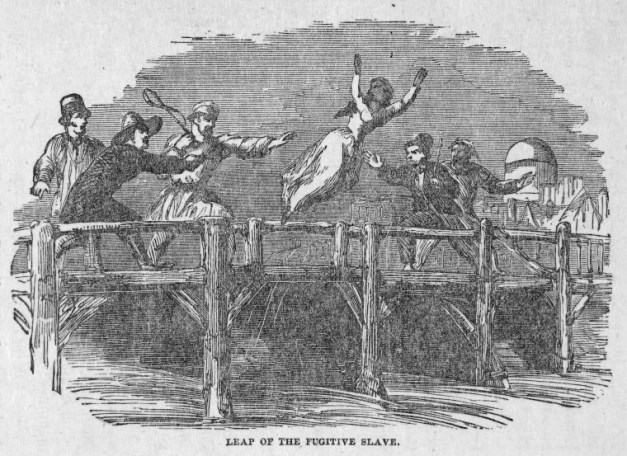
Leap of the Fugitive Slave

“Leap of the Fugitive Slave”: Schomburg Center for Research in Black Culture, Manuscripts, Archives, and Rare Books Division.

On the day that Ms. Turpin died, a Black woman and her son were brought to Philadelphia to appear before the federal Fugitive Slave Commission to determine if they were self-liberated. She gave her name as Hannah Dellam and her son’s as Henry Dellam. The slave catchers swore that their names were Helen and Dick from the plantation of James Perdue of Baltimore County, Maryland. Ms. Dellam stated she was forty-years-old and had given birth to seven children, only three of whom were still living. She also was pregnant and due to deliver any day. Henry Dellam was approximately twelve years old.  The draconian 1850 Fugitive Slave Law was enacted the year before. It granted free rein to slave catchers for hire to roam the northern states and kidnap Black men, women, and children off the streets, out of their beds and to send them back to the whip and the field. This tragedy occured regardless of whether they were actually the formerly enslaved or not.

Ms. Dellam and her son were represented by capable abolition and anti-slavery lawyers in Philadelphia who were responsible for the successful legal representation of scores of self-emancipated African-Americans. However, in this case, the evidence overwhelmingly was in favor of the slavers and, after several days of testimony, the heavily pregnant woman and her son were transported back to Maryland. When the child Henry Dellam was asked why he ran away from the plantation, he stated that he was tired of being tied up and of being whipped. (1)

Official Border

Ms. Turpin died on a snowy day in early March where the temperature did not rise above freezing until later in the afternoon. The day before was a day filled with sleet and snow. 

Official Border

(1) Pennsylvania Freeman, 13 March 1851; Sunday Dispatch, 9 March 1851; Albany Evening Journal (NY), 11 March 1851.

Fifteen-month-old Samuel Lee died this date, March 1st, in 1840 and was buried at Bethel Burying Ground.

Posted by Terry Buckalew on March 1, 2020
Posted in: Uncategorized. 1 Comment

Samuel Lee

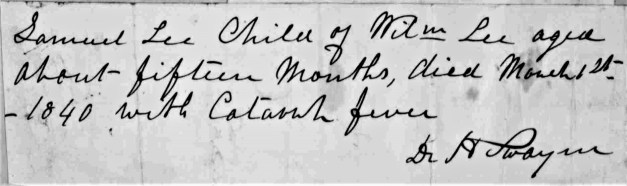
Fifteen-month-old Samuel Lee died this date, March 1st, in 1840 of Catarrh Fever and was buried at Bethel Burying Ground. ‘Catarrh’ referred to inflammation of the air passages. Death likely was due to pneumonia. The child’s parents were William and Sarah Lee. William was 37 years old and was born in New Jersey.  Sarah was 36 years old and was born in Pennsylvania, according to the 1850 U.S. Census. They had two other children, Elisabeth (7y) and William, Jr. (5y), at the time of Samuel’s death.  Both were born in Pennsylvania. 

Rolandson Street

When the Lee family lost baby Samuel, they lived on Tenth Street below Fitzwater (yellow arrow). The family of five would have been living in one room, paying approximately $3 a month in rent. William, Sr. worked as a porter and likely earned around $5 a week. Sarah Lee was self-employed, taking in washing and ironing, and may have made $1-$2 a week, depending on the business. The red arrow illustrates the location of the family in 1847 on Ronaldson Street. The red circle marks the location of Bethel Burying Ground.

According to the 1847 Philadelphia African American Census, the family was doing comparatively well financially. Their personal property was valued at $500 or $15,700 in modern currency. They were also paying $8 a month for rent which was comparatively extremely high and may mean that they were renting an entire rowhouse. 

Institute for Colored Youths

Ronaldson Street was next to the renowned Institue for Colored Youths, illustrated by the orange circle. (1)

In the 1840s Ronaldson Street, along with Rodman Street and Washington Street, was on its way to becoming well known for its “neat and genteelly furnished three-story brick houses owned and occupied . . . almost entirely by colored people.”(2) In 1847, Ronaldson Street was home to the Black middle class. On the same block as the Lee family were two Black ministers. Rev. Benjamin Templeton was pastor of the Presbyterian mission church in St. Mary’s Street and the Rev. Jeremiah Durham of Bethel African Methodist Episcopal Church. Both men were highly respected in the Black communities. 

The race riots in Philadelphia during the 1800s are well-known. The daily street attacks on Black men, women, and children are not as well known. On December 13th in 1847, there was a vicious attack on Ronaldson Street that was clearly an assassination attempt. Rev. Benjamin Templeton was walking to his church to hold his weekly Sunday worship service. Every Sunday for the last several years, he walked the same path to attend to his congregation. On this Sunday morning, he was attacked by three men and received severe head injuries after being assaulted with paving stones. The newspapers reported that the attackers were members of the Moyamensing Hose Company, a volunteer fire company known for its relationship with the local gang called the Killers. The police arrested a man who was later released. No one was ever charged with this crime. Rev. Templeton returned to his duties after a long convalescence. (3/4)

Fifteen-month-old Samuel Lee died on a clear day in early March where the temperature at sunrise was 31 degrees and only rose to 35 degrees during the day.

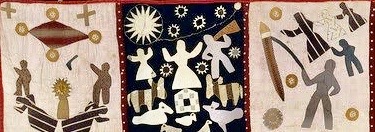
QUILT

These are three panels are from a quilt made by Harriet Powers, an enslaved woman and folk artist from Georgia.

Official Border

(1) The Institute for Colored Youth was founded in 1837 in Philadelphia, Pennsylvania, United States. After moving to Delaware County, Pennsylvania, and changing its name to Cheyney University, it continues as the oldest African-American school of higher education.

(2) Still, William, A Brief narrative of the struggle for the rights of the colored people of Philadelphia in the city railway cars (1867)

(3) Public Ledger, 13 December 1847.

(4) https://niranjanchatterjee.wordpress.com/2014/08/01/19th-century-gangs-in-philadelphia-pennsylvania-looking-back-at-who-they-were-and-how-they-operated/

Posts navigation

← Older Entries
Newer Entries →
  • Recent Posts

    • Three dead as church wall falls on this date, May 1st, in 1841.
    • The ten-month-old Baby Colgate died this date, June 20th, in 1847, and was buried at Bethel Burying Ground.
    • Fifty-eight-year-old Rachel Dawson died this date, May 3rd, in 1839, and was buried at Bethel Burying Ground.
    • Twenty-eight-year-old Robert Swails died on this date, March 31st in 1849, and was buried at Bethel Burying Ground.
    • Forty-year-old Jacob “Jesse” Howard died on this date, January 29th, in 1840, and was buried at Bethel Burying Ground.
  • Archives

    • May 2024
    • June 2023
    • May 2023
    • March 2023
    • January 2023
    • December 2022
    • November 2022
    • October 2022
    • September 2022
    • August 2022
    • May 2022
    • April 2022
    • March 2022
    • February 2022
    • January 2022
    • December 2021
    • November 2021
    • October 2021
    • September 2021
    • August 2021
    • July 2021
    • June 2021
    • May 2021
    • April 2021
    • March 2021
    • February 2021
    • January 2021
    • December 2020
    • November 2020
    • October 2020
    • September 2020
    • August 2020
    • July 2020
    • June 2020
    • May 2020
    • April 2020
    • March 2020
    • February 2020
    • January 2020
    • December 2019
    • November 2019
    • October 2019
    • September 2019
    • August 2019
    • July 2019
    • June 2019
    • May 2019
    • April 2019
    • March 2019
    • February 2019
    • January 2019
    • December 2018
    • November 2018
    • October 2018
    • September 2018
    • August 2018
    • July 2018
    • June 2018
    • May 2018
    • April 2018
    • March 2018
    • February 2018
    • January 2018
    • December 2017
    • November 2017
    • October 2017
    • September 2017
    • August 2017
    • July 2017
    • June 2017
    • May 2017
    • April 2017
    • March 2017
    • February 2017
    • January 2017
    • December 2016
    • November 2016
    • October 2016
    • September 2016
    • August 2016
    • July 2016
    • June 2016
    • May 2016
    • April 2016
    • March 2016
    • February 2016
    • January 2016
    • December 2015
    • November 2015
    • October 2015
    • September 2015
    • August 2015
    • July 2015
    • June 2015
    • May 2015
    • April 2015
    • March 2015
    • February 2015
    • January 2015
    • December 2014
    • November 2014
    • October 2014
  • Categories

    • Archaeology
    • BBG History
    • Bethel Burying Ground Name Directory
    • Bethel Burying Ground Timeline
    • Burial services
    • Diseases
    • Documents
    • Freemasonry
    • Ignatius Beck
    • It's a fact
    • Maps
    • Neighborhood
    • Newspaper Articles
    • On This date
    • Photographs
    • Uncategorized
    • Videos
  • Meta

    • Create account
    • Log in
    • Entries feed
    • Comments feed
    • WordPress.com
Blog at WordPress.com.
Bethel Burying Ground Project
Blog at WordPress.com.
  • Subscribe Subscribed
    • Bethel Burying Ground Project
    • Join 48 other subscribers
    • Already have a WordPress.com account? Log in now.
    • Bethel Burying Ground Project
    • Subscribe Subscribed
    • Sign up
    • Log in
    • Report this content
    • View site in Reader
    • Manage subscriptions
    • Collapse this bar
 

Loading Comments...