Bethel Burying Ground Project

Bethel Burying Ground Project

  • ABOUT THE BETHEL BURYING GROUND PROJECT

Thirty-one-year-old Jane Potter died this date, July 15th, in 1849, and was buried at Bethel Burying Ground.

Posted by Terry Buckalew on July 15, 2020
Posted in: On This date. Tagged: African American burial grounds, African American cemeteries, African American History, African Methodist Episcopal Church, archaeology, Bethel Burying Ground, Mother Bethel, Mother Bethel African Methodist Episcopal Church, Philadelphia, Richard Allen. Leave a comment

JANE POTT

Thirty-one-year-old Jane Potter died this date, July 15th, in 1849 of Cholera and was buried at Bethel Burying Ground. She was born in Maryland and came to reside in Philadelphia in 1826 when she was eight-years-old. At the time of her death, she was married and labored as a domestic worker. There is no additional personal information on Ms. Potter nor her spouse.

In 1849, Ms. Potter lived on Lombard Street which was the center of the Black population in the city. Bethel AME Church at 6th and Lombard was its keystone. In addition to the activities around the church, during the week Ms. Potter would have seen and heard the dozens of young children being brought by their parents to the Lombard Street Infant School. Two Black teachers provided daycare and teaching for two-to-five-year-old Black children. The school was financed by the Pennsylvania Society for Promoting the Abolition of Slavery.
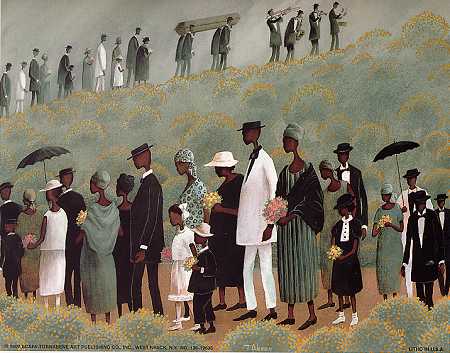
Black funeral

Ms. Potter may have been one of the mourners at the funeral of Bishop Morris Brown on May 20th in 1849. He was the second Bishop of the African Methodist Episcopal Church and the protege of Bishop Richard Allen. It was a Sunday afternoon when the coffin was carried on a bier by ministers wearing flowing white scarfs. After them came others with scrolls, representing the six conferences over which Bishop Brown presided. Hundreds of mourners came next and after them came the daughters of the conference, one hundred and seventy in number, each being “uniformly clad in the deepest mourning. ” (1)

Ms. Potter may have been very sick by this point and realized her time on earth was limited. As the coffin passed her by, thoughts might have been of her last days. Ms. Potter’s death certificate was signed by Black physician J. J. Gould Bias. For more information on the Bias family, please click on the link below. (2)
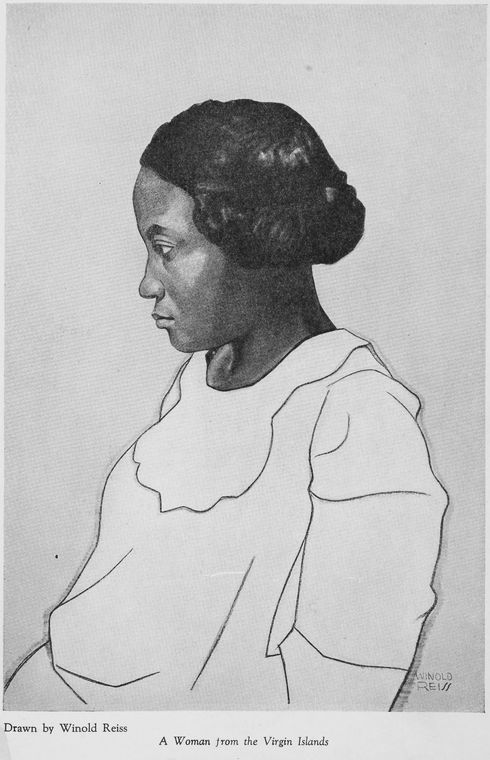
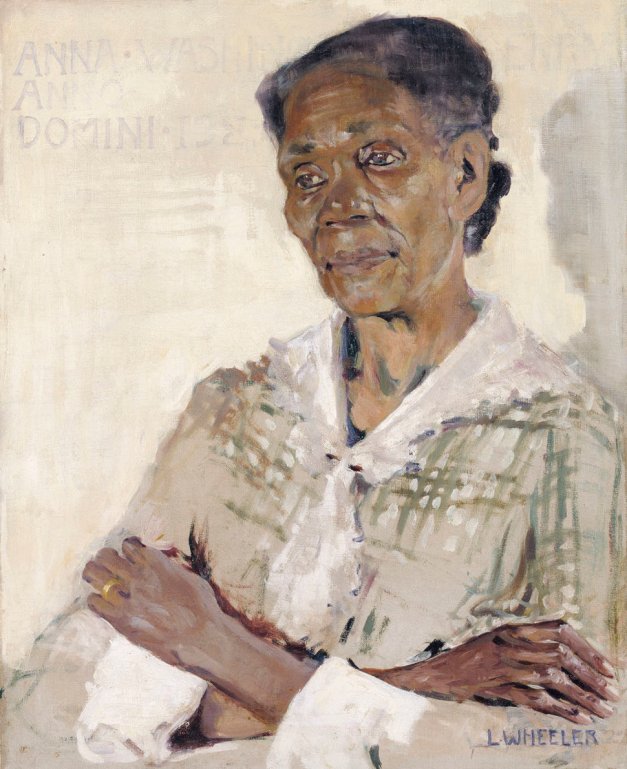
NYL Negro woman

New York Library Digital Collection

Ms. Potter died on a relatively cool day in July where the temperature rose to only 76° by midday, accompanied by a slight breeze out of the north. She was buried by her family, with dignity, at Bethel Burying Ground.

Official Border

(1) The Liberator, 25 May 1849.

(2) BIAS
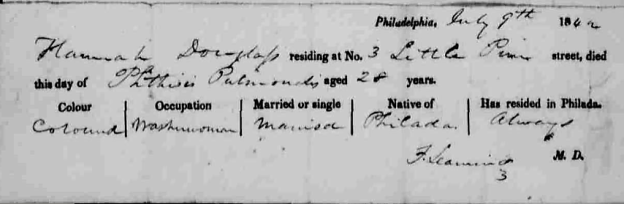
Twenty-eight-year-old Hannah Douglass died this date, July 9th, in 1842, and was buried at Bethel Burying Ground.

Posted by Terry Buckalew on July 10, 2020
Posted in: On This date. Tagged: African American burial grounds, African American cemeteries, African American History, African Methodist Episcopal Church, archaeology, Bethel Burying Ground, Mother Bethel, Mother Bethel African Methodist Episcopal Church, Philadelphia, Richard Allen. 2 Comments

Hannah Douglass

Twenty-eight-year-old Hannah Douglass died this date, July 9th, in 1842 of Tuberculosis and was buried at Bethel Burying Ground. There is little additional information on Ms. Douglass besides what is on her death certificate. She was a married woman and a native of Philadelphia who labored as a washwoman.

The Laundres

“Laundress,” The NY Public Library Digital Collection

Hannah Douglass worked at a job that taxed her body and spirit. Water had to be drawn and carried from the nearest hydrant, firewood had to be obtained, fires had to be started and heavy bundles of clothes had to be picked up and returned to her customers after the clothes and sheets were hung up, dried and folded. All in the wilting heat and freezing cold, while taking care of children, shopping for and preparing the family’s meals, and, on occassion, while pregnant. It was an undertaking for only the strong and strong-willed. And, for all this, she might earn between $0.50 and $1.00 a week!

Little Pine Street

The red arrow illustrates the location of #3 Little Pine Street. The yellow circle indicates the location and proximity of Bethel A.M.E. Church.

Hannah Douglass lived with her family in a room at #3 Little Pine Street. The 1847 Philadelphia African American Census shows that they would have paid $3 – $4 a  month. In modern currency that would be $93.81 – $125.08. After Ms. Douglass’s death, I am unable to find any information on Mr. Douglass or children if they had any. Three weeks after she died, a massive city-wide anti-Black riot occurred, where African Americans were killed, homes and churches destroyed. Many Black families fled the city and never returned. Mr. Douglass may have been in that group.

Screenshot (5)

Philadelphia Free Library Digital Collection

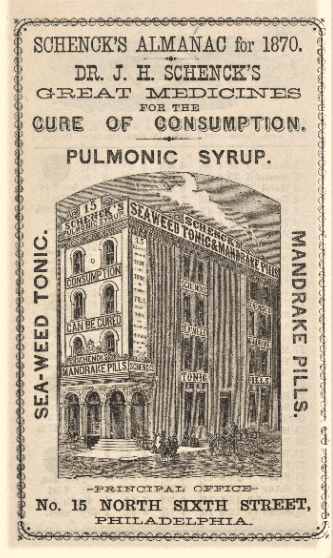
According to the Philadelphia Board of Heath record, Ms. Douglass was one of the 1,991 Philadelphians to succumb to the Tuberculosis bacteria during the period of 1841 and 1842. There would be no vaccine for the disease until the early 1900s. The above advertisement from the 1800s shows the desperate extent to which victims would go for a cure. “Sea-Weed Tonic” was not the answer.

Hannah Douglass died on a rainy and windy day in July and was buried by her family, with dignity, at Bethel Burying Ground.

Official Border

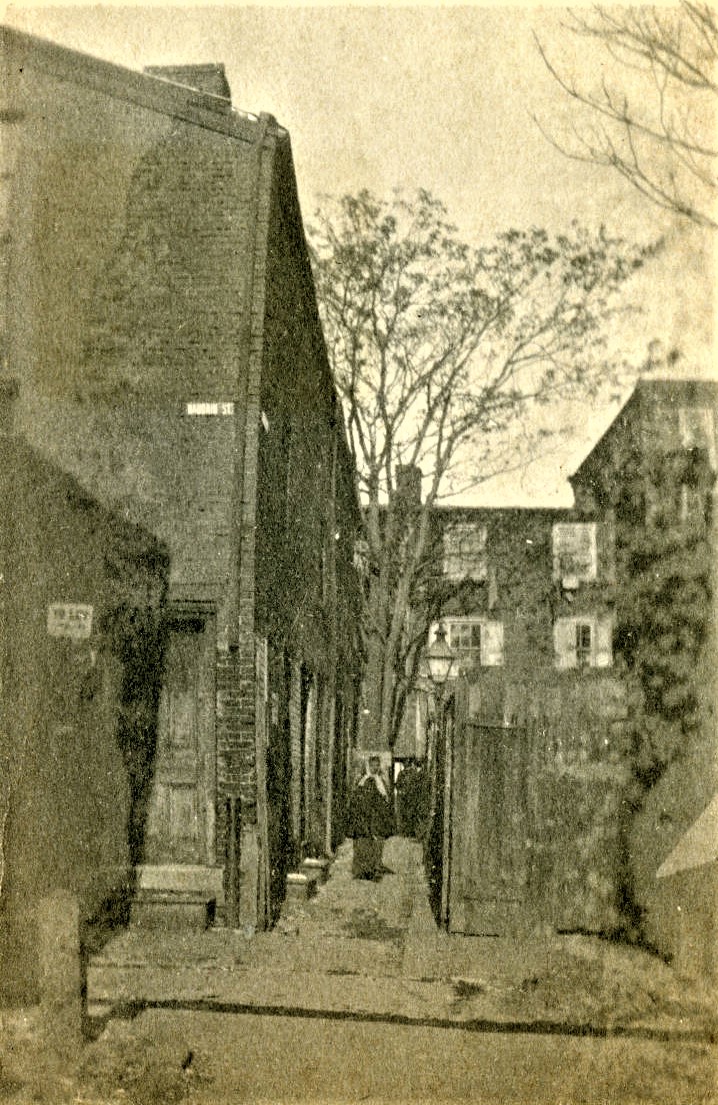
Addison Street (formerly Little Pine Street) in 1938. (Philadelphia Library)

One-year-old Charles Elias died this date, July 6th, in 1844 and was buried at Bethel Burying Ground.

Posted by Terry Buckalew on July 6, 2020
Posted in: On This date. Tagged: African American burial grounds, African American cemeteries, African American History, African Methodist Episcopal Church, archaeology, Bethel Burying Ground, Mother Bethel, Mother Bethel African Methodist Episcopal Church, Philadelphia, Richard Allen. Leave a comment

Chas Elias

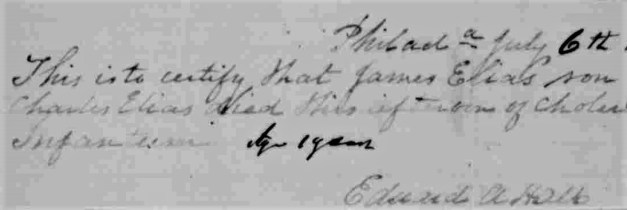
One-year-old Charles Elias died this date, July 6th, in 1844 of Cholera and was buried at Bethel Burying Ground. His mother Elizabeth was young, at nineteen-years-old, while his father James was twenty-four-years-old. James worked as a waiter and Elizabeth labored as a laundress, according to the Philadelphia African American Census of 1847 and the U.S. Census of 1850. Mr. Elias was born in Delaware and Ms. Elias in Philadelphia. It appears that Baby Charles was their only child at that time. However, Elizabeth Elias would have two daughters by the 1850 Census. Sarah Ann was born in 1847 and Mary in 1848. 

Quince 1915

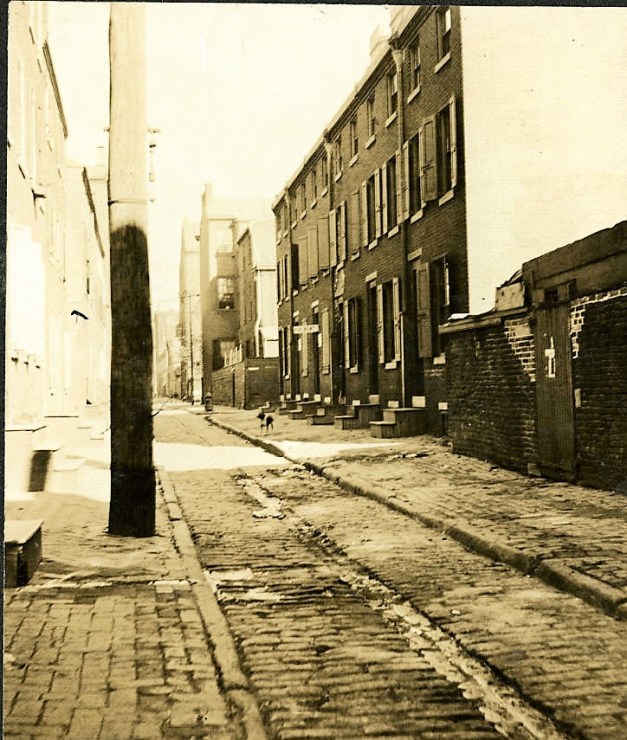
Quince Street in 1915 (Temple University Archives)

Quince Street was a narrow street near Rittenhouse Square, toward the western end of center city Philadelphia. It was little more than a cart path that would often be blocked by piles of garbage, ash, and animal waste. In the winter, snow and ice would make it impassable. The existence of several stables and carpenter workshops on the street made buildings vulnerable to frequent fires.  In 1847, this small thoroughfare was crammed with forty-three Black families totaling one-hundred and thirteen members that worked as laborers and domestics. The poor living conditions led to the deadly diseases of Tuberculosis, Cholera, and Pneumonia.

riots1844staugestine-768x411

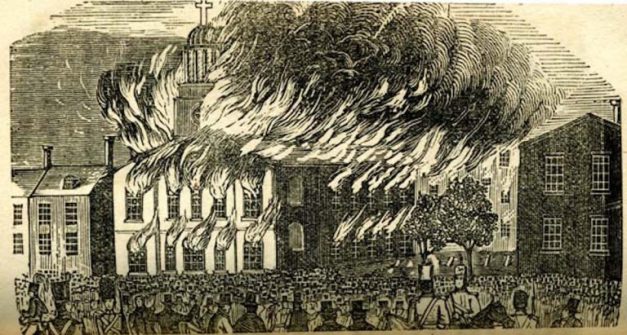
The burning of St. Agnes Catholic Church by Nativists

On the day that one-year-old Charles Elias died the city erupted into a hellish battlefield. For the second time in a month, thousands of Nativists, white Protestants, invaded the Southward District, looking to destroy Catholic churches and the Irish men and women who worshipped in them. The death and destruction continued for days, until the military intervened. Black families fled the city or hid in their homes with the memories of the race riots of 1839 and 1842 still fresh in their minds.  

NY Library Digital Collection

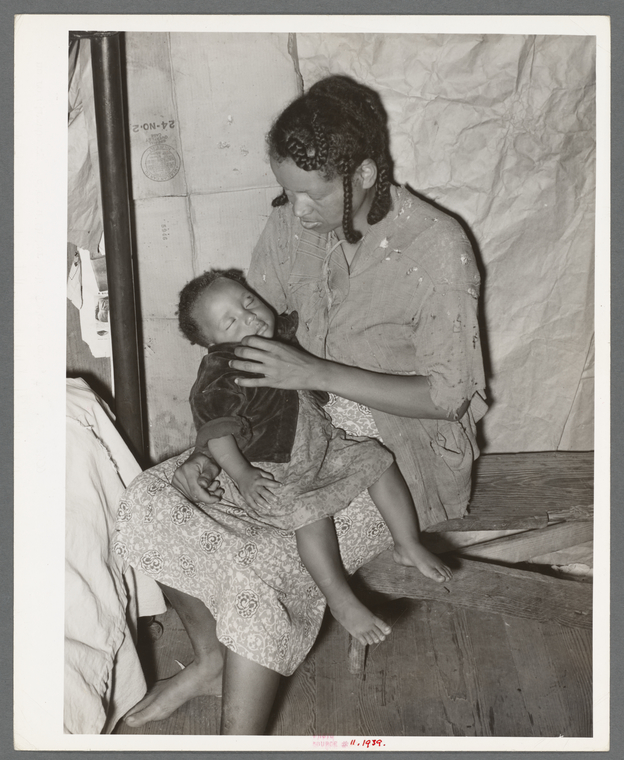
Mother and Child (New York Library Digital Collection: 1939.)

With measureless grief, the young couple watched their baby quickly deteriorate and suffer constant diarrhea, vomiting and, then, the convulsions. They were unable to do anything as their infant slipped into a coma and died. They buried their son on a hot day in July at Bethel Burying Ground.*

Official Border

*Little Charles Elias is the tenth documented individual as of July 6, 2020 to have resided on Quince Street and interred at Bethel Burying Ground. 


Twelve-year-old Lucretia Blake died this date, June 19th, in 1851, and was buried at Bethel Burying Ground.

Posted by Terry Buckalew on June 19, 2020
Posted in: On This date. Tagged: African American burial grounds, African American cemeteries, African American History, African Methodist Episcopal Church, archaeology, Bethel Burying Ground, Mother Bethel, Mother Bethel African Methodist Episcopal Church, Philadelphia, Richard Allen. Leave a comment

L. BLAKE

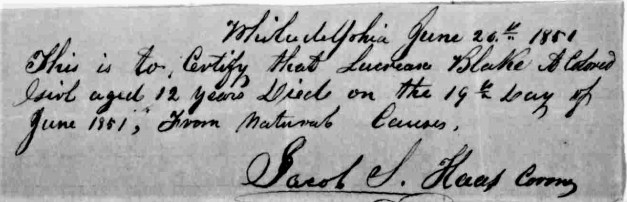
Twelve-year-old Lucretia* Blake died this date, June 19th, in 1851 of “Natural Causes”** and was buried at Bethel Burying Ground. Her mother, Ellen Blake, was forty-four-years-old at the time of her daughter’s death. Ms. Blake was employed as a laundress. Her spouse, John Blake, was forty-five and was a coachman earning $16 a month, according to the 1847 Philadelphia African American Census. Ms. Blake may have been able to earn $.50 to $1.00 a week.

Lucretia was the oldest child of Ellen and John Blake. At the time of her death, they were also the parents of nine-year-old Mary, five-year-old George, and two-year-old John, according to the 1850 U.S. Census. Everyone in the family was born in Pennsylvania except Mr. Blake who was born in Delaware. 

Screenshot (126)

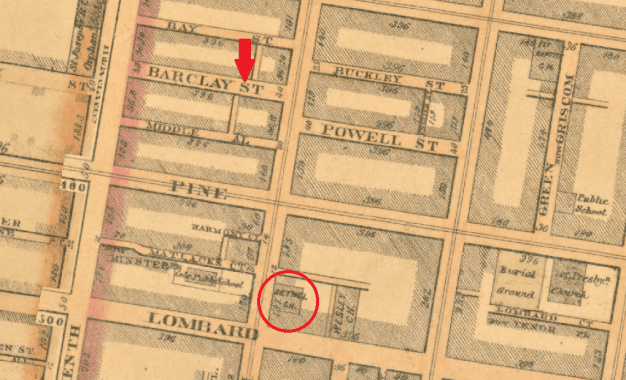
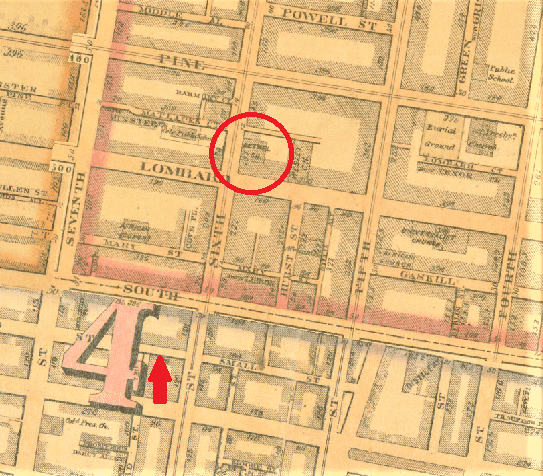
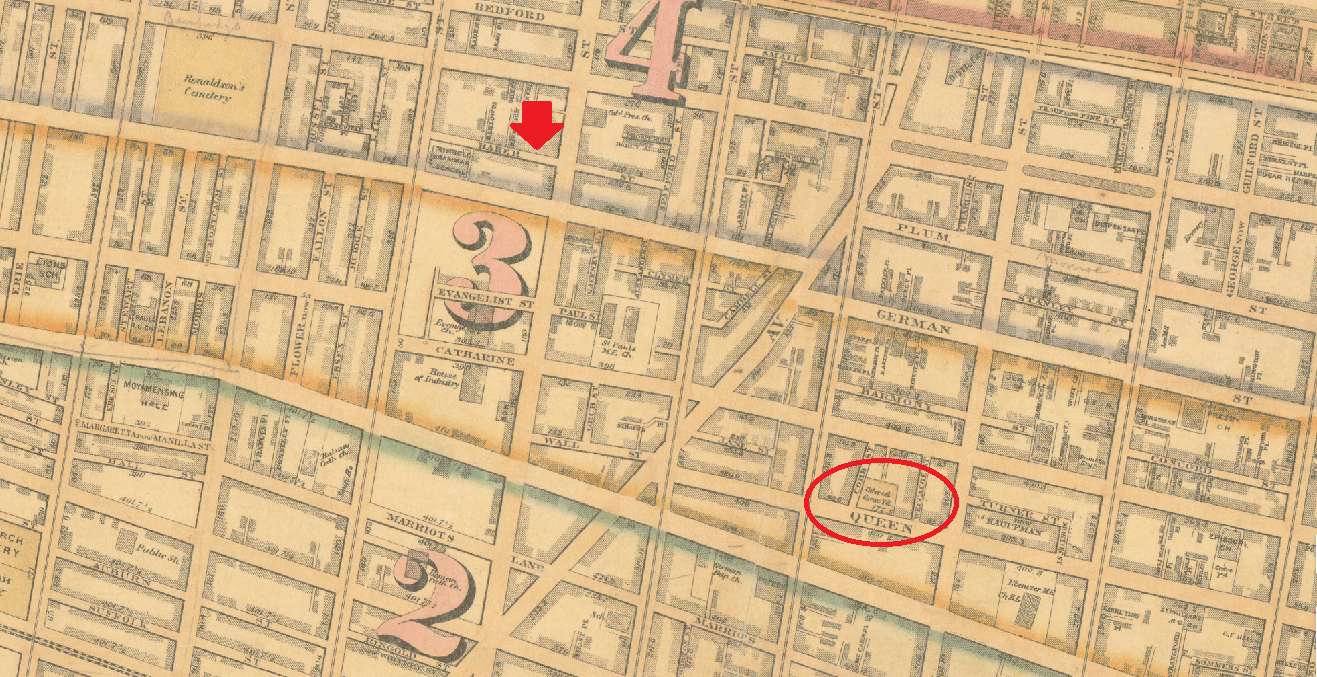
The Blake family lived in a couple of rooms at 29 Barclay Street for which they paid $3.12 a month, according to the 1847 Census. The above map illustrates the proximity of the Blakes’ home (red arrow) to Bethel A.M.E. Church (red circle).

Teenage girl

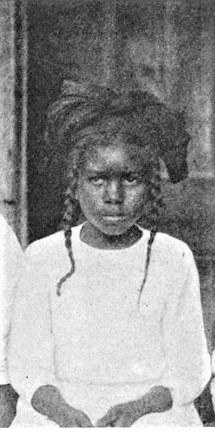
Sixteen months before Lucretia died, her family was in the center of a racist maelstrom. In October of 1849, the Sixth and Lombard Streets area saw thousands of rampaging white racists killing, assaulting, and burning the churches, businesses, and homes of Black families. Did the ten-year-old Lucretia hide with her family at home praying that the mob would leave them alone? Did she help comfort her siblings? Did the family hurry to Bethel Church for protection? The screaming and the smell of the fires would have been terrifying.

download

Sankola

Twelve-year-old Lucretia Blake died on a warm June day in 1851. She was buried, with dignity, at Bethel Burying Ground.

Official Border

*The coroner misspelled Lucretia’s name on the death certificate. The correct spelling appears in the 1850 U.S. Census.

**Death from ‘natural causes’ might include a heart attack, stroke, illness, or infection. By contrast, death caused by active intervention is known as ‘unnatural death,’ such as in the case of murder or suicide. It is likely that Lucretia collapsed in public.

Fifteen-year-old Bingham Baker died this date, June 17th, in 1824, and was buried at Bethel Burying Ground.

Posted by Terry Buckalew on June 17, 2020
Posted in: On This date. Tagged: African American burial grounds, African American cemeteries, African American History, African Methodist Episcopal Church, archaeology, Bethel Burying Ground, Mother Bethel, Mother Bethel African Methodist Episcopal Church, Philadelphia, Richard Allen. Leave a comment

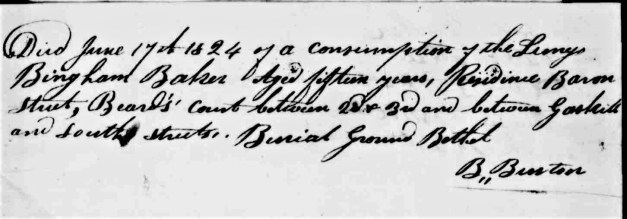
Bingham Baker

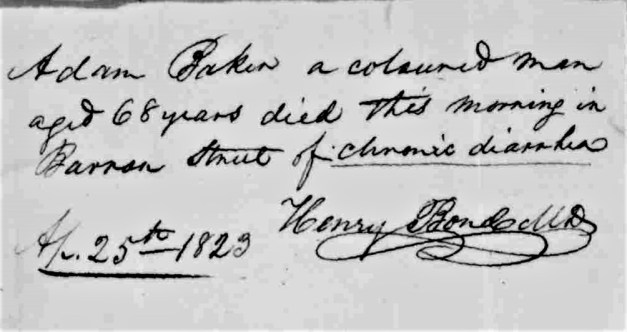
Fifteen-year-old Bingham Baker died this date, June 17th, in 1824 of Tuberculosis and was buried at Bethel Burying Ground. Also buried there was Mr. Adam Baker who died the year before. He lived at the same address as Bingham and was likely the grandfather. The older man would have been approximately fifty-four-years-old at the time of Bingham’s birth. 

Adam Baker

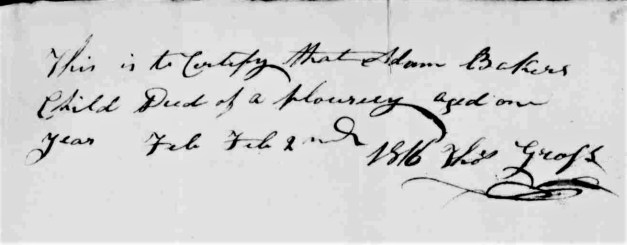
In 1816, seven years before Adam’s death, an Adam Baker lost a year old daughter. All three are buried at Bethel Burying Ground. It appears that there was probably an Adam, Sr. and an Adam, Jr.

Unspecified Baker

Below is the summary of the 1820 Federal Census for the Adam Baker family.

1820 Baker Census

BARRON STREET

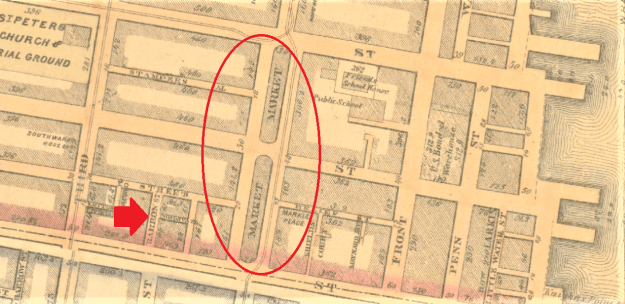
The red arrow above indicates the residence of the Baker family at 28 Barron Street. The red circle illustrates the location of the city’s largest open-air market. Young Bingham would have been very familiar with the two city block long shed that was bustling with Black and white city residents looking to buy meats, vegetables, fruits, sweets, and dry good. There would have been an almost constant din from the large horse-drawn freight wagons coming from the surrounding counties who were bringing their farm goods to market and the loud calls of the vendors announcing their wares. Stepping outside his front door, Bingham might have been able to see the tall masts of the sailing ships at the Delaware River wharves. 

The Black teenager also saw the rapid increase in racist violence during the last several years of his life. “The streets of Philadelphia became dangerous by night and unsafe by day.” With the increase in assaults also came a wildly disproportionate increase in Blacks being imprisoned. In addition, fugitive slave kidnappers roamed the city streets seizing Black men and women who even slightly resembled the description of the newly liberated person. (1)

A prominent white Philadelphia journalist and editor wrote in 1824, “We hope that blacks will disappear from the streets of Philadelphia. They are a pernicious and irreclaimable race, whose insolence and ignorance seem to be increased by the means which have been taken to befriend them.” (2)

It appears that the racist was possibly reacting to an action in 1824 by 150 armed Black men and women who attacked the Arch Street Jail after a Black man was arrested for being a runaway from enslavement.  (3)

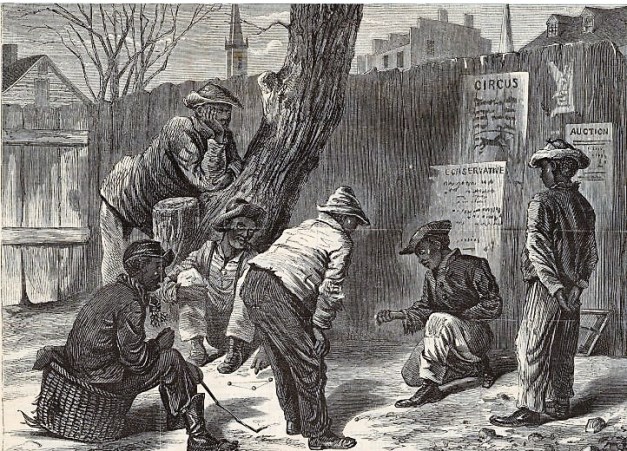
Negro Boys Playing Marbles

“Negro Boys Playing Marbles,” New York Public Library Digital Collection

Fifteen-year-old Bingham Baker died of Tuberculosis on a warm day in June and was buried by his family at Bethel Burying Ground.

Official Border

(1) The Negro in Pennsylvania by Edward R. Turner, p. 155.

(2) Philadelphia in 1824/The Portfolio by Joseph Dennie (aka Oliver Oldschool), p. 458. Available at Haiti Trust.

(3) American Daily Advertiser, September 7 & 8, 1824.

Thirty-nine-year-old Catherine Lawson died this date, June 10th, in 1848, and was buried at Bethel Burying Ground.

Posted by Terry Buckalew on June 10, 2020
Posted in: On This date. Tagged: African American burial grounds, African American cemeteries, African American History, African Methodist Episcopal Church, archaeology, Bethel Burying Ground, Mother Bethel, Mother Bethel African Methodist Episcopal Church, Philadelphia, Richard Allen. Leave a comment

Catharine Lawson #1

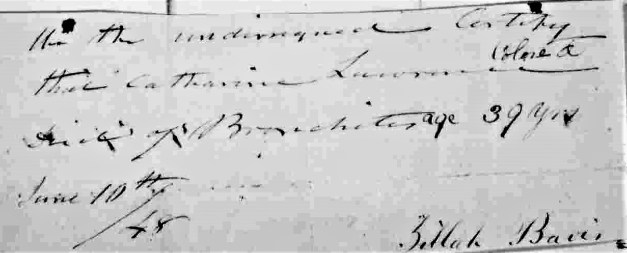
Thirty-nine-year-old Catherine Lawson died this date, June 10th, in 1848 of Bronchitis and was buried at Bethel Burying Ground. According to the 1847 Philadelphia African American Census, she struggled to make a living picking and cutting rags for 12 to 18 cents a day.* Her husband, James Lawson age thirty-eight,  worked on the wharves along the Delaware River. They had two children under the age of fifteen. It’s documented that Mr. Lawson was born in Maryland. There is no such documentation for Ms. Lawson.

Small St map

The red arrow indicates the approximate location of the Lawsons’ residence. The red circle illustrates the location and the proximity of the Bethel African Methodist Episcopal Church.

The Lawson family of four lived in a 10’x10′ room in the 600 block of Small Street for which they paid 50 cents a week. It appears that they lived in one of the few tenements on the street that was mostly occupied with shacks, sheds, and cellar dwellers. The Lawsons may have lived in the tenement that was mentioned in the summary of the 1847 Census that contained fifteen families of forty-two men, women, and children living in “miserable rooms.” They were all “raggers and boners.” The majority were not born in Pennsylvania which indicates they likely  were formerly enslaved. 

Black woman 4

Ms. Catherine Lawson died on a rainy day in early June where the temperature rose to 73 degrees late in the afternoon. She was buried, with dignity, at Bethel Burying Ground.

Official Border

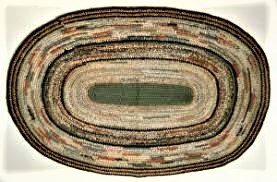
*The 1847 Census tells us that Ms. Lawson was part of the “carpet rags” business. The first group of these women would scavage trash dumps for any clothing that was thrown out. The parts of the garment that could be salvaged were cut out, washed, and sold. Larger quantities of these rags would be sold by the pound to sweatshops where the second group of women would take the fabric and braid it to make rugs like the one in the below photograph.

download

Fifty-three-year-old Frances Paul died and was interred this date May 27th, in 1853 at Bethel Burying Ground.

Posted by Terry Buckalew on May 27, 2020
Posted in: On This date. Tagged: African American burial grounds, African American cemeteries, African American History, African Methodist Episcopal Church, archaeology, Bethel Burying Ground, Mother Bethel, Mother Bethel African Methodist Episcopal Church, Philadelphia, Richard Allen. Leave a comment

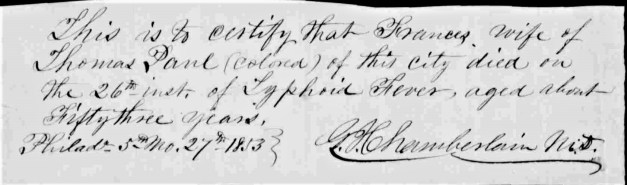
frances-paul-1

Fifty-three-year-old Frances Paul died this date, May 26th, in 1853 of Typhoid Fever and was buried at Bethel Burying Ground on the 27th. The 1847 Philadelphia African American Census reports her occupation as cook. In 1847, she lived with her husband and five other females – one of which was a child and the remaining women were over 14 years of age. One of the females was reported as Lydia Paul, age 24 and born in Pennsylvania. She likely was a daughter of Thomas and Frances Paul. Thomas Paul was sixty-seven years old and was employed as a laborer in 1847.  

The other people living at 245 South 7th Street were occupied as dressmakers and a laundress. Mr. Paul was born enslaved as were two other residents. Two gained their freedom by manumission and the third by “limit.”* I don’t believe Ms. Frances Paul was one of those born into enslavement since her birthplace was New Jersey. It is possible, but unlikely.

1850 Paul Famiy

The census sheet from 1850 shows the three Paul family members (in the red box) residing with six others who are likely boarders.

Screenshot (105)

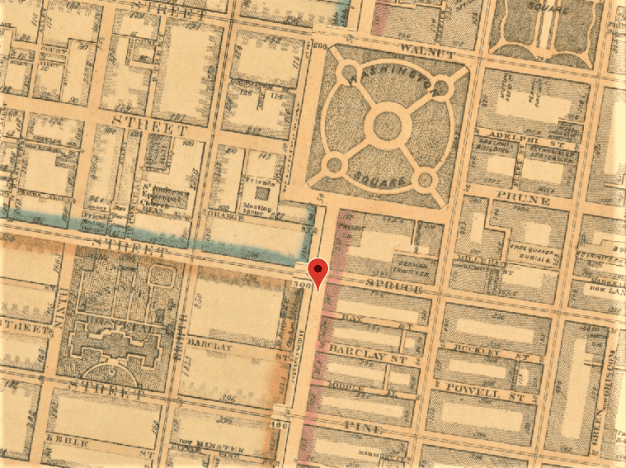
The red pin indicates the approximate location of the Paul family residence between Washington Square and Pennsylvania Hospital.

Frances Paul’s community on south 7th Street in 1847 was a crowded neighborhood. Approximately two hundred Black men and women on two blocks along south 7th Street were employed as seamen, waiters, milliners, laundresses, barbers and coachmen. Ms. Paul was stricken with Thyroid Fever from drinking polluted water. It is likely that the local hand pumps brought up water contaminated with human waste leaked from overflowing cesspools. The disease also would have affected the entire neighborhood. 

The individuals inflicted with the disease would suffer for weeks or months before they died or survived the infection. In 1852 through 1853 two-hundred eighty-eight Philadelphians died of Tyhpoid Fever. Another nine-hundred twenty-two died of Dysentery, a symptom of Typhoid Fever.

043-DSC_0067

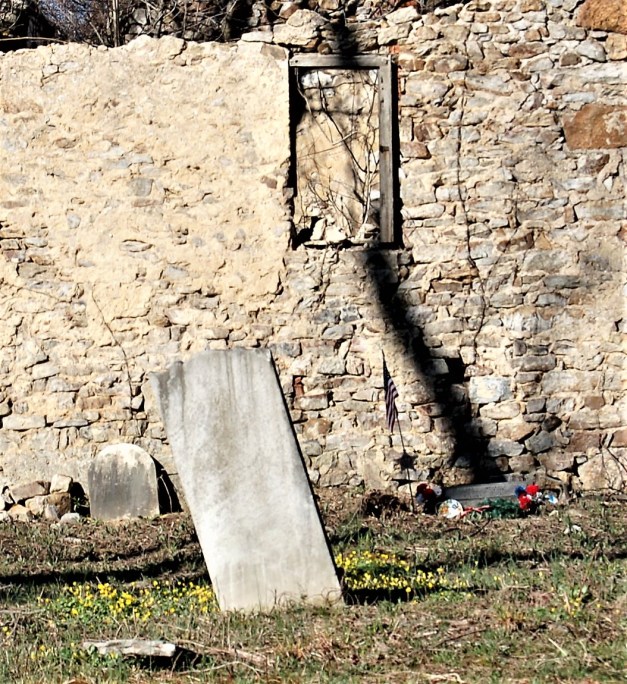
Ms. Frances Paul succumbed to her disease on a clear day in late May of 1853. Her loving family buried her at Bethel Burying Ground.

Official Border

*By the use of the term ‘limit’ I take it to mean that the years of enslavement were limited to a number of years set down in the will or a legal declaration of the enslaver. 

** https://philadelphiaencyclopedia.org/archive/typhoid-fever-and-filtered-water/

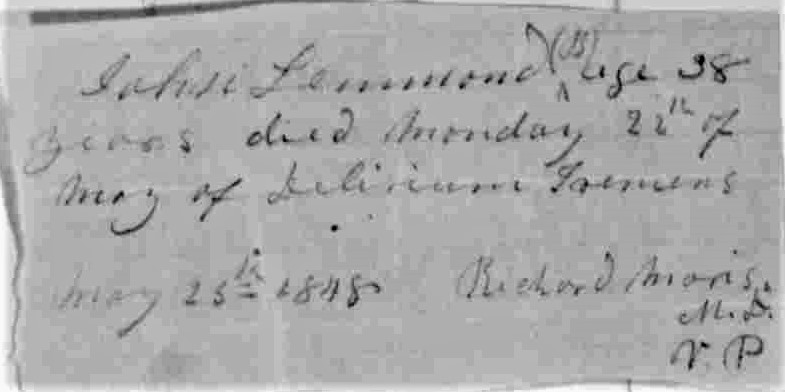
Thirty-eight-year-old John Lemmond died this date, May 22nd, in 1848, and was buried at Bethel Burying Ground.

Posted by Terry Buckalew on May 22, 2020
Posted in: On This date. Leave a comment
JOHN LEMMON

Thirty-eight-year-old John Lemmond died this date, May 25th, in 1848, due to the effects of alcoholism, and was buried at Bethel Burying Ground. He lived with his spouse, who is unnamed, and two children between the ages of five and fifteen years, according to the 1837 Philadelphia African American Census. The adults, who formerly were enslaved, were not native to Pennsylvania. However, the children were born in the state. They attended the Adelphia School and the Sixth & Lombard School.

Mr. Lemmond worked as a porter and his spouse was a day worker “when she can get it,” according to the census taker. The family did receive public aid in the form of firewood for their stove.

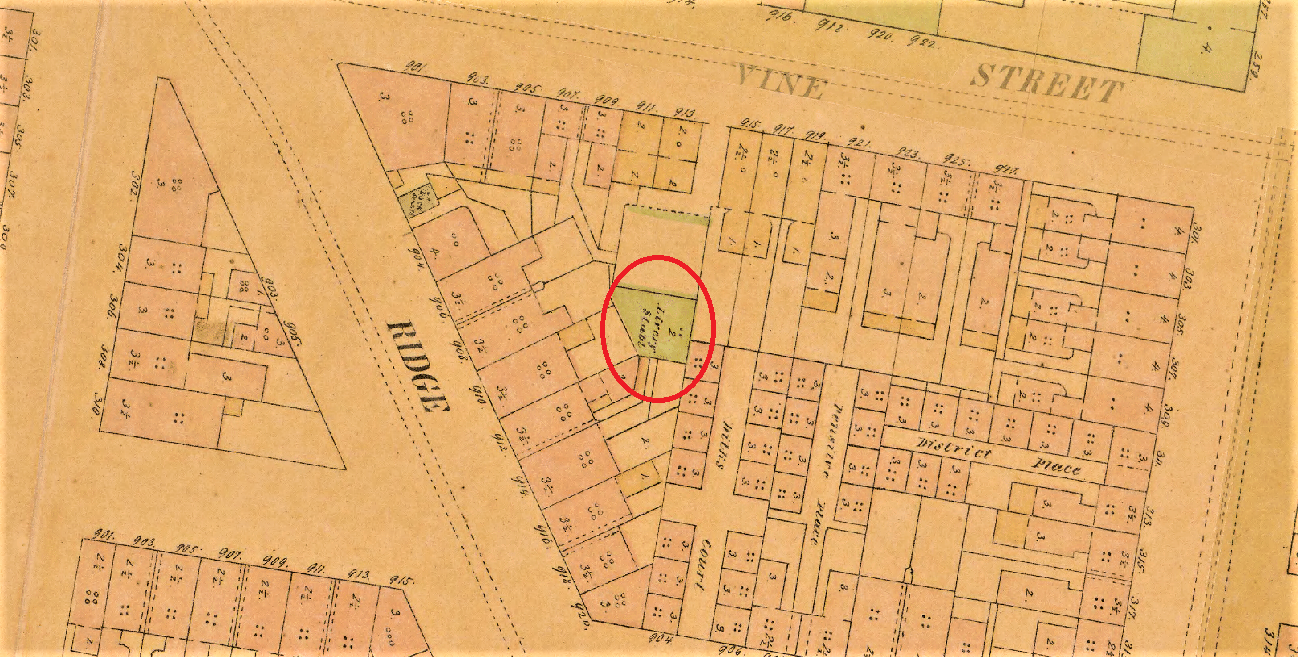
Liberty Court
Liberty Court was wedged between 10th Street, Vine Street, and Ridge                   Avenue in the northern part of the pre-consolidated city.

Liberty Court was an “African American enclave.” It was a small courtyard community of “band-box” houses squeezed in behind the larger residences that faced Ridge Avenue. “Liberty Court had been erected over a portion of the property along Tenth Street, previously owned by the First African Baptist Church (FABC), between 1810 and 1822.”

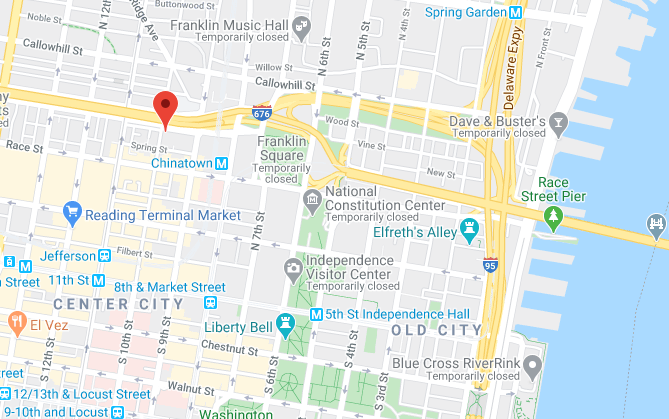
Modern Vine Street Map
Liberty Court eventually was demolished during the construction of the                Vine Street Expressway extension (Rt. 676) in the late 1980s.

This “enclave” was home to poor working-class Black families who were paying $0.75-$1.00 a week for one room. The Lemmonds were paying $0.87 a week for one room. Looking at the results of the 1847 Census, there were 18 families in Liberty Court with a total of 86 family members. The vast majority of the adult males worked as porters while the women were employed in their usual jobs of domestic work and laundress. Many families received public assistance in the form of firewood in the winter. In addition, there was a higher than normal percentage of formerly enslaved men and women. Interestingly, I could not find any of the Liberty Court residents recorded in the 1850 U.S. Census.

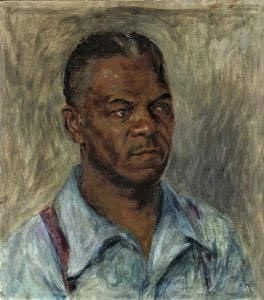
unnamed

Alcoholism or Intemperance, as it was called, was seen by Black religious and civic leaders of the time as a sign of moral weakness. It was labeled as the root cause of disease, poverty, crime, and violence. It even was seen as the main reason the white race saw Blacks as an inferior race. James Forten, an African American businessman and civil rights leader, said that sobriety would “stop the mouths of the enemies of freedom.”** The American Civil War and the failure of Reconstruction stand in stark contrast to this philosophy. 

Mr. John Lemmond died on a day in May where the ” . . . weather was oppressively warm, the thermometer standing at 92 degrees at noon. In the afternoon, a refreshing shower of rain passed over the city, causing quite an agreeable change.”***

Mr. Lemmond was born into slavery on a southern plantation, a victim of the whip and shackle. His family buried him, with dignity, at the Bethel Burying Ground.

Official Border

*John L. Cotter, et al., “The Buried Past: An Archeological History of Philadelphia,” p. 301-303.

**Julie Winch, “A Gentleman of Color: The Life of James Forten,” p. 329.

*** Philadelphia Inquirer, 23 May 1848, p. 2.

Sixty-seven-year-old Amy James died this date, May 15th, in 1841, and was buried at Bethel Burying Ground.

Posted by Terry Buckalew on May 15, 2020
Posted in: On This date. Tagged: African American burial grounds, African American cemeteries, African American History, African Methodist Episcopal Church, archaeology, Bethel Burying Ground, Mother Bethel, Mother Bethel African Methodist Episcopal Church, Philadelphia, Richard Allen. 1 Comment

Amy james

Sixty-seven-year-old Amy James died this date, May 15th, in 1841, of an aneurysm (blood clot) to her heart and was buried at Bethel Burying Ground. Ms. James was a widow living on Baker Street in South Philadelphia. The 1837 Philadelphia African American Census reports that she owned real estate valued at $750. In modern currency, it would be $22,500. It appears that Ms. James owned her home on Baker Street where her income came from renting rooms. In addition, she paid $25/$750 in “ground rent”* and $7.50/$225.00 to the water company. 

Census and bank records show Ms. James was employed as a day worker and a whitewasher at different times in her life. A whitewasher was a plasterer and house painter.

Public_Ledger_1841-08-23_[3]

Public Ledger, August 23, 1841

 The above advertisement, published several months after her death, asked those who owe or who are owned money by Ms. James to communicate with the executors of her estate. Charles Wilmore was a neighbor on Baker Street and a porter by trade. David Ware was a prominent teacher and clergyman at the Bethel African Methodist Episcopal Church. 

Baker Street

The above map shows the location of Baker Street (red arrow) to the location of Bethel Burying Ground (red circle).

In 1827, Ms. James along with two neighbors, Jane Ginn and Hester Butler, opened a bank account at the Philadelphia Savings Fund Society (PSFS). The two Baker Street neighbors also were signees in an account titled “In Trust for the Warner Mifflin Benevolent Trust.” 

Warner Mifflin (1745-1798) was recognized internationally for his antislavery efforts and is credited with assisting a great number of African Americans in obtaining their freedom. Warner Mifflin, a devote Quaker, was widely known and respected for his brave efforts to  promote “righteousness, mercy, and peace, among mankind.” (https://archives.delaware.gov/tag/warner-mifflin/)

The Fund may have been established to assist recently freed enslaved African Americans. Ms. James also had a personal account at PSFS.

Three woman on Lombard street

THREE WOMEN ON LOMBARD STREET

Ms. James died on a Saturday in May of 1841. The day began clear, during which the  temperature rose to 69 degrees by late afternoon. She was buried at Bethel Burying Ground.

Official Border

*Ground rent is an agreement between a landlord and a tenant, where a tenant pays for the right of using a plot of land. With ground rent, the tenant owns the property on the land but does not own the land itself. The ground rent is paid as a fixed fee to the landlord.


Sixty-eight-year-old Susan Brown died this date, May 6th, in 1848 and was buried at Bethel Burying Ground.

Posted by Terry Buckalew on May 6, 2020
Posted in: On This date. Tagged: African American burial grounds, African American cemeteries, African American History, African Methodist Episcopal Church, archaeology, Bethel Burying Ground, Mother Bethel, Mother Bethel African Methodist Episcopal Church, Philadelphia, Richard Allen. Leave a comment

SUSAN BROWN

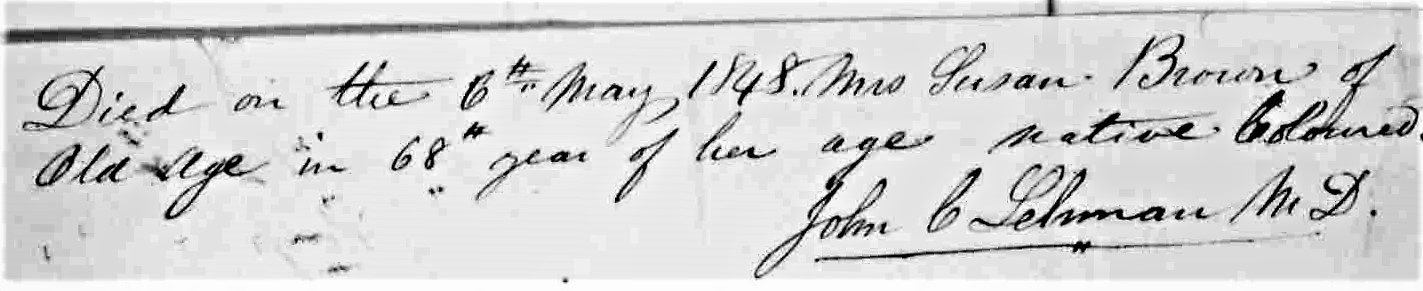
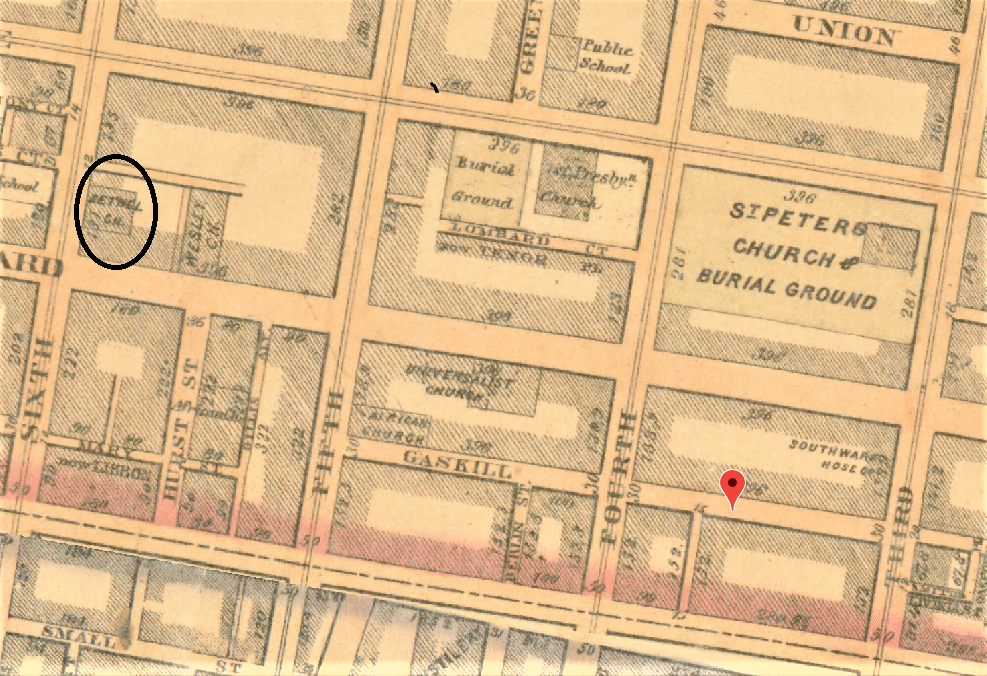
Sixty-eight-year-old Susan Brown died this date, May 6th, in 1848 of “old age” and was buried at Bethel Burying Ground. The year before she died, Ms. Brown cooperated with the 1847 Philadelphia African American Census. She reported that she lived in a room at 96 Gaskill Street with another woman who was under fifty years old and was employed as a laundress. Their relationship was not documented.

Ms. Brown did not report any employment for her self. She did receive public aid. The women paid $1.50 a month in rent for their room. 

Screenshot (91)

The 1847 Philadelphia African American Census shows Gaskill Street was home to 58 Black families with a total of 152 members. The adults were employed in various occupations that included mariner, chimney sweep, porter, wood sawyer, shopkeeper, sailmaker, harnessmaker, shoemakers, laundress, and waiter.

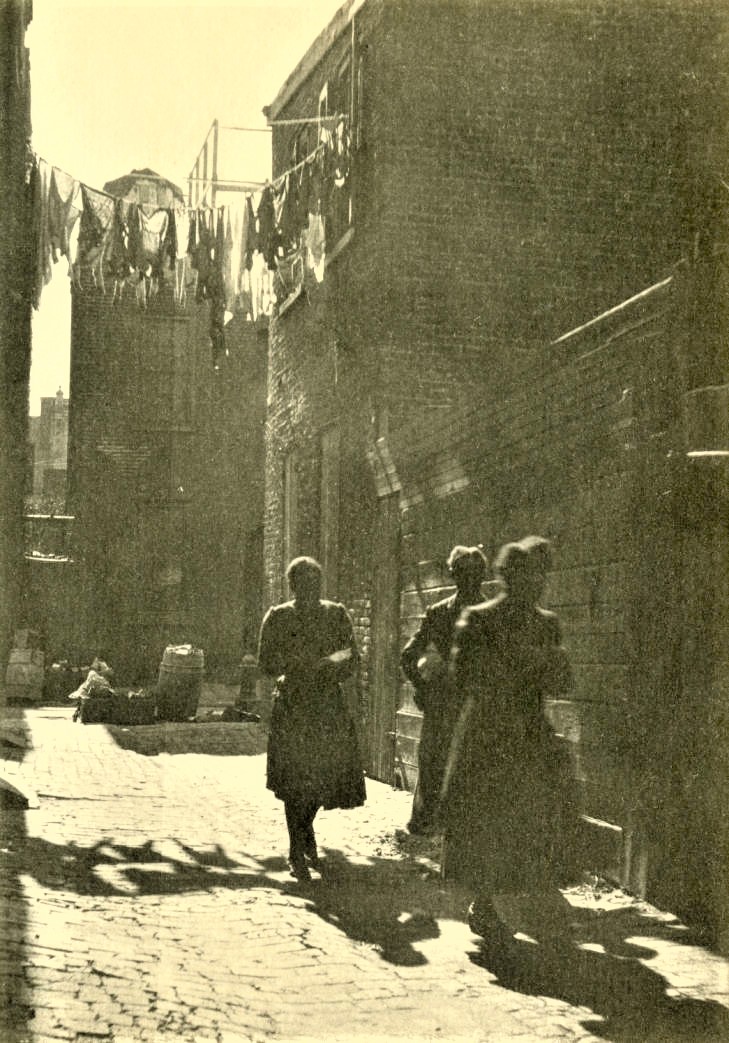
Gaskill Street was only an eight-foot-wide narrow cartway that was often clogged with garbage and ash from stoves. Heavy rains and overflowing cesspools would flood the basements with human excrement. Sewage would filter down to the water level and contaminate the drinking water at the local hand pump, causing illness and sometimes death. In the winter, snow and ice would make the thoroughfare impassable. 

Naudain

This 1904 photo shows the rear of the homes in the 700 block of Naudain Street (formerly Gaskill Street). The area was called Brown’s Court.

Ms. Susan Brown died on a Spring day in May and was buried at Bethel Burying Ground.

Official Border

Posts navigation

← Older Entries
Newer Entries →
  • Recent Posts

    • Three dead as church wall falls on this date, May 1st, in 1841.
    • The ten-month-old Baby Colgate died this date, June 20th, in 1847, and was buried at Bethel Burying Ground.
    • Fifty-eight-year-old Rachel Dawson died this date, May 3rd, in 1839, and was buried at Bethel Burying Ground.
    • Twenty-eight-year-old Robert Swails died on this date, March 31st in 1849, and was buried at Bethel Burying Ground.
    • Forty-year-old Jacob “Jesse” Howard died on this date, January 29th, in 1840, and was buried at Bethel Burying Ground.
  • Archives

    • May 2024
    • June 2023
    • May 2023
    • March 2023
    • January 2023
    • December 2022
    • November 2022
    • October 2022
    • September 2022
    • August 2022
    • May 2022
    • April 2022
    • March 2022
    • February 2022
    • January 2022
    • December 2021
    • November 2021
    • October 2021
    • September 2021
    • August 2021
    • July 2021
    • June 2021
    • May 2021
    • April 2021
    • March 2021
    • February 2021
    • January 2021
    • December 2020
    • November 2020
    • October 2020
    • September 2020
    • August 2020
    • July 2020
    • June 2020
    • May 2020
    • April 2020
    • March 2020
    • February 2020
    • January 2020
    • December 2019
    • November 2019
    • October 2019
    • September 2019
    • August 2019
    • July 2019
    • June 2019
    • May 2019
    • April 2019
    • March 2019
    • February 2019
    • January 2019
    • December 2018
    • November 2018
    • October 2018
    • September 2018
    • August 2018
    • July 2018
    • June 2018
    • May 2018
    • April 2018
    • March 2018
    • February 2018
    • January 2018
    • December 2017
    • November 2017
    • October 2017
    • September 2017
    • August 2017
    • July 2017
    • June 2017
    • May 2017
    • April 2017
    • March 2017
    • February 2017
    • January 2017
    • December 2016
    • November 2016
    • October 2016
    • September 2016
    • August 2016
    • July 2016
    • June 2016
    • May 2016
    • April 2016
    • March 2016
    • February 2016
    • January 2016
    • December 2015
    • November 2015
    • October 2015
    • September 2015
    • August 2015
    • July 2015
    • June 2015
    • May 2015
    • April 2015
    • March 2015
    • February 2015
    • January 2015
    • December 2014
    • November 2014
    • October 2014
  • Categories

    • Archaeology
    • BBG History
    • Bethel Burying Ground Name Directory
    • Bethel Burying Ground Timeline
    • Burial services
    • Diseases
    • Documents
    • Freemasonry
    • Ignatius Beck
    • It's a fact
    • Maps
    • Neighborhood
    • Newspaper Articles
    • On This date
    • Photographs
    • Uncategorized
    • Videos
  • Meta

    • Create account
    • Log in
    • Entries feed
    • Comments feed
    • WordPress.com
Blog at WordPress.com.
Bethel Burying Ground Project
Blog at WordPress.com.
  • Subscribe Subscribed
    • Bethel Burying Ground Project
    • Join 48 other subscribers
    • Already have a WordPress.com account? Log in now.
    • Bethel Burying Ground Project
    • Subscribe Subscribed
    • Sign up
    • Log in
    • Report this content
    • View site in Reader
    • Manage subscriptions
    • Collapse this bar
 

Loading Comments...