Bethel Burying Ground Project

Bethel Burying Ground Project

  • ABOUT THE BETHEL BURYING GROUND PROJECT

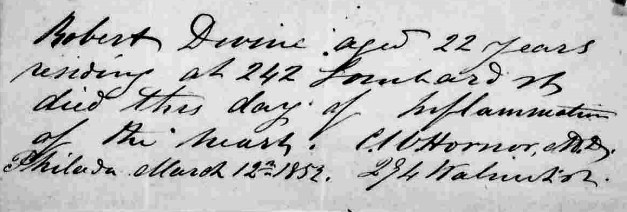
Twenty-two-year-old Robert Devine died this date, March 12th, in 1852 and was buried at Bethel Burying Ground.

Posted by Terry Buckalew on March 12, 2018
Posted in: On This date. Tagged: African American burial grounds, African American cemeteries, African American History, African Methodist Episcopal Church, archaeology, Bethel Burying Ground, Mother Bethel, Mother Bethel African Methodist Episcopal Church, Philadelphia, Richard Allen. Leave a comment

DEVINE

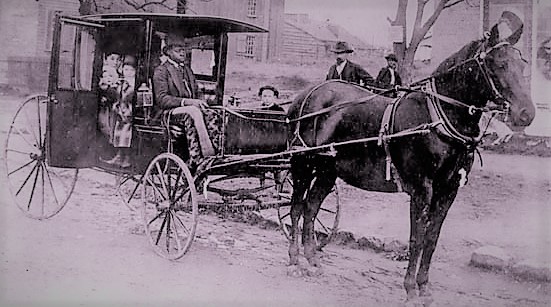
Twenty-two-year-old Robert Devine died this date, March 12th, in 1852 of heart disease and was buried at Bethel Burying Ground. The young man was employed as a hack driver or a public coachman, similar to a taxi driver of today. 

Black coachman

Robert lived with his mother Louisa Devine in a small room at 242 Lombard Street, below 3rd, for which they paid $2.25 a month for rent. Ms. Devine, forty-nine years of age, worked as a laundress and received a small quantity of firewood in public assistance, according to the 1847 Philadelphia African American Census. Both mother and son were born in Pennsylvania. I was unable to locate any information on Mr. Devine’s father.

The 1837 Philadelphia African American Census shows that Ms. Louisa Devine was the head of a family of four including herself. At that time, she was employed as a domestic (in-service) and lived at 8th and Lombard Streets. The family worshiped at Bethel African Methodist Episcopal Church at 6th and Lombard Streets.  

single mother

At the time of the 1837 Census, approximately one Black Philadelphia family in three was headed by a female. Currently, it is estimated to be over double that (68%) nationally.

Louisa Devine died in 1873 at seventy-two-years-old. She was working as a cook at the time. She was buried at Lebanon Cemetery. 

Forty-year-old Peter Bell died this date, March 11th, in 1850 and was buried at Bethel Burying Ground.

Posted by Terry Buckalew on March 11, 2018
Posted in: On This date. Tagged: African American burial grounds, African American cemeteries, African American History, African Methodist Episcopal Church, archaeology, Bethel Burying Ground, Mother Bethel, Mother Bethel African Methodist Episcopal Church, Philadelphia, Richard Allen. Leave a comment

BELL

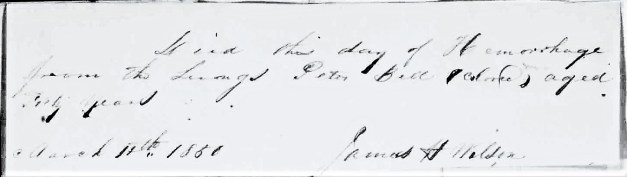
Forty-year-old Peter Bell died this date, March 11th, in 1850 and was buried at Bethel Burying Ground. His occupation may have contributed to his death due to hemorrhaging of his lungs. Mr. Bell was employed as a hat presser/steamer. The highly toxic chemical mercury was used in the manufacturing of hats until 1941. Mercury was used in solution to improve the felting quality of the fur. Steaming caused the mercury to vaporize which then was inhaled by the handler. Chronic mercury poisoning (Erethism) was also known as “Mad as a Hatter” disease. The chemical destroyed brain and lung tissue. 

Mr. Bell may have been employed at one of the large hat manufacturers in Philadelphia, such as John Simpson’s on Chestnut Street above 3rd Street or James Bulkley’s factory at 7th South 5th Street in center city Philadelphia. Mr. Bell’s weekly salary of $6 reflects his position as a skilled worker with a slightly higher than the average salary for Black men of that era. 

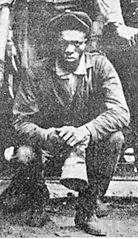
Black working men

The 1847 Philadelphia African American Census shows that Mr. Bell was only one of four Black men employed in the hat and cap manufacturing business. Two are reported to have been occupied as a “hat dryer” and one as a “hat colorer.” The 1850 Federal Census showed that there were 1,000+ white men employed in the business at that time. 

I was unable to locate information on Ms. Bell after her spouse’s death. The 1847 Census reports her occupation as a laundress. The family lived in a 10’x10′ room in the old Southwark District for which they paid $4 a month.

Mr. Bell may have been buried at Bethel Burying Ground because the Bells may have had children buried there. There are four possibilities: three who died in 1845 (Bernard, “E.” and Mary) and one in 1846 (John). 

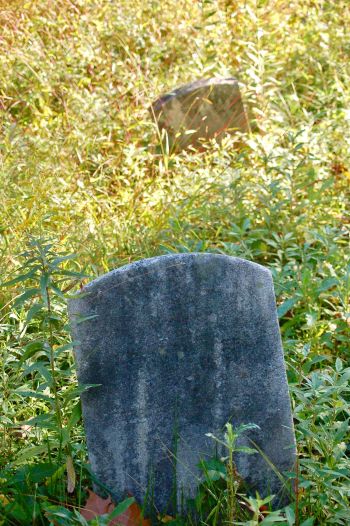
Two tombstones


Twenty-eight-year-old James Rankin died this date, March 8th, in 1850 and was buried at Bethel Burying Ground.

Posted by Terry Buckalew on March 8, 2018
Posted in: On This date. Tagged: African American burial grounds, African American cemeteries, African American History, African Methodist Episcopal Church, archaeology, Mother Bethel, Mother Bethel African Methodist Episcopal Church, Philadelphia, Richard Allen. Leave a comment

RANKIN

Twenty-eight-year-old James Rankin died this date, March 8th, in 1850 of Tuberculosis and was buried at Bethel Burying Ground. According to the 1847 Philadelphia African American Census, he was married (spouse unnamed) and they had a daughter under five years old. Mr. Rankin was employed as a waiter and his spouse as a laundress. 

Their one-room (11’x 11′) home was located in the rear of 137 Lombard Street which is in the 500 block of Lombard Street, only yards away from Bethel AME Church. The Rankins were among the working poor in the Black community paying $2 a month for rent and only owning a total of $10 in personal property, according to the 1847 Census. 

SG pic

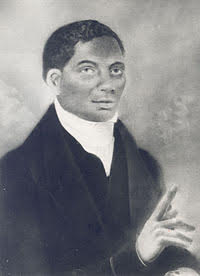
Rev. Stephen H. Gloucester

Living in the front of 137 Lombard Street was the Rev. Stephen H. Gloucester and his family of twelve. He was the pastor of Central Presbyterian Church which was located a block away in the 600 block of Lombard Street. Reverend Gloucester established a school for Black children and organized a library for Black adults. He was active in the Philadephia Underground Railroad and organized several anti-slavery societies. In 1938, he became the publisher of the Colored American newspaper. The publication advocated for abolition, educational improvements, and civil rights while rallying against prejudice and oppression.

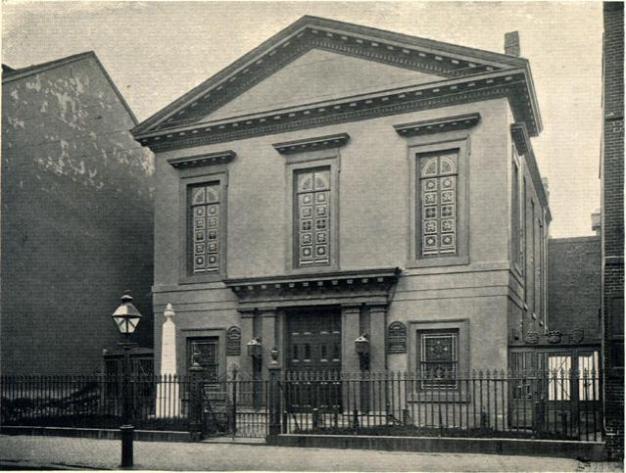
2nd Prez chuch pic

James Rankin and Rev. Gloucester were neighbors and likely saw each other daily and especially on Sundays at the Lombard Street Central Presbyterian Church (above) erected in 1848. The Rankin family probably walked past the church in the comings and goings of their everyday life. The white obelisk in front of the church was not installed at the time. It is the grave marker for Rev. Gloucester who died of Pneumonia only two months after Mr. Rankin’s death. Ms. Gloucester is also buried in the same vault.  

FAMILY LIFE

I was unable to locate any information on Ms. Rankin and her daughter after James’ death.

*For more information on the life of Rev. Stephen H. Gloucester please go to  http://planphilly.com/articles/2008/11/22/4551.


Twenty-six-year-old Susan Burton died this date, February 28th, in 1811 and was buried at Bethel Burying Ground.

Posted by Terry Buckalew on February 28, 2018
Posted in: On This date. Tagged: African American burial grounds, African American cemeteries, African American History, African Methodist Episcopal Church, archaeology, Bethel Burying Ground, Mother Bethel, Mother Bethel African Methodist Episcopal Church, Philadelphia, Richard Allen. Leave a comment

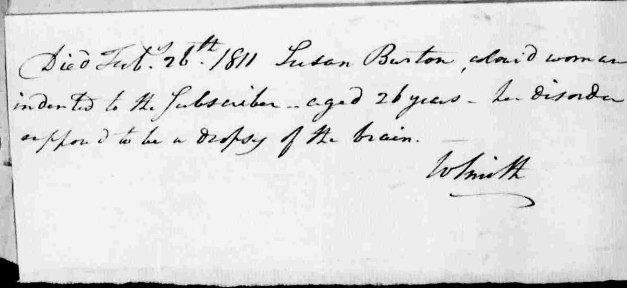
Susan BurtonTwenty-eight-year-old Susan Burton died this date, February 28th, in 1811 of “Dropsy of the brain” and was buried at Bethel Burying Ground. Chronic Hydrocephalus  – “Dropsy of the brain” is due to the meningitis virus and is marked by atrophy of the brain, mental weakness and convulsions.

Ms. Burton was an indentured servant under the ownership of William Smith. Indentured servants were slaves, just by another name. They were considered the property of their owners. We don’t know how Ms. Burton came to this circumstance. When families applied for aid at the local almshouses, they often were required to indenture their children. This happened to both black and white families. However, most black children were indentured to the age of twenty-eight, while most white boys were indentured until they were twenty-one, and most white girls until they were eighteen. It would be a horrible scenario to think that Ms. Burton died just as she was scheduled to be freed from enslavement. 
5

The only difference between being enslaved or indentured was that there was a supposed date that the individual would be set free. Indentured servants did not have the freedom to move about without a written note or to marry without their master’s permission. The penalty for doing so was the addition of one year of service to their contract. They were allowed to be whipped for any infractions and they had no real legal recourse.

Black female indentured servants were forced to be cooks, domestics, and nannies to the children of their white masters. I was unable to definitively identify the”William Smith” for whom Ms. Burton was forced to serve. He was either an attorney or wealthy merchant. Both of these men had large families and lived near the Delaware River in the old section of the city. 

Free Black men also were allowed to own indentured servants. Clearly, Black businessmen did this for profit but also to provide protection to an individual, such as for a child who was orphaned or whose family was no longer able to care for him or her. In Philadelphia, situations like those were not uncommon. But, no matter what the circumstances, indentured servants often would run away from their masters – Black or white. Below are two advertisements that the Rev. Richard Allen, the founder of the AME, Bethel Church, and the Bethel Burying Ground, placed in the local newspapers offering rewards for two young males who decided they no longer wanted the good Reverend’s hospitality.  
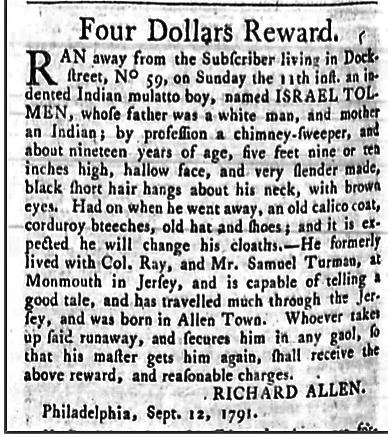
 

$4 R. Allen

Dunlap’s Daily Advertiser, 29 May 1792


Sam - R. Allen

North American Intelligence, 28 September 1791. The young man’s name is “Sam.”


Susan Burton was buried on a warm day which broke a cold spell in late February.

*************************************************************************************

For further reading on Black women and indentured servitude, I suggest “A Fragile Freedom” by Erica Armstrong Dunbar.



Seventy-four-year-old Judith Govan died this date, February 25th, in 1842 and was buried at Bethel Burying Ground.

Posted by Terry Buckalew on February 25, 2018
Posted in: On This date. Tagged: African American burial grounds, African American cemeteries, African American History, African Methodist Episcopal Church, archaeology, Bethel Burying Ground, Mother Bethel, Mother Bethel African Methodist Episcopal Church, Philadelphia, Richard Allen. Leave a comment

GOVERN

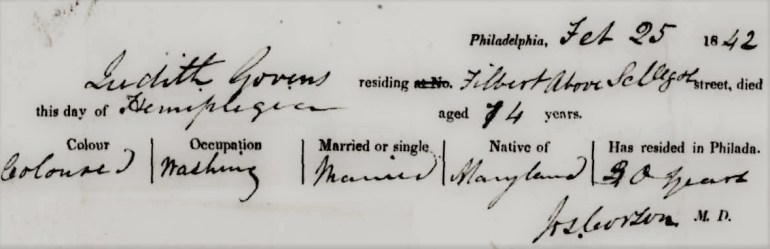
Seventy-four-year-old Judith Govan* died this date, February 25th, in 1842 from complications of a stroke and was buried at Bethel Burying Ground. She had been a resident of Philadelphia for forty years. In 1768, she was born into enslavement in the colony of Maryland. She worked as a laundress and lived near 15th and Filbert Streets now J.F.K. Boulevard in center city Philadelphia. 

Govan Slave

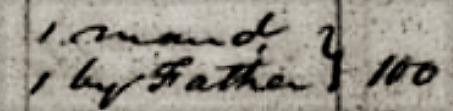
The above is an entry in the 1838 Philadelphia African American Census for the Govan family headed by Ms. Govan, a widow. I believe it shows that she was enslaved and eventually manumitted while her female child’s freedom was purchased by her late husband for $100. Manumission was the renunciation of the property rights that slave owners had over the enslaved. The enslaved were released from the owner’s control by self-purchase or by the last Will and Testament of the enslaver. The latter often occurred for the “faithful service” of the Black man or woman. 

Harriet

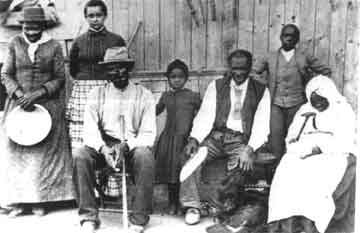
Another enslaved Maryland woman, Harriet Tubman (far right) with a group that she assisted in escaping from slavery in Maryland. She herself escaped from a Maryland plantation in 1849. Ms. Tubman is the most famous “conductor” on the Underground Railroad.

free-african-symbols-vector


*The physician who made out the death certificate spelled the last name “Governs.” All other documents including censuses use “Govan.” 

Fifty-five-year-old Jupiter Miller died this date, February 22nd, in 1851 and was buried at Bethel Burying Ground.

Posted by Terry Buckalew on February 22, 2018
Posted in: On This date. Tagged: African American burial grounds, African American cemeteries, African American History, African Methodist Episcopal Church, archaeology, Bethel Burying Ground, Mother Bethel, Mother Bethel African Methodist Episcopal Church, Philadelphia, Richard Allen. Leave a comment

Jupiter

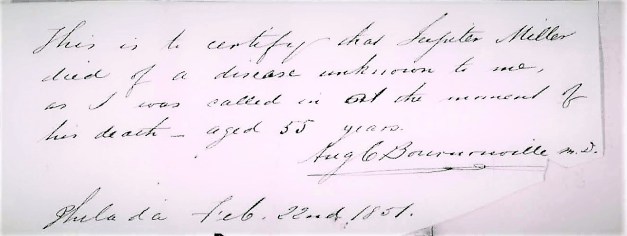
Fifty-five-year-old Jupiter Miller died this date, February 22nd, in 1851 of unknown causes. The 1847 Philadelphia African American Census reports that Mr. Miller was a “paralytic” which was likely due to a stroke and heart disease. In 1847 he lived on Mulberry Street (now Arch Street) between 5th and 6th Streets, in the shadow of Independence Hall, with his spouse, two of his adult children and what appears to be two grandchildren. The family of six lived in one room 12’x12′ for which they paid 75 cents a week. The adults worked as a woodsawyer, day worker, and rag sorter. Mr. Miller’s occupation was listed as “laborer” in the 1830s Philadelphia city directories. 

Soup Kitchen delivery

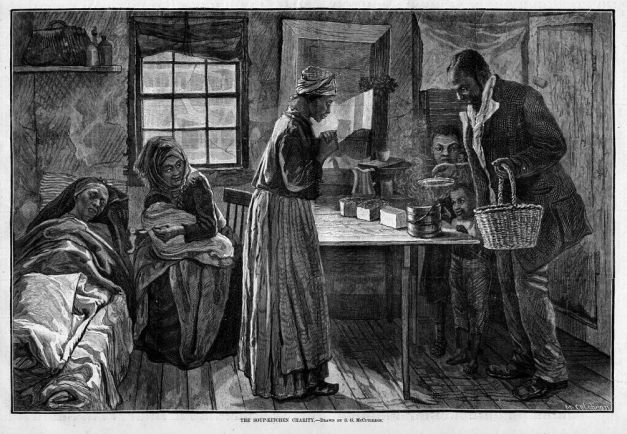
The 1847 Census reports that one of the older grandchildren stayed at home and cared for Mr. Miller while the other adults went to work. The 1838 Philadelphia African American Census shows that the family attended religious services at Bethel A.M.E. Church at 6th and Lombard Streets. The congregants of Bethel were caring people. They had numerous charitable societies that focused on the poor, the sick, orphans and widows.  The two oldest groups were the United Daughters of Tapsico, a mutual aid society for sick members founded in 1837, and the Union Benevolent Sons of Bethel, a burial aid society founded in 1826. The Sons served as caretakers of the Bethel Burying Ground plots. Hopefully, these groups provided aid to the Miller family.

Out of surviving Board of Health records, Jupiter Miller is one of thirty-two individuals with the family name of “Miller” who are buried at Bethel Burying Ground. Chronologically, he was the last one to be buried there in 1851.

Burial Ground path

anvil


Thirty-seven-year-old Mary Parker died this date, February 19th, in 1846 and was buried at the Bethel Burying Ground.

Posted by Terry Buckalew on February 19, 2018
Posted in: On This date. Tagged: African American burial grounds, African American cemeteries, African American History, African Methodist Episcopal Church, archaeology, Bethel Burying Ground, Mother Bethel, Mother Bethel African Methodist Episcopal Church, Philadelphia, Richard Allen. 1 Comment

MARY PARKER

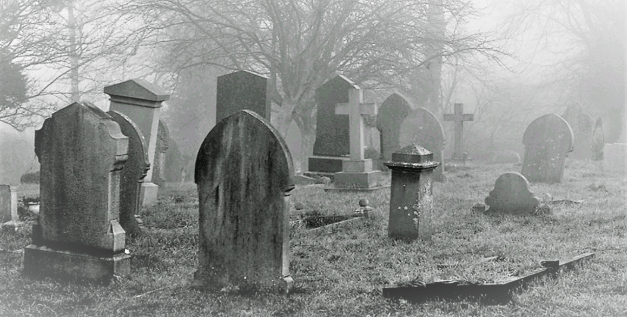
Thirty-seven-year-old Mary Parker died this date, February 19th, in 1846 of Tuberculosis (Pulmonary Consumption) and was buried at Bethel Burying Ground. The morning of the 19th dawned clear and cold at 13 degrees with a stiff wind out of the northeast. By late afternoon, the skies had turned cloudy and gray with the temperature never rising above freezing. The graveyard was covered with snow, making digging the grave by church sexton Shepard Gibbs a more difficult job. 

Snowny cemetery

I have not been able to find any more information on Ms. Parker except what is on her death certificate. There are many “Mary Parkers” in the immediate neighborhood of Rose Alley but none that I could definitively say were this Mary Parker. 

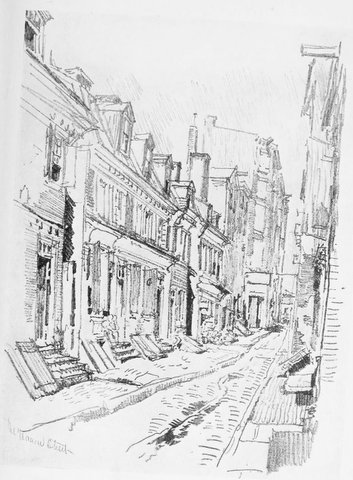
Rose Alley was a dead end backstreet, only ten feet wide, lined with three-story buildings with tattered masonry and split down the middle by grimy cobblestones. The one-time family homes had been turned into single rooms rented out to the poor working class. Mary Parker lived in one of these rooms. The 1847 African American Census reveals that the year after Ms. Parker died, there were eleven Black families living in small Rose Alley with a total of forty-two members. The women in the households were employed in the jobs available to them such as laundress, seamstress and domestic worker. If Ms. Parker was employed outside of the home, she likely worked in one of these jobs.

rose map

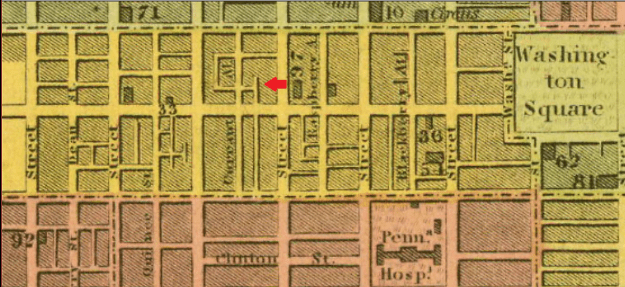
Rose Alley (red arrow) is rarely named on a map of the city. It was located parallel between 10th and 11th Streets and emptied into Locust Street. The alley no longer exists. It was demolished to make room for the Thomas Jefferson University Hospital.

Rose Alley was notable for an infamous house of prostitution and for a soup kitchen run by the Society of Friends (Quakers). It provided 600 quarts of hot soup daily during the bitter winter months. It is likely that Ms. Parker and her family (if she had one) took advantage of this life-saving nutrition. 

Narrow Street (1)

In addition to Mary Parker, research has so far identified nineteen other individuals with the family name of Parker interred at Bethel Burying Ground. Ms. Parker is the oldest one out of the twenty individuals recorded. She was 37 years of age. 


Eight-month-old Charlotte Stewart died this date, February 4th, in 1853 and was buried at Bethel Burying Ground.

Posted by Terry Buckalew on February 4, 2018
Posted in: On This date. Tagged: African American burial grounds, African American cemeteries, African American History, African Methodist Episcopal Church, archaeology, Bethel Burying Ground, Mother Bethel, Mother Bethel African Methodist Episcopal Church, Philadelphia, Richard Allen. Leave a comment

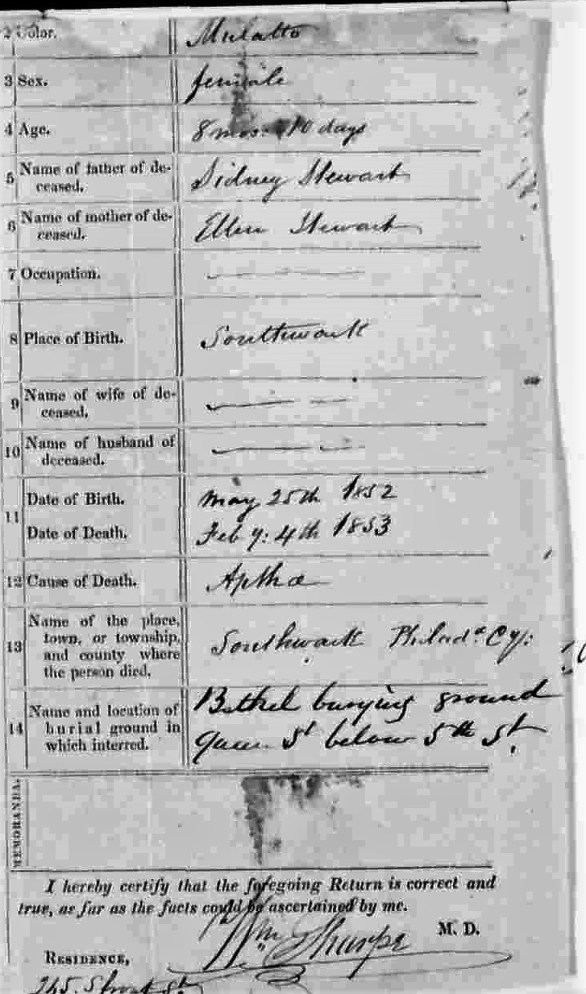
Stewart child

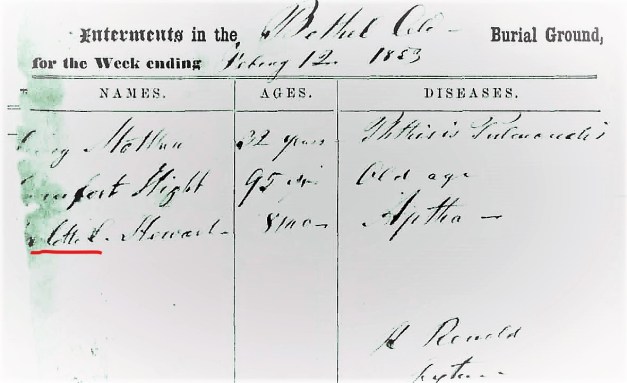
Eight-month-old Charlotte Stewart died this date, February 4th, in 1853 of Aptha and was buried at Bethel Burying Ground. The child’s death certificate was missing its top edge due to water damage which dissolved the paper. However, the weekly summary of burials by the Bethel Church Sexton, which is also damaged, appears to have  “Charlotte” (underlined in red) as the child’s first name.

InkedCharlotte Stewart

The baby’s parents were Ellen (35 y/o) and Sidney (45 y/o) Stewart. The family owned a home on Harmony Street (now Fitzwater) a block from Bethel Burying Ground. Mr. Stewart was a steward on a passenger steamboat sailing on the Delaware River for which he earned $300 a year. I was unable to locate an out of the home occupation for Ms. Stewart. However, she was the mother of five other children beside Charlotte, according to the 1847 Philadelphia African American Census. We do know that one of the children was “Isabella,” age four years old at the time of her sister’s death.

Little Charlotte’s official cause of death is only a symptom of a more serious condition. Apatha or Apathae are ulcers usually found in the mouth which are not fatal. The term can also mean, in rare situations, ulcers of the colon and in the 19th Century always led to death. This is most likely the reason for the baby’s death. 

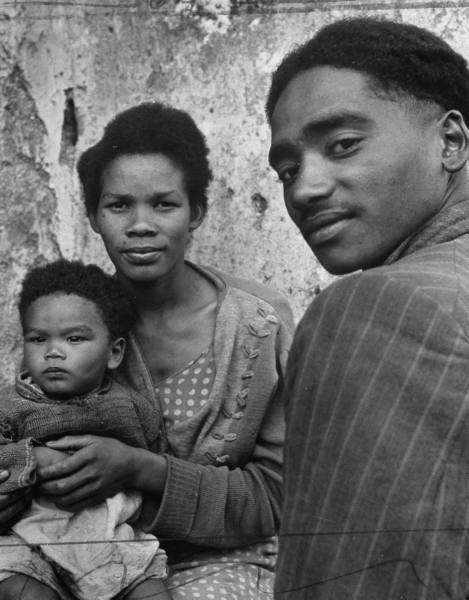
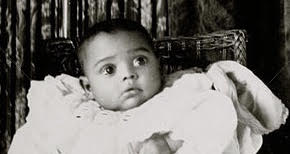
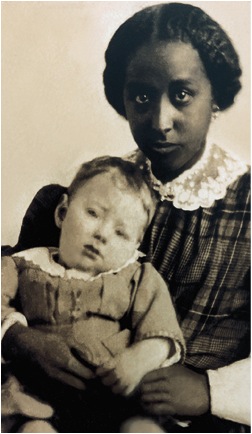
black baby

Charlotte was one of only three individuals in Philadelphia to die of Apatha in 1853. (19th-century photo of an unknown infant.)

Tragically, Sidney Stewart died six months later from lung disease and was buried next to his baby daughter at Bethel Burying Ground. Fourteen years later, the family would lose Isabella who was eighteen years of age, due to a bacterial infection she developed after giving birth to a child. She was buried at Lebanon Cemetery.

asas_lg


Twenty-seven-year-old Vincent Durham died this date, January 29th, in 1841 and was buried at Bethel Burying Ground.

Posted by Terry Buckalew on January 29, 2018
Posted in: On This date. Tagged: African American burial grounds, African American cemeteries, African American History, African Methodist Episcopal Church, archaeology, Bethel Burying Ground, Mother Bethel, Mother Bethel African Methodist Episcopal Church, Philadelphia, Richard Allen. Leave a comment

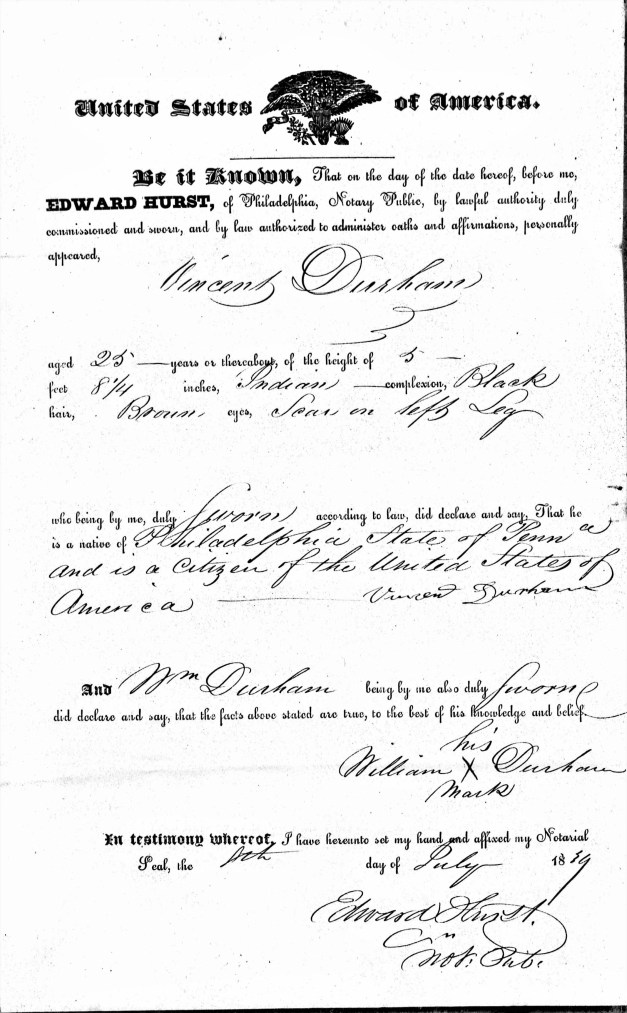
record-image_S3HY-6884-31S

Twenty-seven-year-old Vincent Durham died this day January 29th, in 1841 of an “Inflammation of the Stomach” and was buried at Bethel Burying Ground. The Durhams were a large African American family in 19th century Philadelphia. Out of surviving records, there are a total of fifteen Durhams buried at Bethel Burying Ground. Several members of the clan (including Vincent) lived on Marriott Street (now Montrose) in south Philadelphia. 

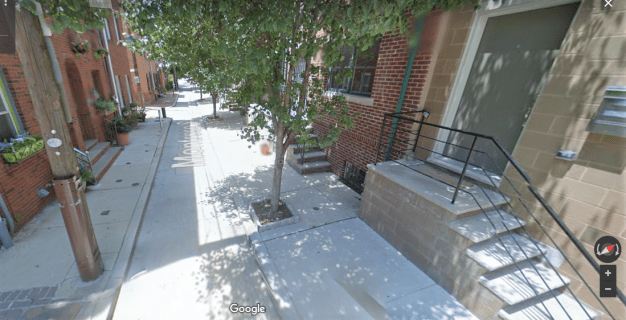
Montrose

Marriott (now Montrose) Street as it looks currently.

Vincent Durham worked as a laborer but wanted to improve his situation by becoming a merchant marine sailor. His first step in doing this was getting his Seaman Certificate that proved he was a citizen of the United States. This certificate was an early form of a passport that also stated that Mr. Durham was a free Black man and not enslaved. 

Seaman Durham

Tragically, Mr. Durham did not see his dreams fulfilled. He received his Certificate in July of 1839 and passed away a year and a half later. He is buried with a large number of his family members.

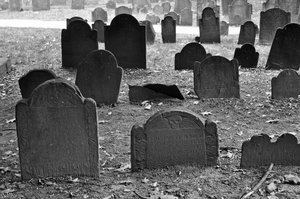
Old tombstones


Seventy-five-year-old Hester Jeffries died this date, January 26th, in 1847 and was buried at Bethel Burying Ground.

Posted by Terry Buckalew on January 26, 2018
Posted in: On This date. Tagged: African American burial grounds, African American cemeteries, African American History, African Methodist Episcopal Church, archaeology, Bethel Burying Ground, Mother Bethel, Mother Bethel African Methodist Episcopal Church, Philadelphia, Richard Allen. Leave a comment

Jefferies

Seventy-five-year-old Hester Jeffries* died this date, January 26th, in 1847 from complications of a stroke but wasn’t buried at Bethel Burying Ground until the 28th of January. The newspaper obituary for Ms. Jeffries states she died on the 26th although the death certificate states the 28th. This discrepancy is unexplained. 

Hester obit

Ms. Jeffries was employed as a dressmaker throughout her adult life, but it is unclear how much she could do during her final days. Her spouse William died in December of 1850. He worked as a whitewasher** for decades. The Jeffries were longtime residents of Philadelphia and the 1840 Federal Census reports that one of the Jeffries was formerly enslaved and eventually manumitted. 

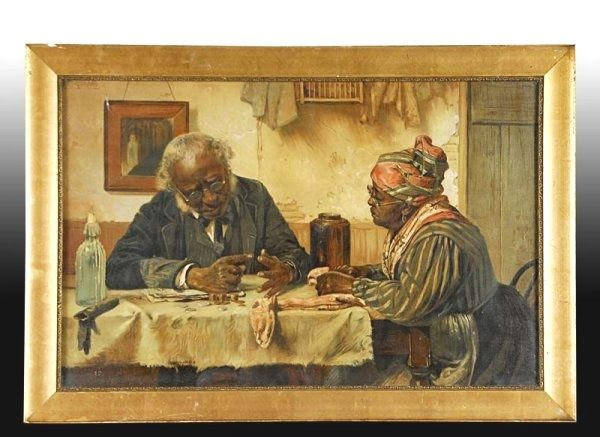
Black Couple

Black Philadelphians like the Jeffries took what was available to them from a racist society and they created a thriving community of businesses, churches, schools, and beneficial societies. This is a story of self-preservation and resilience that should not be forgotten.


*The attending physician misspelled the last name. All census and city directories spell it without the middle “e.”

**Whitewash is a solution of caustic lime, chalk, and water used for painting walls whiter.

Posts navigation

← Older Entries
Newer Entries →
  • Recent Posts

    • Three dead as church wall falls on this date, May 1st, in 1841.
    • The ten-month-old Baby Colgate died this date, June 20th, in 1847, and was buried at Bethel Burying Ground.
    • Fifty-eight-year-old Rachel Dawson died this date, May 3rd, in 1839, and was buried at Bethel Burying Ground.
    • Twenty-eight-year-old Robert Swails died on this date, March 31st in 1849, and was buried at Bethel Burying Ground.
    • Forty-year-old Jacob “Jesse” Howard died on this date, January 29th, in 1840, and was buried at Bethel Burying Ground.
  • Archives

    • May 2024
    • June 2023
    • May 2023
    • March 2023
    • January 2023
    • December 2022
    • November 2022
    • October 2022
    • September 2022
    • August 2022
    • May 2022
    • April 2022
    • March 2022
    • February 2022
    • January 2022
    • December 2021
    • November 2021
    • October 2021
    • September 2021
    • August 2021
    • July 2021
    • June 2021
    • May 2021
    • April 2021
    • March 2021
    • February 2021
    • January 2021
    • December 2020
    • November 2020
    • October 2020
    • September 2020
    • August 2020
    • July 2020
    • June 2020
    • May 2020
    • April 2020
    • March 2020
    • February 2020
    • January 2020
    • December 2019
    • November 2019
    • October 2019
    • September 2019
    • August 2019
    • July 2019
    • June 2019
    • May 2019
    • April 2019
    • March 2019
    • February 2019
    • January 2019
    • December 2018
    • November 2018
    • October 2018
    • September 2018
    • August 2018
    • July 2018
    • June 2018
    • May 2018
    • April 2018
    • March 2018
    • February 2018
    • January 2018
    • December 2017
    • November 2017
    • October 2017
    • September 2017
    • August 2017
    • July 2017
    • June 2017
    • May 2017
    • April 2017
    • March 2017
    • February 2017
    • January 2017
    • December 2016
    • November 2016
    • October 2016
    • September 2016
    • August 2016
    • July 2016
    • June 2016
    • May 2016
    • April 2016
    • March 2016
    • February 2016
    • January 2016
    • December 2015
    • November 2015
    • October 2015
    • September 2015
    • August 2015
    • July 2015
    • June 2015
    • May 2015
    • April 2015
    • March 2015
    • February 2015
    • January 2015
    • December 2014
    • November 2014
    • October 2014
  • Categories

    • Archaeology
    • BBG History
    • Bethel Burying Ground Name Directory
    • Bethel Burying Ground Timeline
    • Burial services
    • Diseases
    • Documents
    • Freemasonry
    • Ignatius Beck
    • It's a fact
    • Maps
    • Neighborhood
    • Newspaper Articles
    • On This date
    • Photographs
    • Uncategorized
    • Videos
  • Meta

    • Create account
    • Log in
    • Entries feed
    • Comments feed
    • WordPress.com
Blog at WordPress.com.
Bethel Burying Ground Project
Blog at WordPress.com.
  • Subscribe Subscribed
    • Bethel Burying Ground Project
    • Join 48 other subscribers
    • Already have a WordPress.com account? Log in now.
    • Bethel Burying Ground Project
    • Subscribe Subscribed
    • Sign up
    • Log in
    • Report this content
    • View site in Reader
    • Manage subscriptions
    • Collapse this bar
 

Loading Comments...