Bethel Burying Ground Project

Bethel Burying Ground Project

  • ABOUT THE BETHEL BURYING GROUND PROJECT

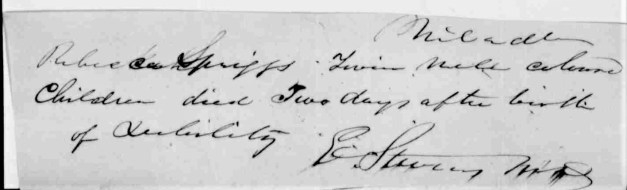
Rebecca and Osborn Spriggs* suffered the loss of their two-day-old twin boys on January 20th, in 1844. The brothers were buried at Bethel Burying Ground.

Posted by Terry Buckalew on January 20, 2019
Posted in: On This date. Tagged: African American burial grounds, African American cemeteries, African American History, African Methodist Episcopal Church, archaeology, Bethel Burying Ground, Mother Bethel, Mother Bethel African Methodist Episcopal Church, Philadelphia, Richard Allen. Leave a comment

spriggs

Two-day-old twin brothers died this date, January 20th, in 1844 of debility** and were buried at Bethel Burying Ground. Their parents were Rebecca, 23 years old, and Osborn Spriggs, 34 years old. Ms. Spriggs was born in Delaware and Mr. Spriggs was born in Maryland. He was employed as a waiter and she worked in the home, according to the 1850 U.S. Census. In the 1847 Philadelphia African American Census, Ms. Osborn reported that she worked as a wash woman. 
659978c3fcb90b0dc1a27bba157c220a

 According to the 1850 U.S. Census, Rebecca and Osborn Spriggs had three other children at the time of the twins’ deaths. They included Ellen (3 y/o), William (4 y/o), and Mary (5 y/o). Sadly, Ellen died a year after the twins, most likely from a heart condition. She also was buried at Bethel Burying Ground. The 1850 Census reported that a 15-year-old James Spriggs also lived with the family. He was employed as a barber. His relationship to the family is not stated.

After the twins’ deaths, Rebecca Spriggs went on to have at least two other children, Margaret and Rebecca, Jr. who were five years old and three years old respectively in 1850. 
map a

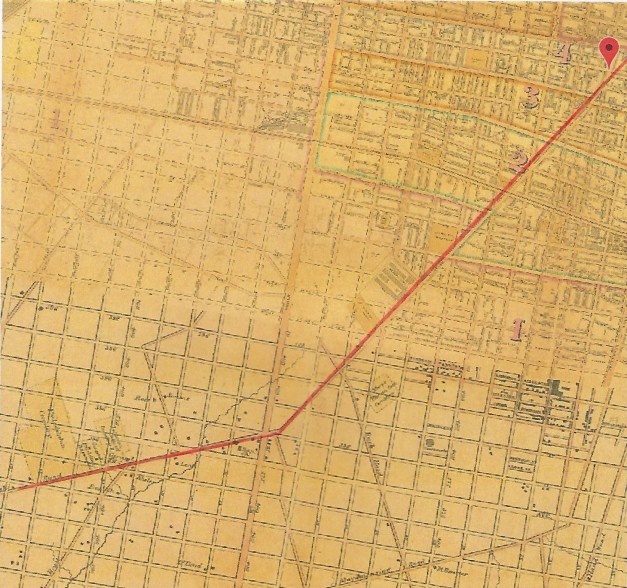
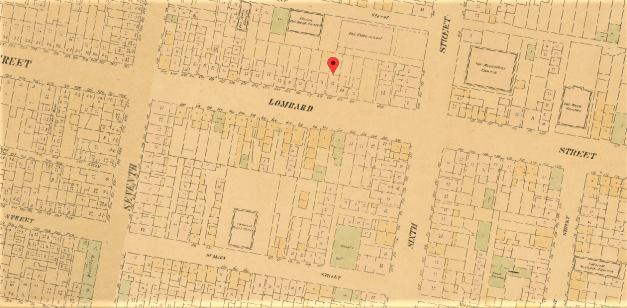
The pin is pointing to the approximate location of 201 Lombard Street.

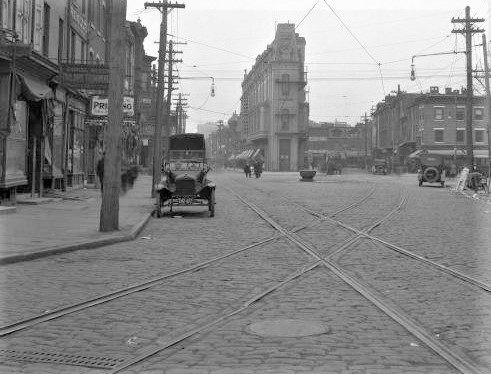
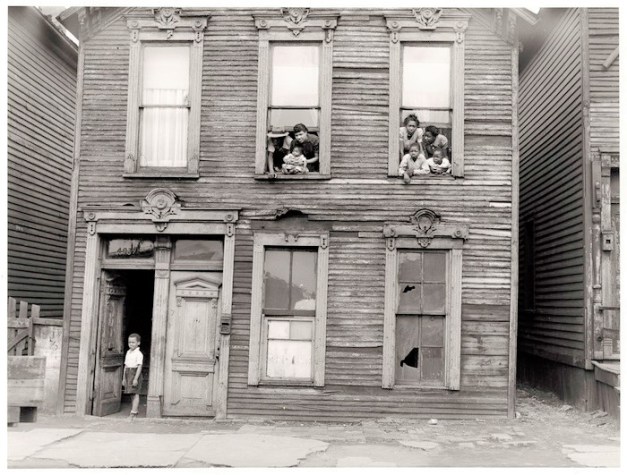
The Spriggs family lived in a one-room shanty in the rear of 201 Lombard Street that was located between 6th and 7th Streets on Lombard Street. They paid $3.50 a month for their rent. Mr. Spriggs earned $15 a month working as a waiter, according to the 1847 Census. Their home was across from a crowded, dirty, crime-ridden square, where prostitutes, policymakers, gambling rooms and speakeasies abounded. It was packed with dilapidated tenements filled with hundreds of black children and adults living in squalor; often in dank windowless basements without sanitary facilities. But because of the cheap rents, it was often the first Philadelphia address of newly arrived freed slaves in the antebellum era. In the early 1900s, these tenements were torn down and replaced by Starr Playground, a city playground.
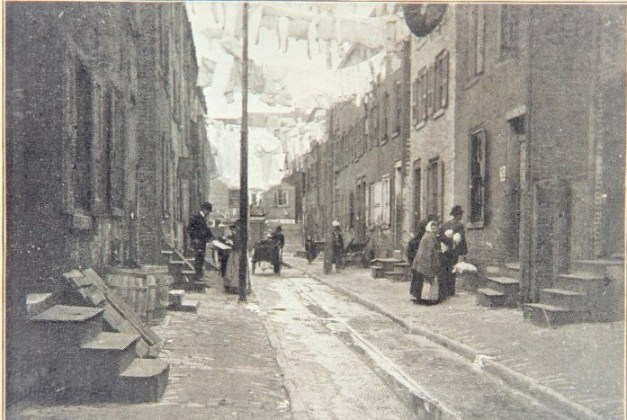


street near starr gardens 1905 hsp-some call it home

Alleyway near the family’s home. (Historical Society of Pennsylvania)
 

5b858f2ef7c3890dc1f6abe62c3b1346

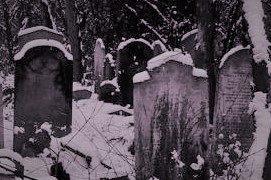
The Spriggs twins were buried on a cold day in December 1844 where snow started falling at 11 o’clock in the morning and continued through the night.


—————————————————————————————————————————————–

*I have found alternate spellings of the last name, i.e., .”Sprigg,” “Sprig,” and “Sprigs.” 

**Ms. Spriggs gave birth to several healthy children before and after the twins, so the “debility” or failure to thrive likely was due to the twins being premature and not able to nurse. 
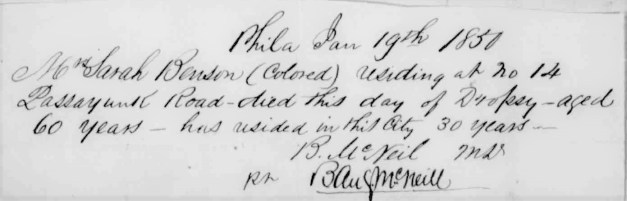
Sixty-year-old Sarah Benson died this date, January 19th, in 1850 and was buried at Bethel Burying Ground.

Posted by Terry Buckalew on January 19, 2019
Posted in: On This date. Tagged: African American burial grounds, African American cemeteries, African American History, African Methodist Episcopal Church, archaeology, Bethel Burying Ground, Mother Bethel, Mother Bethel African Methodist Episcopal Church, Philadelphia, Richard Allen. Leave a comment

sarah benson

Sixty-year-old Sarah Benson died this date, January 19th, in 1850 of Dropsy* and was buried at Bethel Burying Ground. Although not born in Pennsylvania, she had been living in Philadelphia for the last thirty years. The 1847 Philadelphia African Census shows her as a widow and living with another woman and a child under five years old. Ms. Benson is reported as “assisting at home,” while the younger woman is employed as a wash woman earning $15 a month. Their rent for their one-room shed in the rear of 14 Passyunk Road was an expensive $5 a month.

passyunk longview

Ms. Benson resided at the end of the long Passyunk Road (red pin) which was the entrance to the city proper from the farms in the southern part of the county. It is hard to imagine the constant noise, commotion, and tumult of the 24/7 procession of heavy freight wagons driven by barking teamsters. In addition, there would have been large droves of livestock that included cattle, pigs and sheep moving up the road. 

passyunk 1

The Benson residence (red pin) was not only exposed to constant heavy traffic but there was also a large commercial liquor distillery right across the street, which surely added to the chaos.

Sarah Benson lived from 1820 to 1850  in the most racist city in the North. She witnessed and physically survived six major race riots during those decades. In addition to the major riots, Irish vigilante gangs with the terrifying names of Killers, Murderers, Bleeders, and Skinners went unchecked daily in their assaults against Black citizens. Black women were forced to do their market shopping early in the morning because, by late morning, the now drunk gangsters on the streets posed a violent threat. 

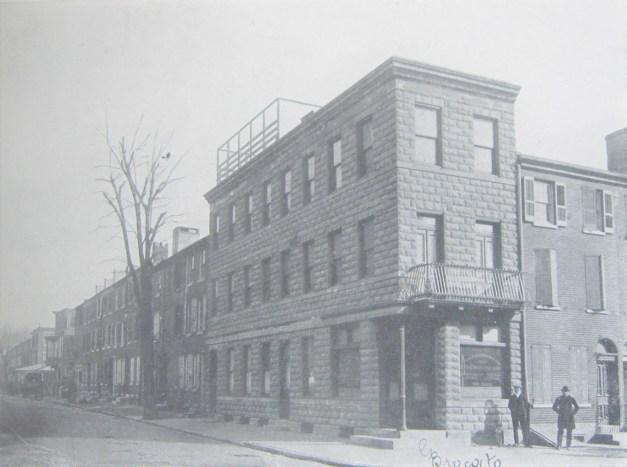
passyunk and 5th 1920

Ms. Benson’s street in 1920. 

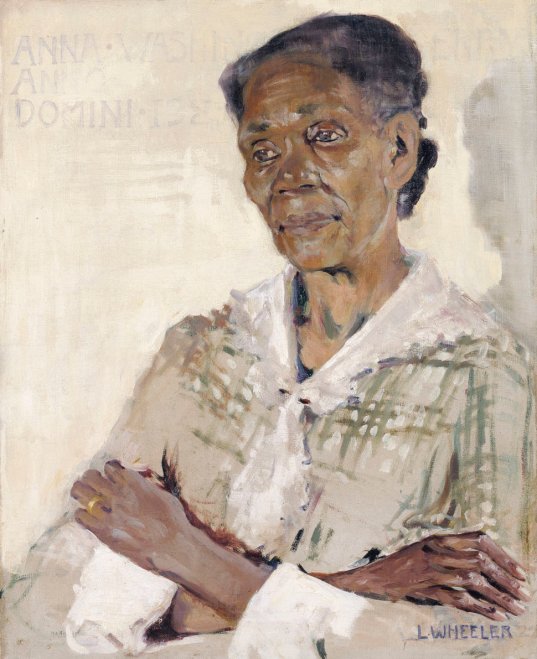
black woman 8 (2)

Ms. Benson was buried at Bethel Burying Ground on a cold overcast January day where the temperature only reached thirty-four degrees. 


*Dropsy – An old term for the swelling due to the accumulation of excess water. Today, one would be more descriptive and specify the cause, such as congestive heart failure or kidney disease.
 

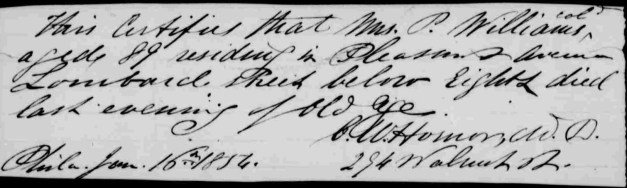
Eighty-nine-year-old Phillis Williams died this date, January 15th, in 1854 and was buried at Bethel Burying Ground.

Posted by Terry Buckalew on January 15, 2019
Posted in: On This date. Tagged: African American burial grounds, African American cemeteries, African American History, African Methodist Episcopal Church, archaeology, Bethel Burying Ground, Mother Bethel, Mother Bethel African Methodist Episcopal Church, Philadelphia, Richard Allen. Leave a comment
phillis williams

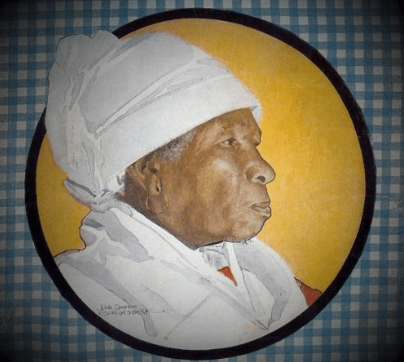
Eighty-nine-year-old Phillis Williams died this date, January 15th, in 1854 of “old age” and was buried at Bethel Burying Ground. Ms. Williams was a widow whose deceased spouse, Sampson, likely died pre-1836, according to census records. In addition, it is likely that he was buried at Bethel Burying Ground. A death certificate is not available for him. The vast majority of the Philadelphia Board of Health death certificates for the 1830s are missing and presumably no longer exist. 

Ms. Williams was born (1766) into slavery in Maryland and eventually gained her freedom through manumission, according to the 1850 U.S. Census. In 1847, four years before her death, she was living with the Coursey family at 30 Raspberry Street in a 12’x12′ room for which they paid $2.75 a month. Ann Coursey, then thirty-two-years-old, worked as a wash woman. William Coursey was employed as a waterman.* The Courseys had two children who likely attended The Raspberry Street School across the street from their home. The school was established by Mrs. Emeline Higgins for Black children in 1848.

christian_921_edited

Above is an undated photo of 921 Hutchinson Street  (formerly Raspberry Street) – the northeast corner of Hutchinson and Christian Streets.

black woman 4

On the day that Ms. Williams died, the day dawned “sunny and pleasant…But as the day advanced, grey and dusky clouds swarmed over the sky, and the air became raw, moist and extremely disagreeable.” (North American, 17 January 1854, p.3.)

—————————————————————————————————————————————–

*Definition of Waterman — a: a man who makes his living from the water (as by fishing); b: a boatman who plies for hire, usually on inland waters or harbors. This information about the Courseys is from the 1847 Philadelphia African American Census.


Fifty-eight-year-old Barbara Ludlow died this date, January 11th, in 1848 and was buried at Bethel Burying Ground

Posted by Terry Buckalew on January 11, 2019
Posted in: On This date. Tagged: African American burial grounds, African American cemeteries, African American History, African Methodist Episcopal Church, archaeology, Bethel Burying Ground, Mother Bethel, Mother Bethel African Methodist Episcopal Church, Philadelphia, Richard Allen. Leave a comment

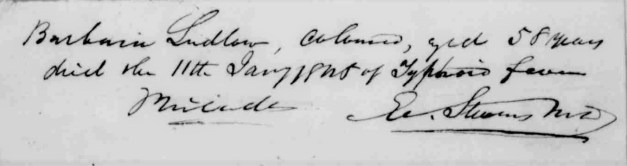
ludlow

Fifty-eight-year-old Barbara Ludlow died this date, January 11th, in 1848 of Typhoid Fever and was buried at Bethel Burying Ground. Ms. Ludlow was the matriarch of a large family, according to the 1847 Philadelphia African American Census. Typhoid Fever is a bacterial disease transmitted by the ingestion of food or water that is contaminated with the feces of an infected person and contains the bacterium Salmonella enterica. This disease has been a deadly human disease for thousands of years, flourishing in conditions of poor sanitation, crowding, and poverty. After becoming infected, the victim develops a high fever and becomes exhausted and emaciated due to constant diarrhea and the perforation of the intestines. The patient develops septicemia, slips into a coma and dies. 

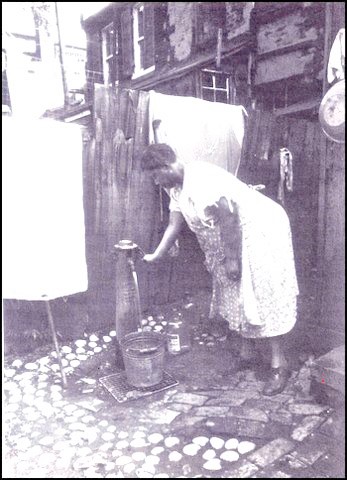
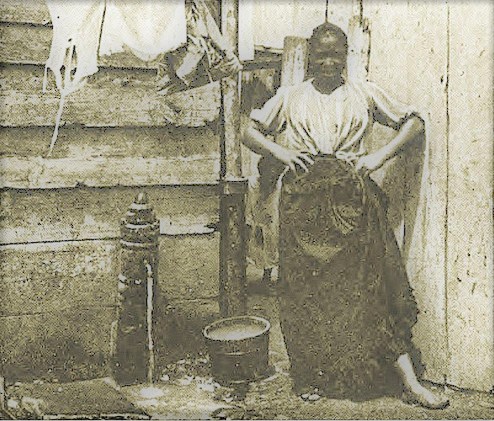
black woman (2)

The photograph above illustrates the problem that poor people faced getting clean water. The pump is being fed from a well that is next to outhouses. If the cesspool was not properly built or maintained, human waste likely seeped into the drinking and cooking water.

little pine treet

The red arrow above points to the exact location of #7 Little Pine Street that by 1856 became 707 Minster Street. It was a two-story wood frame house that housed three families, according to the 1847 Census. It appears that Ms. Ludlow’s family of nine lived in the 12’x12′ room on the first floor. The second floor was home to two separate families who paid rent by the week. The Ludlow family paid $3 a month. The 1847 census taker commented that there had been much sickness in the family and that “part” of the family members “sleep on the floor.”

AA Coachman
Waiters
woodsawyer (1)
Washer Woman

The 1847 Philadelphia African American Census shows that there were eight other members of the family in addition to Ms. Ludlow. Five adult males were employed as waiters, woodsawyers and a coachman. The two adult females were employed as a barber and a washerwoman. The young children went to local schools – one of which was right across the street from their home. All of the adults regularly attended religious services.

Little Pine Street was a narrow two-block long thoroughfare located between 6th and 8th Streets and Pine and Lombard Streets. In 1847, it was home to at least 52 Black families consisting of 134 members. Nineteen men and woman reported having been enslaved previously.

mortice-blackcemeteries-14

Ms. Ludlow was buried at Bethel Burying Ground on a brutally cold day where the temperature sank to two degrees above zero. 


Fifty-six-year-old Lavinia Thomas died this date, January 2nd, in 1854 and was buried at Bethel Burying Ground.

Posted by Terry Buckalew on January 2, 2019
Posted in: On This date. Tagged: African American burial grounds, African American cemeteries, African American History, African Methodist Episcopal Church, archaeology, Bethel Burying Ground, Mother Bethel, Mother Bethel African Methodist Episcopal Church, Philadelphia, Richard Allen. Leave a comment

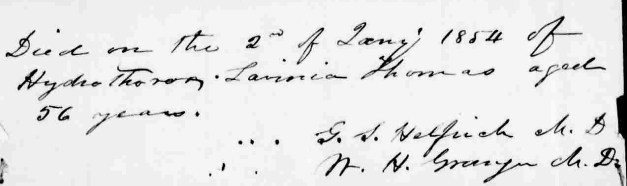
L THOMAS

Fifty-six-year-old Lavinia Thomas died this date, January 2nd, in 1854 of a Hydrothorax* and was buried at Bethel Burying Ground.  According to the 1850 U.S. Census, Ms. Thomas, a native of North Carolina, lived with the Singer family. Theodore Singer, 45 years old, was born in New Jersey and employed as a waiter. His spouse, Rebecca, was 27 years old and also was born in New Jersey. All their children were born in Pennsylvania: John (17) worked as a barber; James (5) and Elizabeth (2). The Singers lost a two-year-old daughter, Mary Lavinia Singer, to Tuberculosis in July of 1849. She also was buried at Bethel Burying Ground.**

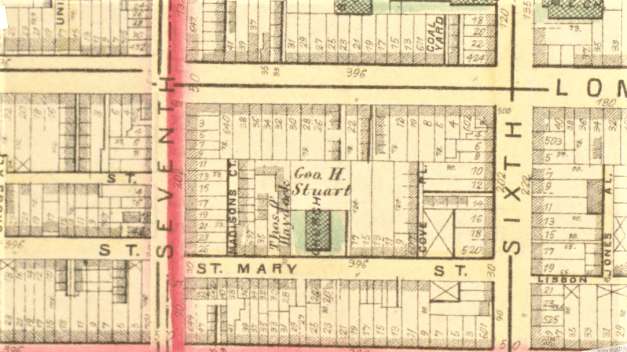
In 1847 the Thomas/Singer family lived on the 700 block of Cedar Street (now South Street) on the border of the city with the southern districts. All four members of the family lived in a 10’X10′ room for which they paid $3 a month. It was a busy business corridor and not an unusual address for someone in Mr. Singer’s occupation. However, by the time of Ms. Thomas’ death, they lived in St. Mary’s Street, the “heart of the slums.”  It would have been quite an economic fall for the family. St. Mary’s was a narrow thoroughfare lined with dilapidated hovels that were home to speakeasies,  prostitution, gambling, and rooming houses where rats ruled. In addition, St. Mary’s Street was a perennial target of violent white gangs who, in 1842, burned the local Black church to the ground. 

Map of St. Mary's Street.png

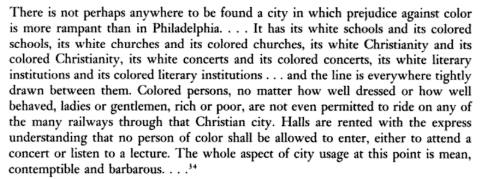
Black historian and abolitionist William Wells Brown declared of Philadelphia in 1854: “Colorphobia is more rampant here than in the pro-slavery, negro-hating city of New York” ***

Frederick Douglass agreed: 

Philadelphia in 1854

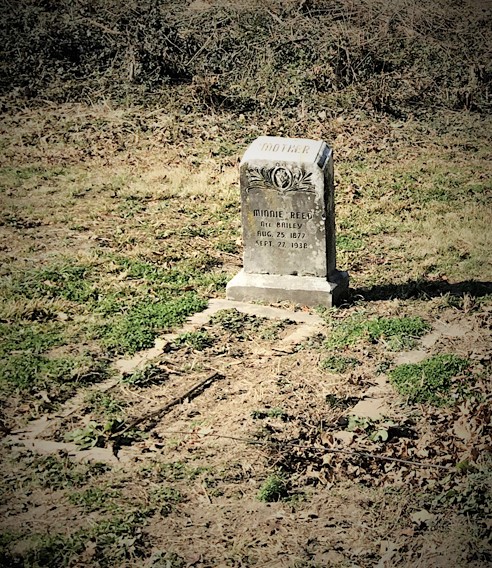
Lavina tombstone

Ms. Thomas was buried on a cold day in January at Bethel Burying Ground. It had been very cold for weeks where the Schuylkill River was frozen over and closed to ship traffic. It is likely Ms. Thomas was buried with the two-year-old Singer child who may have been her granddaughter. 

—————————————————————————————————————————————–

*Hydrothorax is when blood accumulates in the chest cavity. This condition is most likely to develop secondary to congestive heart failure or liver disease.

**https://bethelburyinggroundproject.com/2017/07/14/two-year-old-mary-lavinia-singer-died-this-date-july-14th-in-1849-and-was-buried-at-bethel-burying-ground/

*** “Philadelphia: A 300-Year History,” p. 386. 

Thirty-year-old Elizabeth Baxter died this date, December 31st, in 1847 and was buried at Bethel Burying Ground.

Posted by Terry Buckalew on December 31, 2018
Posted in: On This date. Tagged: African American burial grounds, African American cemeteries, African American History, African Methodist Episcopal Church, archaeology, Bethel Burying Ground, Mother Bethel, Mother Bethel African Methodist Episcopal Church, Philadelphia, Richard Allen. Leave a comment

Elizabeth Baxter

Thirty-one-year-old Elizabeth Baxter died this date, December 31st, in 1847 of an illness that resulted in paralysis before she passed away. The paralysis could have been either from trauma or from a cerebral vascular accident. Little is known about Ms. Baxter’s personal history. The Baxter family is not recorded in the 1847 Philadelphia African American Census or in the 1850 U.S. Census. The 1847 Philadelphia City Directory shows a James Baxter also residing on Shippen Street (now Bainbridge) between 12th and 13th Streets. Mr. Baxter is employed as a waiter.

Map 2Map 1

Shippen Street in 1847 was an overcrowded slum that was home to at least sixty-five Black households totaling over 250 family members. The vast majority of the working females were employed as washwomen while the males were essentially laborers in a wide range of businesses including wharf worker, porter/carrier, and rag picker. An 1847 census worker commented on Black residents on Shippen Street: “Tis a very difficult matter to tell how much these people make a week or month. Some make a considerable amount. Others make very little. The more poor and respectable the person, the less they make. This is true in respect to both male and females.” 

Peace

Elizabeth Baxter was buried on a warm New Year’s Day at Bethel Burying Ground where the temperature reached fifty-four degrees.  

Forty-five-year-old Catharine Morris and her stillborn child died this date, December 26, in 1820 and were buried at Bethel Burying Ground.

Posted by Terry Buckalew on December 26, 2018
Posted in: On This date. Tagged: African American burial grounds, African American cemeteries, African American History, African Methodist Episcopal Church, archaeology, Bethel Burying Ground, Mother Bethel, Mother Bethel African Methodist Episcopal Church, Philadelphia, Richard Allen. Leave a comment

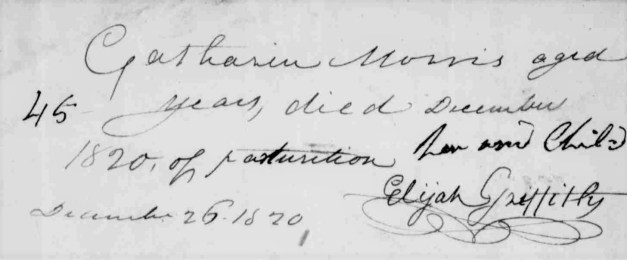
Catharine Morris.jpg

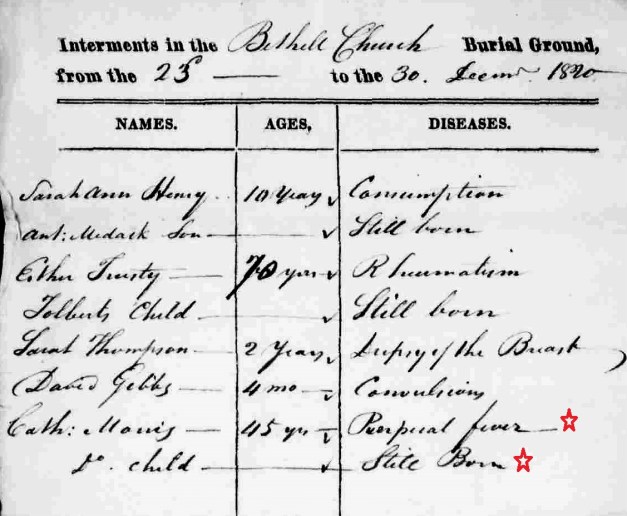
Forty-five-year-old Catharine Morris and her stillborn child died this date, December 26th, in 1820 and they were buried at Bethel Burying Ground. Ms. Morris died of Puerperal Fever, which is a bacterial infection of the female reproductive tract. The diagnosis is puzzling because, according to the medical literature, a fever of this kind commonly occurs between 1-4 days after the delivery. The above death certificate was written by Dr. Elijah Griffiths who appears to have had trouble with spelling and sentence construction on this day. The below Board of Health summary is clearer. 

Catharine Morris 2

Ms. Morris’ home address is unknown. Looking at the 1820 Philadelphia City Directory, an educated guess would have Ms. Morris as the spouse of Abraham Morris who resided in Cleaver Alley off Walnut Street between 5th and 6th Street. This would put her home two blocks from her doctor and a block away from the Southern Dispensary, a medical clinic for the poor. However, this is just a guess. Mr. Morris’ occupation is listed as “laborer.”

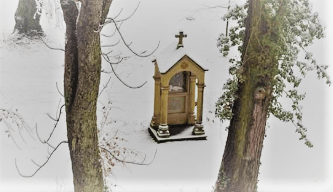
cold tombstone

The 1820 Philadelphia Board of Health reported that there were 185 stillbirths in the city during that year and 13 deaths from Puerperal Fever. From the surviving Bethel Burying Ground’s death certificates, there are 86 stillbirth babies interred. In addition, there are six women who reportedly died of Puerperal Fever. 

Ms. Morris and her child were buried together on the day after Christmas in 1820 at the Bethel Burying Ground. 


Seventy-year-old Sarah Mason died this date, December 19th, in 1851 and was buried at Bethel Burying Ground.

Posted by Terry Buckalew on December 19, 2018
Posted in: On This date. Tagged: African American burial grounds, African American cemeteries, African American History, African Methodist Episcopal Church, archaeology, Bethel Burying Ground, Mother Bethel, Mother Bethel African Methodist Episcopal Church, Philadelphia, Richard Allen. Leave a comment

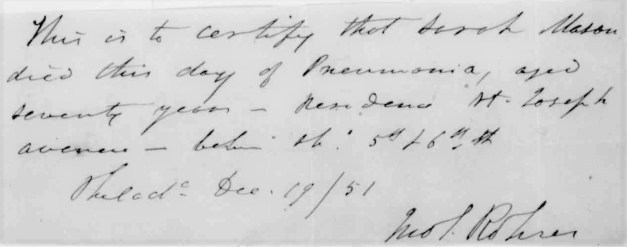
SARAH MASON

Seventy-year-old Sarah Mason died this date, December 19th, in 1851 of Pneumonia and was buried at Bethel Burying Ground. There is only a small amount of personal data on Ms. Mason. The 1850 U.S. Census in the year before her death reported that she was born in Maryland in 1780. She lived with a family where the mother may have been her daughter. The family in 1850 included James Thomas (41 y/o) who was born in Delaware and was employed as a carriage drive. His spouse was Caroline Thomas (39 y/o), born in Maryland. They had two children William (17 y/o), a student, and Adelaid (3 y/o). Both children were born in Pennsylvania.

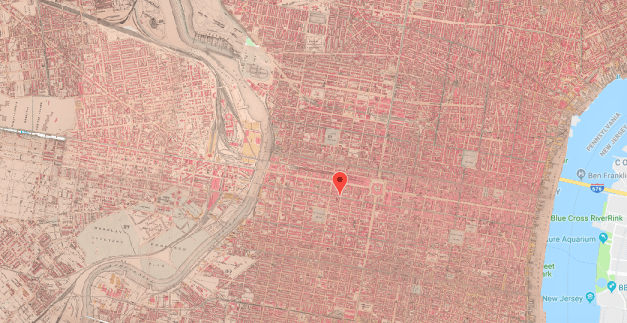
Big Map

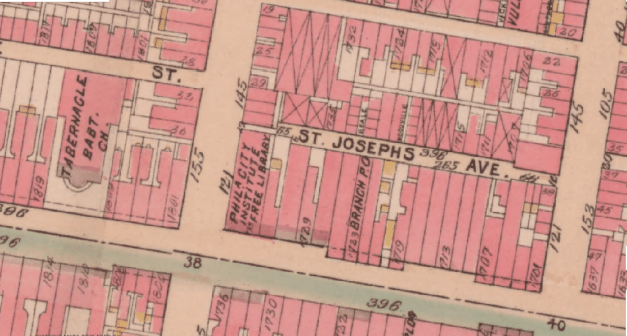
Ms. Mason and the Thomas family lived in a room on St. Joseph’s Avenue, an unpaved alley between Market and Chestnut Streets and what is now 17th and 18th Streets in center city Philadelphia. There is no mention of this thoroughfare in the 1837 or 1847 African American Censuses. 

Screenshot 2018-12-13 11.11.44

Research has been unable to discover Ms. Mason’s employment over the decades. However, by 1847, forty-nine percent of Philadelphia Black women were occupied as washerwomen and domestic servants.* Historian Gayle T. Tate explains the difference between a washerwoman and a laundress. A washerwoman had no set clientele as opposed to a laundress who would have a steady clientele of “five or six families.” 


The Laundress
Laundress

Mondays were often spent securing work assignments, augmenting one’s business, gathering work supplies, and setting up the general workloads based on expected days and times of delivery. Tuesdays and Wednesdays were designated as wash days, necessitating frequent trips to the fire hydrants, alternately boiling water while soaking clothes, washing and starching clothes in steaming hot water, and then hanging them, using the clothesline across the courtyards and the makeshift ones strung diagonally across the kitchen, as well as vacated furniture that served multifunctional purposes. Thursdays and Fridays would be the best exposure to the meager light coming into the apartment. Saturday was the day set aside for ironing, an all-day job, with women finishing late at night or early in the morning.*

All this while cooking, cleaning, shopping and caring for small children at home. 

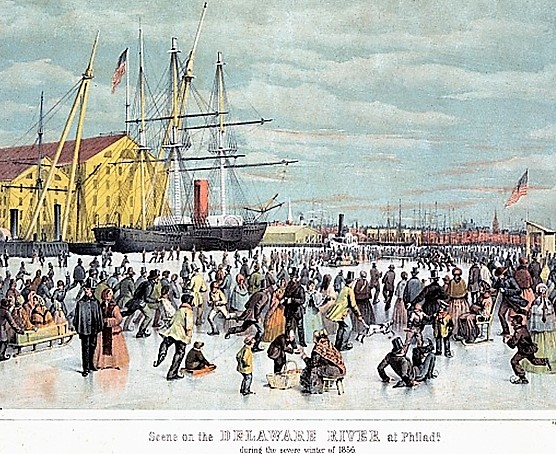
20.70-LOC-Skating-on-Frozen-DE-1st-version-choose-one

Ms. Mason was buried on a bitterly cold day in December. For weeks, Philadelphians had been experiencing “intense cold weather” that froze over the Delaware and Schuylkill Rivers. 

Fifty-three-year-old Cato Griggs died this date, December 14th, in 1842 and was buried at Bethel Burying Ground.

Posted by Terry Buckalew on December 14, 2018
Posted in: On This date. Tagged: African American burial grounds, African American cemeteries, African American History, African Methodist Episcopal Church, archaeology, Bethel Burying Ground, Mother Bethel, Mother Bethel African Methodist Episcopal Church, Philadelphia, Richard Allen. Leave a comment

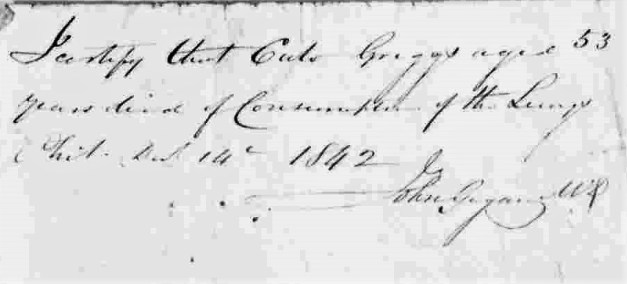
Cato Griggs

Fifty-three-year-old Cato Griggs died this date, December 14th, in 1842 of Consumption (Tuberculosis) and was buried at Bethel Burying Ground. Mr. Griggs was employed as a chimney sweep and his spouse was employed as a day worker, according to the 1837 Philadelphia African American Census. Ms. Griggs’ first name was not recorded. In the 1830 U.S. Census, they reported having a son and daughter under the age of ten years. By the time of Mr. Griggs’ death, the children were adults and no longer lived with their parents in their one room on Bedford Street below 7th Street in the Moyamensing District. 

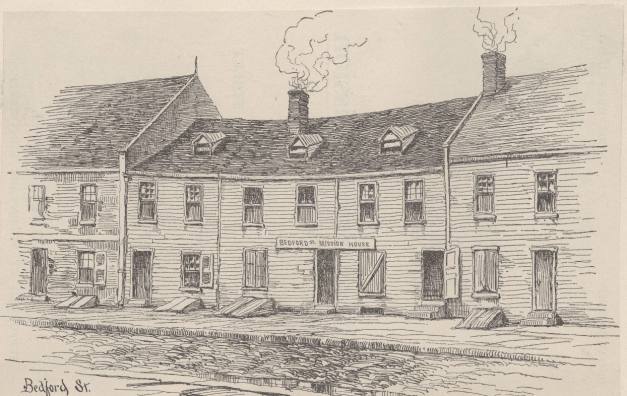
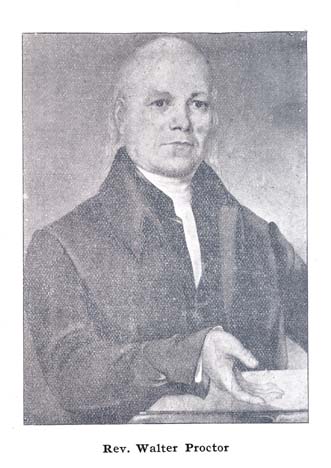
The Griggs were working class poor, having only $20 in personal property and paying only $2.50 per month for rent, according to the 1837 Census. It is amazing to look at the 1830 U.S. Census and see who the Griggs’ neighbors were on Bedford Street. They included African Methodist Episcopal pioneering missionaries and former Bethel Church pastors Rev. John Boggs and Rev. Walter Proctor.* In addition, there were the founding AME families of Trusty, Durham, Law, and Tilghman. Many of these families have members buried at Bethel Burying Ground. Given the number of militant freedom fighters (Underground Railroad) on Bedford Street, it is very likely that runaways from Southern enslavers were sheltered with these brave families. 

Bedford Street 1854

The Bedford Street Mission was a welcomed soup kitchen for the poor of the area.

WALKING WHILE BLACK?

“Cato Griggs, a sprout from the African race, and a suspicious character was caught trespassing on the premises of a citizen of Southwark, about 2 o’clock in the morning. Committed.”   (Public Ledger, November 25, 1837, p.1.)

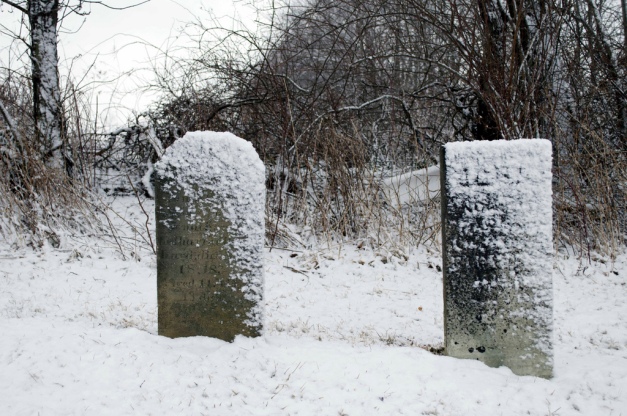
 snow on gravestones

Mr. Griggs was buried at the Bethel Burying Ground on a cold December day that saw snow flurries in the afternoon.

————————————————————————————————————————————

*William Carl Bolivar, an African American historian, and journalist, wrote that Durham and Proctor would travel to the slave state of Maryland for “camp meetings” preaching the bible. In addition to “soul saving,” these men would pilot enslaved men and women to freedom at great danger to these Black missionaries. (Philadelphia Tribune, June 28, 1913, in Bolivar’s weekly column, Pencil Pusher Points.) 

Walter Proctor

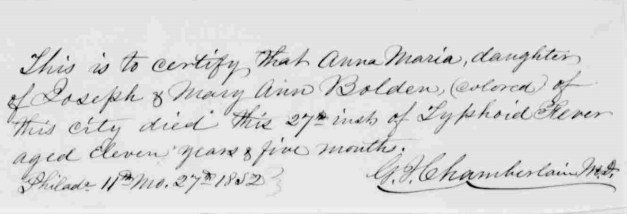
Eleven-year-old Anna Maria Bolden died this date, November 27th, in 1852 and was buried at Bethel Burying Ground.

Posted by Terry Buckalew on November 27, 2018
Posted in: On This date. Tagged: African American burial grounds, African American cemeteries, African American History, African Methodist Episcopal Church, archaeology, Bethel Burying Ground, Mother Bethel, Mother Bethel African Methodist Episcopal Church, Philadelphia, Richard Allen. Leave a comment

ANNA MARIA BOLDEN

Eleven-year-old Mary Ann Bolden died this date, November 27th, in 1853 of Typhoid Fever and was buried at Bethel Burying Ground. She was the daughter of Joseph and Mary Ann Bolden. He was twenty-five years old at the time of his child’s death. Ms. Bolden was thirty-one. Both were born in Maryland. Mr. Bolden worked as a porter sporadically which was problematical since Ms. Bolden was physically unable to work. Charitable organizations donated firewood and “some groceries” to the family, according to the 1847 Philadelphia African American Census. 

The Boldens had two other children, Levi, who was seven-years-old at the time of his sister’s death and Joseph who was four-years-old, according to the 1850 U.S. Census. Ms. Bolden would give birth to a stillborn child in 1854 who was buried at Lebanon Cemetery. 

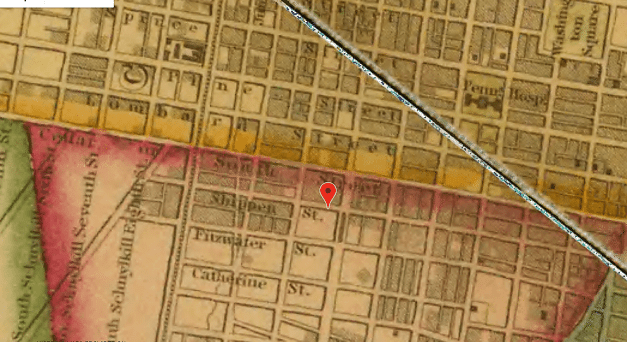
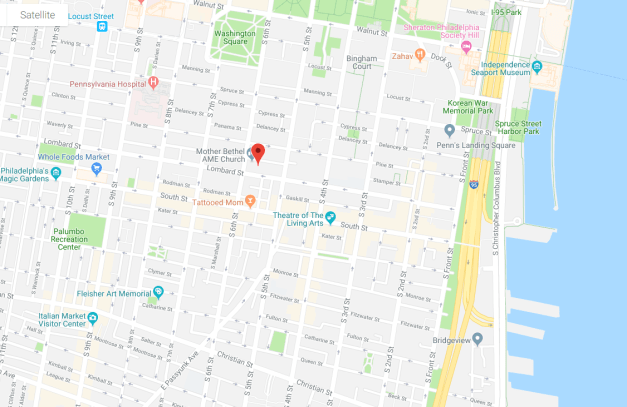
THEE MAP

The Bolden home (red pin above) was in Atkinson’s Court that opened on to Lombard Street between 5th and 6th Streets.

The Court

Atkinson’s Court (red arrows) was located between two important Black churches: Bethel AME Church (yellow arrow) and Wesley AMEZ (black arrow).

The Bolden family lived in one room at #1 Atkinson’s Court for which they paid $2.50 a month in rent, according to the 1847 Philadelphia African American Census. This overcrowded block-wide 10-foot wide lane was home to twenty poor Black families, totaling seventy-five member. The sun never shone in the dark rooms on the alley, making it a haven for respiratory diseases, especially Tuberculosis. For all the residents, there was only one hydrant/spigot for water to supply the block with questionable clean water. 

trilby

lee_russell_14_2003_455212_displaysize

In the same building as the Boldens, there was a family of eight adults and children living in one room. Six of the eight were formerly enslaved, according to the 1847 Census.

The Boldens buried their daughter on a day that started out cloudy with the temperature at 47 degrees at sunrise. The afternoon saw the skies clear with the temperature falling to 42 degrees by two o’clock.


Posts navigation

← Older Entries
Newer Entries →
  • Recent Posts

    • Three dead as church wall falls on this date, May 1st, in 1841.
    • The ten-month-old Baby Colgate died this date, June 20th, in 1847, and was buried at Bethel Burying Ground.
    • Fifty-eight-year-old Rachel Dawson died this date, May 3rd, in 1839, and was buried at Bethel Burying Ground.
    • Twenty-eight-year-old Robert Swails died on this date, March 31st in 1849, and was buried at Bethel Burying Ground.
    • Forty-year-old Jacob “Jesse” Howard died on this date, January 29th, in 1840, and was buried at Bethel Burying Ground.
  • Archives

    • May 2024
    • June 2023
    • May 2023
    • March 2023
    • January 2023
    • December 2022
    • November 2022
    • October 2022
    • September 2022
    • August 2022
    • May 2022
    • April 2022
    • March 2022
    • February 2022
    • January 2022
    • December 2021
    • November 2021
    • October 2021
    • September 2021
    • August 2021
    • July 2021
    • June 2021
    • May 2021
    • April 2021
    • March 2021
    • February 2021
    • January 2021
    • December 2020
    • November 2020
    • October 2020
    • September 2020
    • August 2020
    • July 2020
    • June 2020
    • May 2020
    • April 2020
    • March 2020
    • February 2020
    • January 2020
    • December 2019
    • November 2019
    • October 2019
    • September 2019
    • August 2019
    • July 2019
    • June 2019
    • May 2019
    • April 2019
    • March 2019
    • February 2019
    • January 2019
    • December 2018
    • November 2018
    • October 2018
    • September 2018
    • August 2018
    • July 2018
    • June 2018
    • May 2018
    • April 2018
    • March 2018
    • February 2018
    • January 2018
    • December 2017
    • November 2017
    • October 2017
    • September 2017
    • August 2017
    • July 2017
    • June 2017
    • May 2017
    • April 2017
    • March 2017
    • February 2017
    • January 2017
    • December 2016
    • November 2016
    • October 2016
    • September 2016
    • August 2016
    • July 2016
    • June 2016
    • May 2016
    • April 2016
    • March 2016
    • February 2016
    • January 2016
    • December 2015
    • November 2015
    • October 2015
    • September 2015
    • August 2015
    • July 2015
    • June 2015
    • May 2015
    • April 2015
    • March 2015
    • February 2015
    • January 2015
    • December 2014
    • November 2014
    • October 2014
  • Categories

    • Archaeology
    • BBG History
    • Bethel Burying Ground Name Directory
    • Bethel Burying Ground Timeline
    • Burial services
    • Diseases
    • Documents
    • Freemasonry
    • Ignatius Beck
    • It's a fact
    • Maps
    • Neighborhood
    • Newspaper Articles
    • On This date
    • Photographs
    • Uncategorized
    • Videos
  • Meta

    • Create account
    • Log in
    • Entries feed
    • Comments feed
    • WordPress.com
Blog at WordPress.com.
Bethel Burying Ground Project
Blog at WordPress.com.
  • Subscribe Subscribed
    • Bethel Burying Ground Project
    • Join 48 other subscribers
    • Already have a WordPress.com account? Log in now.
    • Bethel Burying Ground Project
    • Subscribe Subscribed
    • Sign up
    • Log in
    • Report this content
    • View site in Reader
    • Manage subscriptions
    • Collapse this bar
 

Loading Comments...