Bethel Burying Ground Project

Bethel Burying Ground Project

  • ABOUT THE BETHEL BURYING GROUND PROJECT

The three-month-old son of Francis and Maria Still died this date, February 12th, in 1850 and was buried in Bethel Burying Ground

Posted by Terry Buckalew on February 12, 2015
Posted in: On This date. Tagged: African American burial grounds, African American cemeteries, African American History, archaeology, Bethel Burying Ground, Mother Bethel African Methodist Episcopal Church, Philadelphia, Richard Allen. Leave a comment

STill2

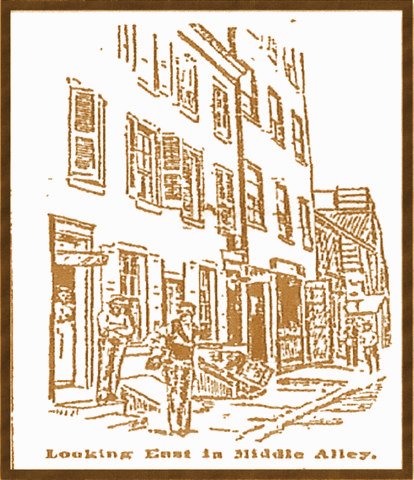
The three-month-old son of Francis (30) and Maria Still (28) died this date, February 12th, in 1850 of convulsions and was buried in Bethel Burying Ground. Mr. Still was a porter and Mrs. Still was a day worker. The family lived at 4 1/2 Middle Alley.* They had another child approximately 3-4 years of age that attended the Lombard Infant School. Both mother and father could read and write according to the 1847 African American Census.

Middle Alley (1)

Every time I come across a family living in “notorious”** Middle Alley I cringe because of the alley’s long history of violence, brothels, speakeasies and crushing poverty. The only other factor that would make it worst is if the address contained a “1/2” after the house number as in the case of the Still family.  It usually signified a 9’x9′ shed attached to the rear of the tenement. A shanty where a wooden floor would be a luxury. It would be situated next to the outhouse used by the dozens of people living in the adjacent buildings. Rats, roaches, the threat of fire and deadly diseases were constant neighbors. And yet the Still family persevered as did the thousands of other Black families did under the same circumstances. When we state that we “stand on the shoulders of giants” – these people buried at Bethel Burying Ground are the giants!

*Middle Alley ran from 6th to 7th Streets and between Spruce and Pine Streets. It is now named Panama Street. 

**Colored Amazons: Crime Violence, and Black Women in the City of Brotherly Love, 1880-1910 by Kali N. Gross, p. 52-53.; The Philadelphia Negro by W.E.B. DuBois, p. 60 and  293.

On this date, February 11th, the six-month-old son of Josiah and Mary Purnell died and was buried at Bethel Burying Ground

Posted by Terry Buckalew on February 11, 2015
Posted in: On This date, Photographs. Tagged: African American burial grounds, African American cemeteries, African American History, archaeology, Bethel Burying Ground, Mother Bethel African Methodist Episcopal Church, Philadelphia, Richard Allen. Leave a comment

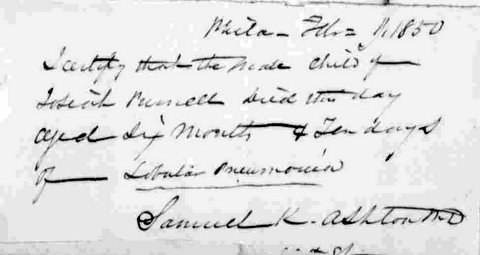
Purnell

On this date, February 11th, in 1850 the six-month-old son of Josiah and Mary Purnell died of Pneumonia and was buried at Bethel Burying Ground. Josiah worked as a waiter and Mary worked performing “domestic duties,” according to the 1847 African American Census. It appears they were private servants to a wealthy family that lived on the south side of Washington Square. Josiah was born into slavery in Delaware and was freed through manumission. In the 1847 Census, Josiah, 29 years of age, is described as “Mulatto.” It also reports that Mary, 22 years of age, was born free.

Moors

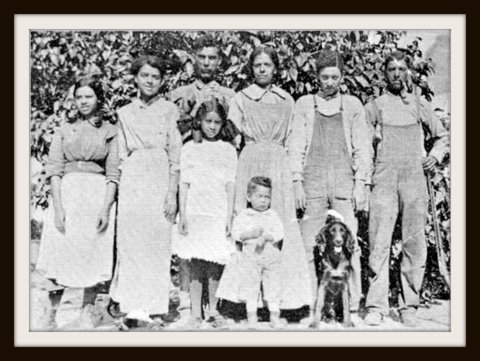
A Delaware family of Moors ancestry.

Mr. Purnell’s family’s origins might have sprung from the family group known as the “Moors of Delaware.” The Moors are a tri-racial group of interrelated white, Native American and African families with origins on the Delmarva Peninsula of Delaware. Buried at Bethel Burying Ground are members of the Le Count family whose ancestry can be traced back to the early “Moors.”. See http://www.moors-delaware.com/gendat/moors.aspx.

 For additional reading on the “Moors of Delaware” see Delaware’s Forgotten Folk by C.A. Weslanger.

The four-year-old son of Caleb Hayes died this date, February 10th, in 1848 and was buried in Bethel Burying Ground

Posted by Terry Buckalew on February 10, 2015
Posted in: Documents, On This date. Tagged: African American burial grounds, African American cemeteries, African American History, archaeology, Bethel Burying Ground, Mother Bethel African Methodist Episcopal Church, Philadelphia, Richard Allen. Leave a comment

HAYES (1)

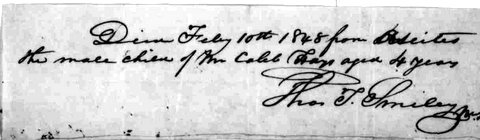
The four-year-old son of Caleb Hayes died this data, February 10th, in 1848 and was buried at Bethel Burying Ground. Ascites is not a cause of death. It is a symptom that describes a massive build-up of fluid in the abdomen. The causes for this symptom are many, including liver disease, cancer and bacterial infection.

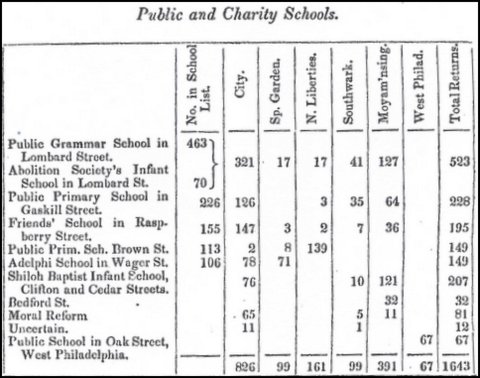
According to the 1847 African American Census, Caleb Hayes earned $12 a month as a waiter and his spouse took in laundry to add to the family’s income. They lived at 8 Washington Street (now 1108 Rodman Street) in the Cedar District of the city with four other children besides the unnamed deceased male child. There were five in the family that could read and two of them could also write. Two of the children attended school at 6th and Lombard Streets and one attended The Infant School in Lombard Street that was established in 1841 by the Pennsylvania Society for Promoting the Abolition of Slavery. It accepted children from 2-5 years of age and was staffed by two African American teachers. 

School chart (1)

This is a list of the schools available to Black children in 1847 Philadelphia. From 1847 AA Census. Unfortunately, it was not uncommon for the Black schools to be frequently closed due to lack of funding. (National Gazette, 15 June 1839; Philadelphia Inquirer, 9 May 1862.)

John Rumsey died this date, February 9th, in 1824 at the Philadelphia Naval Hospital and was buried at Bethel Burying Ground

Posted by Terry Buckalew on February 9, 2015
Posted in: On This date, Photographs. Tagged: African American burial grounds, African American cemeteries, African American History, archaeology, Bethel Burying Ground, Mother Bethel African Methodist Episcopal Church, Philadelphia, Richard Allen. Leave a comment


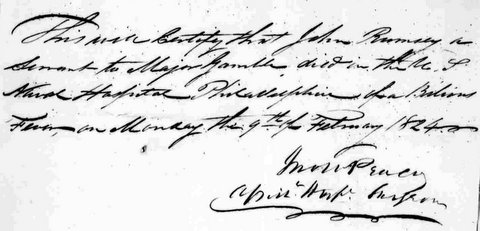
Rumsey

Forty-year-old John Rumsey died on this date, February 9th, in 1824 of Bilious Fever and was buried at Bethel Burying Ground. Mr. Rumsey was a freeman who worked as a servant to Major Robert Gamble, U.S.M.C., who was stationed at the Philadelphia Navy Yard. Mr. Rumsey died at the Hospital of the Philadelphia Navy Yard. At that time, the hospital was characterized as a “wretched hovel” and “the black hole of the yard” that was no more than a wooden shed. Originally, it was calculated to hold eight patients, but on occasion was crammed with twenty-four sick and dying men. It was stated that the “hovel” was a place where “patients remained until they could gather strength to desert.”* 

Image-1

Confederate officer and manservant


*http://www.navalhistory.org/2012/04/02/construction-of-first-naval-hospital; Jeffery M. Dorwart and Jean K. Wolf, The Philadelphia Navy Yard: An Illustrated History.

The trustees of Bethel Church were informed that Bethel Burying Ground was sold for $10,000 on this date, February 5th, in 1890.

Posted by Terry Buckalew on February 5, 2015
Posted in: On This date, Photographs. Tagged: African American burial grounds, African American cemeteries, African American History, archaeology, Bethel Burying Ground, Mother Bethel African Methodist Episcopal Church, Philadelphia, Richard Allen. Leave a comment

2/5/1890 – President of the Bethel Church trustees D.W. Parvis reports on behalf of the Real Estate Committee that the “Queen Street lot” (BBG) has been sold to the City of Philadelphia for $10,000. In addition, Mr. Parvis reports that board member Charles Jenkins had an interview with Wendell P. Bowman, Esquire the lawyer who the trustees hired to negotiate the sale price of Bethel Burying Ground. Mr. Bowman “points out” that he had “difficulties” in securing the high amount for the burial ground ($10,000) and that his fee of $1,250 is fair. Trustee Parvis states he would be willing to check out with “other lawyers” to ascertain if the fee is excessive. Pastor Shaffer is in attendance. (Minutes of the Bethel Trustees) Mr. Bowman was a white, Republican powerbroker and lobbyist. He was debatably one of the most influential men in Philadelphia politics at this time. He never ran for office, but was involved in party leadership and financing candidates.

Wendell P. Bowman PP

General Wendell P. Bowman


The one-year-old son of Sarah and Gazaway Chase died this date, February 5th, in 1848 and was buried at Bethel Burying Ground

Posted by Terry Buckalew on February 5, 2015
Posted in: On This date, Photographs. Tagged: African American burial grounds, African American cemeteries, African American History, archaeology, Bethel Burying Ground, Mother Bethel African Methodist Episcopal Church, Philadelphia, Richard Allen. Leave a comment

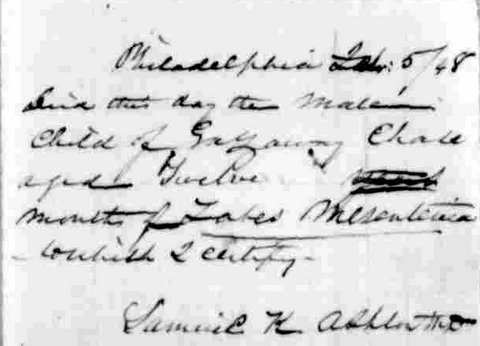
CHASE (1)


The one-year-old son of Sarah and Gazaway Chase* died on February 5, 1848 of Tabes Mesenterica and was buried at Bethel Burying Ground. The term “Tabes Mesenterica” was used up until the late 19th century to represent a group of illnesses in children that included malnutrition and swelling of the abdomen. Now that term is archaic and has been replaced by the term “tuberculosis of the mesenteric and retroperitoneal lymph nodes” or a type of cancer in the abdominal cavity.

 The Chase family lived at 801 S. 10 Street; the southeast corner of 10th and Catharine Streets in the Southwark section of the county. He was a porter in a store and later a barber. Sarah took in washing and ironing according to 1847 African American Census. 

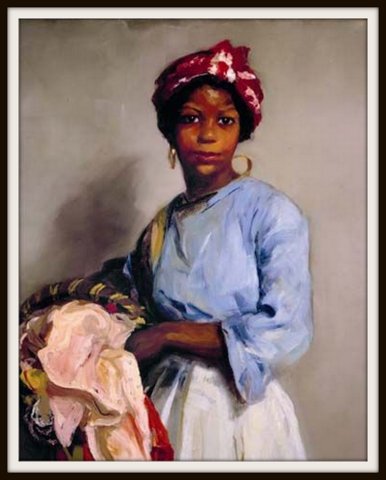
Robert Henri, The Laundress. 1916

“The Laundress,” Robert Henri (1916)


African Americans in antebellum Philadelphia were relegated, for the most part, to domestic services. The men were employed chiefly as barbers, porters, waiters, coachmen, butlers, stablemen, chimney sweeps and janitors. The women found employed as laundresses, nursemaids, hairdressers cooks, maids or day laborers. With the arrival of cheap Irish laborers, it became increasingly difficult for Black men to find work. In this extreme situation, “the Negro washerwoman rose to prominence. She became in many instances the sole breadwinner of the family. She washed and ironed while her all but idle husband brought in and carried the clothes back to the home.” This was especially evident in Philadelphia, according to renowned African American historian Carter G. Woodson. He adds, “Without a doubt many Negro family in the free States would have been reduced to utter destitution had it not been for the labor of the mother as a washerwoman. . .  Foreigners immigrating into this country went freely into all menial work except washing and ironing, in which it seems that they could not compete with Negro women.” (The Negro Wage Earner by Lorenzo J. Greene and Carter G. Woodson, 1930, pp. 4-5.)


*The Christian Recorder, March 5, 1885  

“Brother Gazaway Chase died. Jan. 29th, 1885, in the 74th year of his age. He was a member of the Church fifty-four years, of these he was 30 years a member of the Wesley A. M. E. Church. As a member of the church, he was much esteemed and dearly believed by all; he ever loved prosperity, and when the church was in her greatest adversities he ever stood faithful and an approved workman; he always felt that the church was his home, always a ready and a willing servant, not only to God, to the church, but to the community in which he lived. As a man of God he was a devout Christian, always working to attain the highest good; he was an exemplary man not merely talking the life of a Christian, but living, that men or his followers, as he was a class-leader, might not stumble or be misguided by his example; he was also a great worker in the Sabbath school, as he being an old veteran, as we may term it he was ever our counselor; he was attached to all things of the Church that were of service to it. A sermon was delivered by the pastor, M. V. Lawrence.”

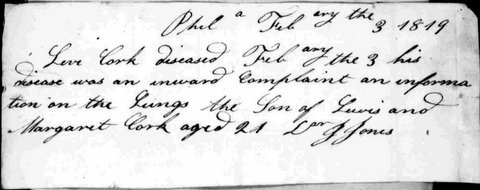
Twenty-one-year-old Levi Cork died this date, February 3rd, in 1819 and was buried at Bethel Burying Ground

Posted by Terry Buckalew on February 3, 2015
Posted in: Newspaper Articles, On This date, Photographs. Tagged: African American burial grounds, African American cemeteries, African American History, archaeology, Bethel Burying Ground, Mother Bethel African Methodist Episcopal Church, Richard Allen. Leave a comment

Levi Cork

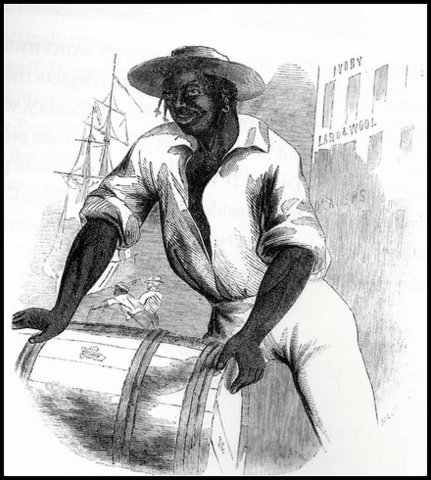
Twenty-one year old Levi Cork died this date, February 3rd, in 1819 of a lung disease and was buried at Bethel Burying Ground. It appears that he lived with his parents, Margaret and Lewis Cork at 28 Sassafras Street (now Race Street). I have not been able to find an occupation for Levi, however, his father was a porter and his son may have been in the same grueling line of work. Also, given their address, they likely worked the docks hauling everything from passenger baggage to freight to firewood. Margaret Cork would list her occupation years later as “day worker,” according to the 1847 African American Census. 

Stevedore

“The Colored Stevedore – A Reminiscence.” NY Historical Society

Being a porter on Philadelphia docks in 1818 was a constant battle with other porters for work. Porters would rush incoming steamboat passengers vying for their trunks. The scene would sometimes turn violent and always chaotic. It reached a point that the public clamored for the city government to regulate the business and bring a halt to the overcharging for the service. The cost of 50 to 100 cents for a small trunk to be transported was thought to be outrageous.*

It took until 1830 for a small group (19) of African American porters to organize the African Porters’ Benevolent Society.** Seventeen years later the 1847 African American Census recorded 157 carters and draymen in the County of Philadelphia. 

*Franklin Gazette,  and 3/6/1819 and 11/3/1819; Poulson’s American Daily Advertiser, 7/28/1818. 

** Julie Winch, The Elite of Our People: Joseph Wilson’s Sketches of Black Upper-Class in Antebellum Philadelphia, Pennsylvania, p. 15. 

The “Hallowed Ground” before Bethel Burying Ground

Posted by Terry Buckalew on February 1, 2015
Posted in: Archaeology. Tagged: African American burial grounds, African American cemeteries, African American History, archaeology, Bethel Burying Ground, Mother Bethel African Methodist Episcopal Church, Philadelphia, Richard Allen. Leave a comment

Before there was Bethel Burying Ground there was only one other place African Americans could be buried within the city’s boundaries, with the exception of a couple small churchyards. That place was South East Square or what we know now as Washington Square. Archeologist Doug Mooney included in the archeological report on BBG the history of that “Hallowed Ground.”
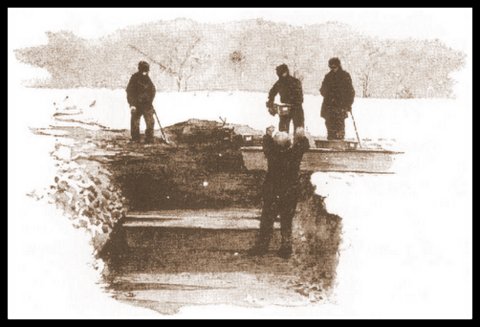
Digging a trench in a Potter's Field (1)

                                 Filling a trench in a Potter’s Field                                                  

Hallowed Ground: African American Petitions and Philadelphia’s Potter’s Field

 During the late eighteenth century, the free black community in Philadelphia initiated multiple attempts to gain some measure of control over the negro section of the city’s potter’s field cemetery, located in what is now Washington Square. Also known as the “Stranger’s Burying Ground,” the potter’s field was originally set aside in the early 1700s for the interment of those persons viewed as outsiders—who were not members of local churches, were poor, or who otherwise lived at the margins of the established Philadelphia social order. Individuals interred in that ground were often buried in anonymity, sometimes under deplorable conditions, and left to desecration at the uncaring hands of grave robbers and vandals. Fragmentary historical information suggests that ground inside the potter’s field was at some point segregated for the burial of persons of European ancestry, enslaved and free people of African descent, and Catholics. In later years, soldiers who died in British prisons during the Revolution and victims of the 1793–1794 yellow fever epidemics were also interred in this cemetery.

The efforts of leaders in the emergent free black community to lay claim to their section of the potter’s field followed the accepted practices of the day, and involved the submission of a succession of petitions—written requests submitted to the state or city government agencies that had jurisdiction over this ground. The requests made in these documents represented the first civil and political assertions of independence and self-determination by the members of this community, and reflected the great importance attached to this cemetery and the ancestral remains held within it. If they had been successful, these efforts would have established an official black cemetery within the square, and would have forced the dominant white populace of the city to acknowledge the legitimate right of African Americans to bury their dead with dignity in that space, in accordance with their customs. The creation of such a publicly recognized sacred space would also have served as a powerful symbol reinforcing the notion that people of African descent were by that time no longer strangers, but rather a permanent part of Philadelphia’s social and historical fabric. The sequence of African American attempts to wrest control over the black section of the potter’s field are summarized below.

1782: In April 1782, six free black men—James Black, Samuel Saviel, Oronoco Dexter, Cuff Douglas, Aram Prymus, and William Gray—representing “the Black people of the City and Suburbs,” petitioned the Pennsylvania Supreme Executive Council for permission to “fence in the Negroes Burying ground in the Potter’s Field” (Nash 1991: 94). After a four-year delay, this petition was finally brought before the council for consideration in 1786, and was referred to the surveyor general’s office, but was never acted upon. (Note: the original 1782 petition is held in the Pennsylvania State Archives, Records of Pennsylvania’s Revolutionary Governments, Executive Correspondence and Petitions, 1777-1790 [RG # 27.28], item #633.)

1790: On March 13, the leadership of the Free African Society (FAS) responded to a proposal to lease the “Ground called Potter’s Field” and petitioned City Council, asking that the square be rented to them (Douglas 1862: 33–35). The full text of this petition read:

To the worshipful, the Mayor, Aldermen and Common Councilmen, of the City of Philadelphia, in Common Council.

The petition of the Free African Society for the benefit of the sick, in the City of Philadelphia,

RESPECTFULLY SHEWETH:

That the burial-ground called the Potter’s field, being in part appropriated for the burial of black persons, and chiefly made use of for that purpose, and your petitioners being informed thatthe Common Council are about to let the same, are desirous to have the said burial-ground under the care of the said Society, and are willing to pay the same rent that hath been offered by any other person, and a year’s advance as soon as the said ground is enclosed, and they are put in possession thereof.They therefore pray that the said ground may be rented to them for one or more years, on the

They therefore pray that the said ground may be rented to them for one or more years, on the terms they propose, and under such regulations as the Common Council shall think proper to make. And your petitioners shall pray.

Signed on behalf of the same, by

MOSES JOHNSON, ABSALOM JONES, Overseers. CYRUS BUSTILL, WILLIAM WHITE, HENRY STEWART, TOD FINCH, ABRAHAM INGLIS, JAMES CATON, Committee

Eleven prominent members of the city’s white community endorsed the back of this petition:

We, the subscribers, having for some time past been acquainted with several of the members of the FREE AFRICAN SOCIETY, ESTABLISHED IN THE CITY OF PHILADELPHIA, FOR THE BENEFIT OF SUCH AMONG THEM WHO MAY BECOME INFIRM, do certify, that we have informed ourselves of the rules and order established by the said Society, and approve of their Institution, and can therefore recommend the members thereof, as well their humane design, to the notice and attention of their fellow citizens, they being worthy of a degree of confidence and encouragement.

GEO. WILLIAMS, BENJ. RUSH, ASHBY, NICHOLAS WALN, JOSEPH CLARK, WILLIAM WHITE, SAM’L MAGAW, CHARLES WILIAMS, TENCH COXE, JOSEPH JAMES, WILLIAM SAVERY.

On April 26, City Council considered the three petitions they had received, and awarded the lease of the potter’s field to local businessmen Joseph Ogden and Jeremiah Fisher for a term of three years (Philadelphia City Council 1789–1793: 216–234).

1791: On September 7, the City’s Common Council received “A Petition from the free Africans of Philadelphia, praying that the north west corner of the Ground call Potter’s Field may be granted to them for the Purpose of erecting a Church” (Philadelphia City Council 1789–1793: 415–424). Submitted little more than a month after the Free African Society transformed itself into the African Church, this petition identified that the organization’s first choice for locating their house of worship was within this hallowed ground, and reflected the importance placed on associating the church building with the graves of their ancestors. The fact that the petition singled out the northwest corner of the potter’s field may also indicate that this was the location of the “Negroe” section within that larger burial ground. Ultimately, this request was allowed to be voluntarily withdrawn by the church before the council debated it. Five months later, the members of the African Church purchased a lot of ground at 5th and Adelphi Streets for their sanctuary. The church erected on that lot was subsequently renamed the African Episcopal Church of St. Thomas (Douglass 1862: 43–46).

1793: On March 11, the City’s Common Council received a petition from the “Members of the African Society” (Philadelphia City Council 1793–1796: 8–10). Council minutes do not record the subject of this petition, and the original document either has not survived or has not yet been located in an archival collection. This request was submitted exactly three years after the petition of 1790—as the term of Odgen and Fisher’s lease of the potter’s field was expiring—and may have been another attempt by the Free African Society to lease the cemetery grounds.

By late 1794, the potter’s field in Washington Square was closed to the burial of the dead, and the process of turning it into a landscaped public park began shortly after. Sometime around 1798, the remains of individuals buried in the black section of the potter’s field may have been relocated to the graveyard behind St. Thomas’ Church. Information regarding this removal of interments was provided by a former staff member of Independence National Historical Park (Roberts and Benedict 2000). However, documentary evidence confirming that information has not yet been identified. There is no mention of such a relocation effort in any of the local newspapers of the time, and no discussion of such a proposal is mentioned in surviving City Council minutes. A handful of archaeological investigations have been conducted within Washington Square since the 1950s, but these have all been relatively limited in scope. None of the human remains identified during these prior excavations have been verified as belonging to persons of African descent (Mooney and Crist 2007). Burials in the St. Thomas churchyard were moved to Lebanon Cemetery around 1887, and then again to Eden Cemetery, in Delaware County, in 1903 (Keels 2003: 81).

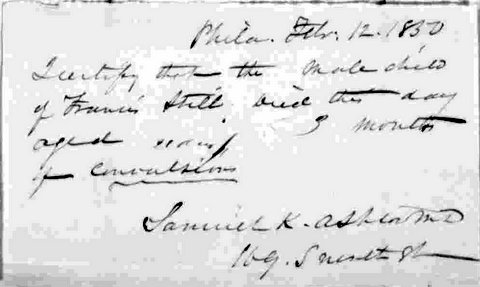
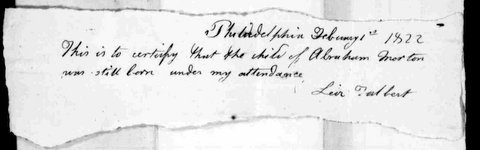
The stillborn child of Abraham Morton was delivered this date, February 1st, in 1822 and was buried at Bethel Burying Ground

Posted by Terry Buckalew on February 1, 2015
Posted in: Archaeology, On This date, Photographs. Tagged: African American burial grounds, African American cemeteries, African American History, archaeology, Bethel Burying Ground, Mother Bethel African Methodist Episcopal Church, Philadelphia, Richard Allen. Leave a comment

Morton death cert

The stillborn child of Abraham Morton was delivered this date, February 1st, in 1822 and was buried in Bethel Burying Ground. Abraham was a porter living in a neighborhood of Black porters, waiters, and laborers. The family lived at 213 South 7th Street across from the southern edge of Washington Square (then Southeast Square). The Mortons were a neighbor of Rev. John Gloucester, pastor of the First African Presbyterian Church in Philadelphia.

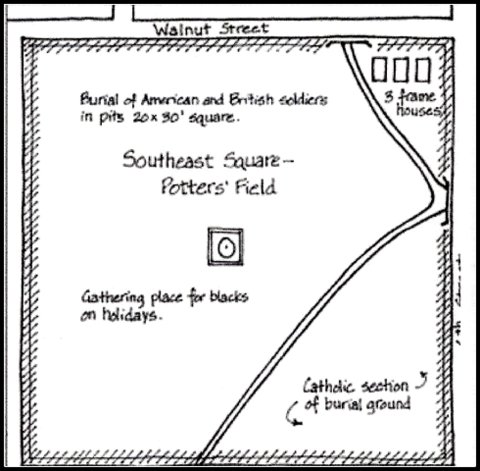
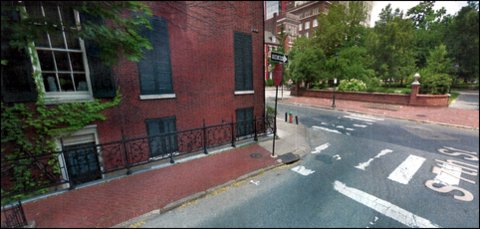
WS map

Southern border of Washington Square with location of burial pits. African Americans were buried in the southwest corner of the square. (Lower left-hand quadrant.) 

South 7th (1)

213 S. 7th Street looking at the southern border of Washington Square. The Mortons had a clear view of the African American burial ground.


*** For more information on the Washington Square burial ground please see the next posting on this website.

GRAVE SHAFTS

Posted by Terry Buckalew on January 26, 2015
Posted in: Archaeology, Photographs. Tagged: African American burial grounds, African American cemeteries, African American History, archaeology, Bethel Burying Ground, Mother Bethel African Methodist Episcopal Church, Richard Allen. Leave a comment
Grave Shafts

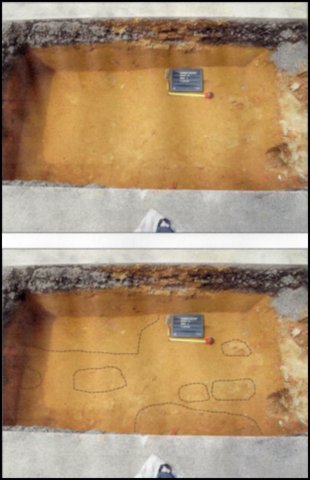
Overview of the west half of Trench 4, looking north, showing identified grave shafts and the east wall of the cemetery. From page 3.23 of “Phase IB Archaeological Investigation of the Mother Bethel Burying Ground, 1810-Circa 1864 (ER No. 2013-1516-101-A).”

In July of 2013 an archeological team headed by Doug Mooney and Kim Morrell uncovered grave shafts in trenches that were cut from the top soil of the Weccacoe Playground. They explained the term “grave shaft” in their report. “The term “grave shaft” refers to the hole dug into the ground for a burial, and into the bottom of which a deceased person’s remains were placed. As used in this report, the term “burial remains” refers to the physical evidence of the burial itself, including preserved parts of the wooden coffin, associated coffin hardware and decorations, and human skeletal material. During this investigation, no intact human skeletal remains were exposed; however, in a small number of cases, evidence of decayed coffin wood was identified.” (page 1.7)

Mooney and Morrell went on to further explain –

“In terms of the burials within the cemetery, each of the four trenches completed uncovered evidence of intact burials. This evidence came in the form of grave shaft outlines and, in a handful of instances, of decayed coffin wood with associated coffin nails or lid screws. In total, the excavations resulted in the identification of at least 36 individual burials, all of which were oriented west to east in accordance with common Christian burial practices.

 In Christian cemeteries, the orientation of burials with the head to the west and feet to the east takes on special significance, and is rooted in a powerful image of rebirth. In the New Testament, Matthew (24:27) foretells that Jesus, at the time of his Second Coming, will arrive from the east: “For as the lightning commeth out of the east, and shineth even unto the west; so shall also the coming of the Son of man be” (American Bible Society 1999). In accordance with this belief, burials in Christian cemeteries are oriented in the above manner, so that on JudgmentDay, when the dead are called to rise from their graves, they will sit up to face the resurrected Christ.” (page 4.3 of the Report)


 The entire Mooney and Morrell report is available at – 

#1   Part One of Phase IB Archaeological Investigations of the Mother Bethel Burying Ground,1810 – Circa 1864

#2  Part Two – Appendix


Posts navigation

← Older Entries
Newer Entries →
  • Recent Posts

    • Three dead as church wall falls on this date, May 1st, in 1841.
    • The ten-month-old Baby Colgate died this date, June 20th, in 1847, and was buried at Bethel Burying Ground.
    • Fifty-eight-year-old Rachel Dawson died this date, May 3rd, in 1839, and was buried at Bethel Burying Ground.
    • Twenty-eight-year-old Robert Swails died on this date, March 31st in 1849, and was buried at Bethel Burying Ground.
    • Forty-year-old Jacob “Jesse” Howard died on this date, January 29th, in 1840, and was buried at Bethel Burying Ground.
  • Archives

    • May 2024
    • June 2023
    • May 2023
    • March 2023
    • January 2023
    • December 2022
    • November 2022
    • October 2022
    • September 2022
    • August 2022
    • May 2022
    • April 2022
    • March 2022
    • February 2022
    • January 2022
    • December 2021
    • November 2021
    • October 2021
    • September 2021
    • August 2021
    • July 2021
    • June 2021
    • May 2021
    • April 2021
    • March 2021
    • February 2021
    • January 2021
    • December 2020
    • November 2020
    • October 2020
    • September 2020
    • August 2020
    • July 2020
    • June 2020
    • May 2020
    • April 2020
    • March 2020
    • February 2020
    • January 2020
    • December 2019
    • November 2019
    • October 2019
    • September 2019
    • August 2019
    • July 2019
    • June 2019
    • May 2019
    • April 2019
    • March 2019
    • February 2019
    • January 2019
    • December 2018
    • November 2018
    • October 2018
    • September 2018
    • August 2018
    • July 2018
    • June 2018
    • May 2018
    • April 2018
    • March 2018
    • February 2018
    • January 2018
    • December 2017
    • November 2017
    • October 2017
    • September 2017
    • August 2017
    • July 2017
    • June 2017
    • May 2017
    • April 2017
    • March 2017
    • February 2017
    • January 2017
    • December 2016
    • November 2016
    • October 2016
    • September 2016
    • August 2016
    • July 2016
    • June 2016
    • May 2016
    • April 2016
    • March 2016
    • February 2016
    • January 2016
    • December 2015
    • November 2015
    • October 2015
    • September 2015
    • August 2015
    • July 2015
    • June 2015
    • May 2015
    • April 2015
    • March 2015
    • February 2015
    • January 2015
    • December 2014
    • November 2014
    • October 2014
  • Categories

    • Archaeology
    • BBG History
    • Bethel Burying Ground Name Directory
    • Bethel Burying Ground Timeline
    • Burial services
    • Diseases
    • Documents
    • Freemasonry
    • Ignatius Beck
    • It's a fact
    • Maps
    • Neighborhood
    • Newspaper Articles
    • On This date
    • Photographs
    • Uncategorized
    • Videos
  • Meta

    • Create account
    • Log in
    • Entries feed
    • Comments feed
    • WordPress.com
Blog at WordPress.com.
Bethel Burying Ground Project
Blog at WordPress.com.
  • Subscribe Subscribed
    • Bethel Burying Ground Project
    • Join 48 other subscribers
    • Already have a WordPress.com account? Log in now.
    • Bethel Burying Ground Project
    • Subscribe Subscribed
    • Sign up
    • Log in
    • Report this content
    • View site in Reader
    • Manage subscriptions
    • Collapse this bar
 

Loading Comments...