Bethel Burying Ground Project

Bethel Burying Ground Project

  • ABOUT THE BETHEL BURYING GROUND PROJECT

Forty-three-year-old Festus Frame died this date, August 12th, in 1847, and was buried at Bethel Burying Ground.

Posted by Terry Buckalew on August 12, 2022
Posted in: On This date. Tagged: African American burial grounds, African American cemeteries, African American History, African Methodist Episcopal Church, archaeology, Bethel Burying Ground, Mother Bethel, Mother Bethel African Methodist Episcopal Church, Philadelphia, Richard Allen. Leave a comment

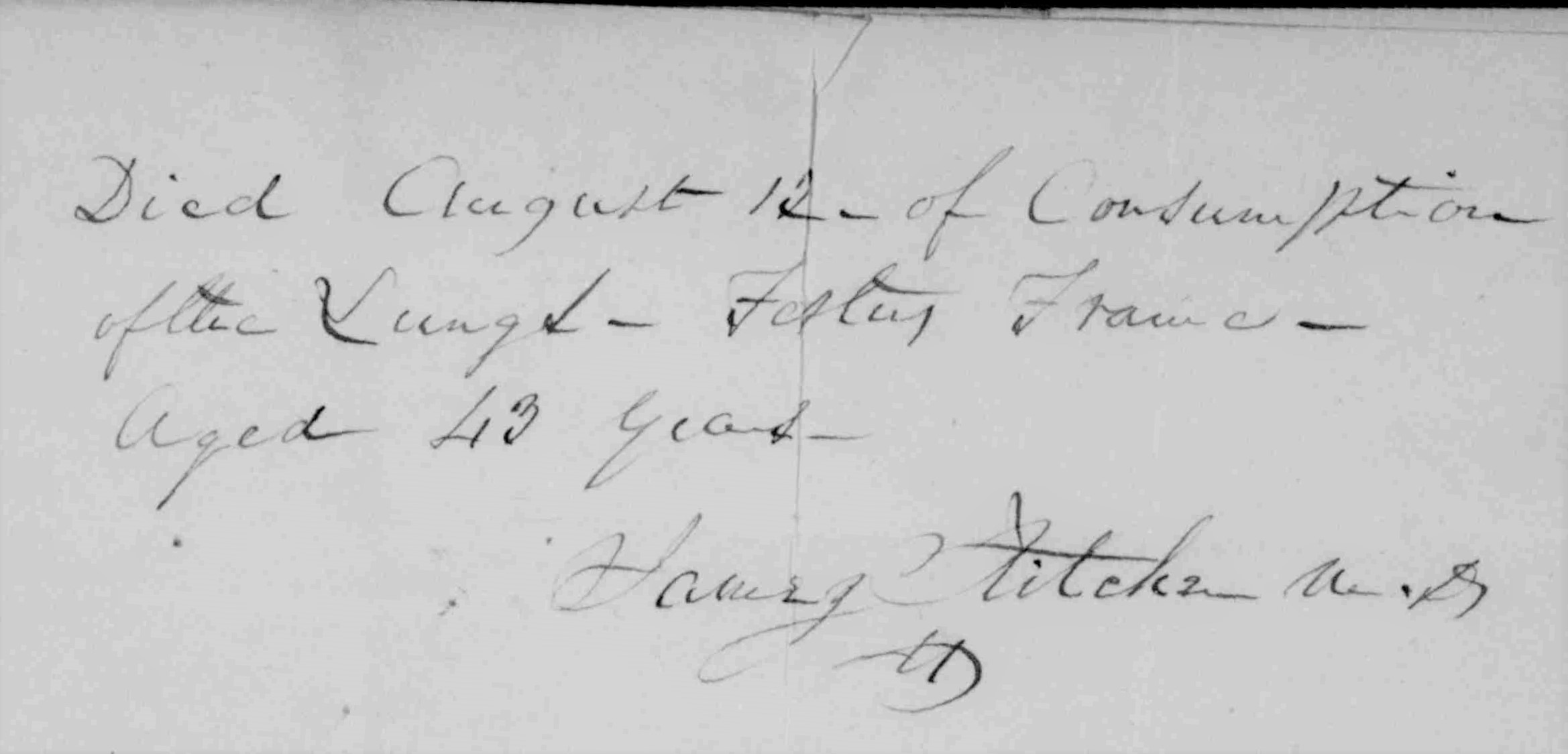
Forty-three-year-old Festus Frame died of Tuberculosis on August 12th, 1847, and was buried at Bethel Burying Ground. He is first listed in the 1837 Philadelphia City Directory as ‘Festus France.’ Over the next ten years, he and his family used ‘France’ and ‘Frame’ fairly interchangeably. The problem may have been with the transcribers or that the family was hoping to throw fugitive slave catchers off their trail. According to the 1847 Philadelphia African American Census, where he appears listed as ‘Mr. Frame,’ he and his spouse were previously enslaved. They did not report to the census taker how they were liberated.

Two mysteries cloud the telling of the family’s story. In the 1838 Philadelphia African American Census, it is reported that Mr. Frame and his spouse owned $700 in personal property or approximately $22,845 in modern currency. They owned their home so that may account for the personal property amount. Mr. Frame worked as a laborer and his spouse was self-employed as a washwoman.

After Mr. Frame’s death, the family address, #10 Acorn Alley, is listed under the name of ‘Sarah Frame’ in the 1850 City Directory. Sarah is listed as the head of the family. Her age is reported to be fifty-five years old and she was born in Delaware, according to the 1850 U.S. Census. This would have been an age difference of eight or nine years between Sarah and Festus.

The yellow arrow indicates the location of the Frames’ home at #10 Acorn Alley. It was situated just north of Pennsylvania Hospital and west of Washington Square in the area that we now know as Independence Square.

Acorn Alley was a narrow thoroughfare, just west of 8th Street. In 1847 it held at least twenty-one Black families with a total of eighty-seven children, women, and men. The women were employed as laundresses and domestics, while their children attended the 6th and Lombard Infant School or the private schools of Diana Smith or Roger Georges. The men were employed as coachmen, seamen, carpenters, waiters, and oyster house-workers. There was one minister, Rev. John Boggs, who was the Frames’ next-door neighbor at #9 Acorn Alley. (1) He was a key member of Bethel African Methodist Episcopal Church and an important figure in the Philadelphia African-American community. No doubt he was close to the Frame family as they were Bethel congregants, according to the 1838 Census.
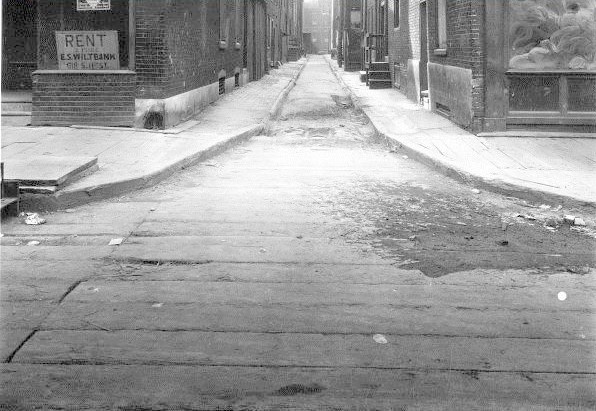
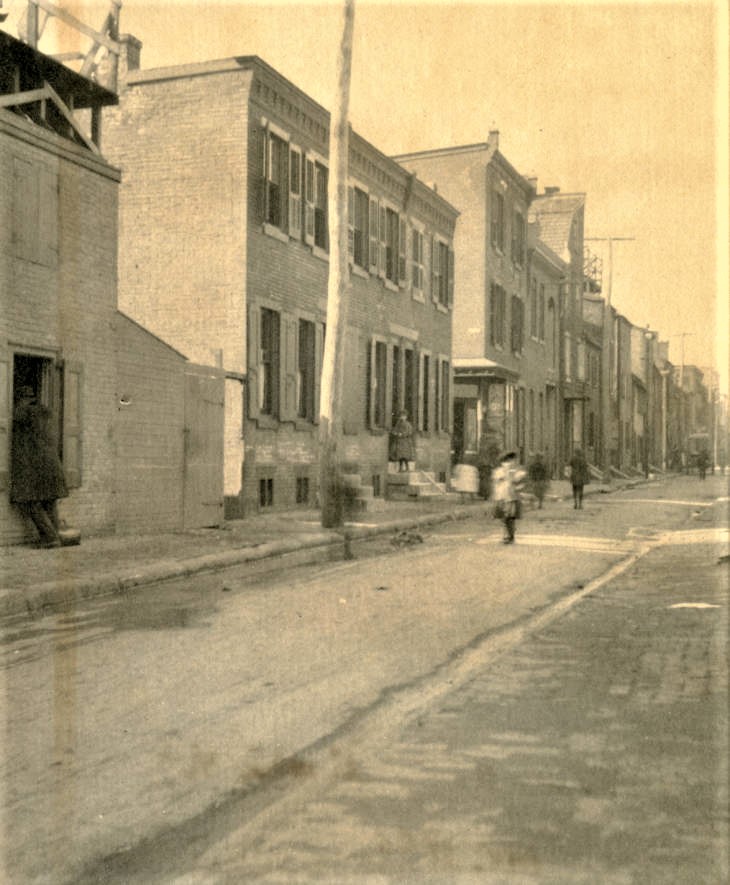
The above is a 1931 photo of Acorn Alley then and now known as Schell Street. (City Archives)

Mr. Frame was one of 1,841 to die of Tuberculosis between 1847 and 1848, according to the Philadelphia Board of Health records. He died on a clear warm day in August that saw the temperature rise to eighty-five degrees by late afternoon. He was buried, with dignity, by his family and friends at Bethel Burying Ground.

(1) Until 1854 the street numbers were consecutive. After 1854 odd number houses were on the north side of the street and even numbered houses were on the south side.
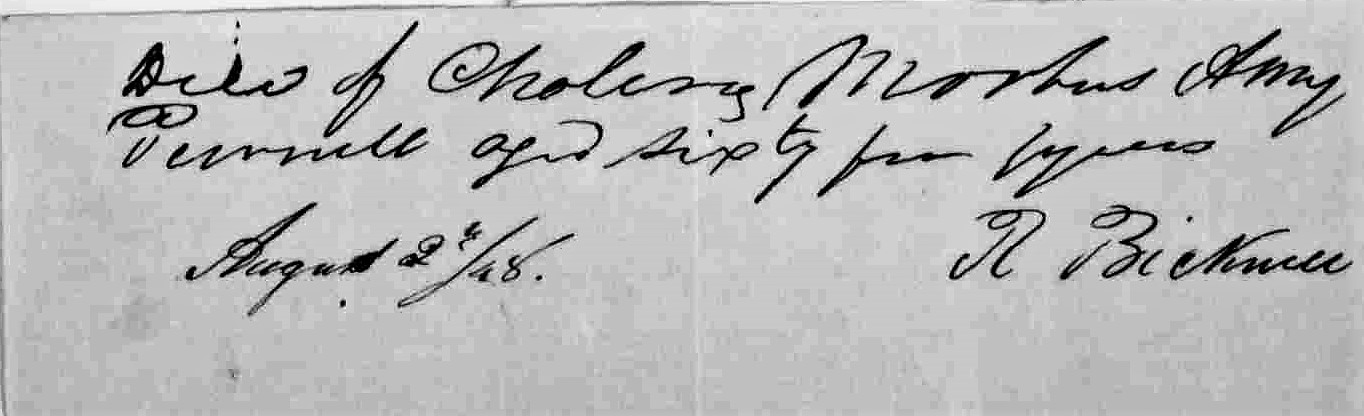
Sixty-four-year-old Amy Purnell died this date, August 2nd, in 1848, and was buried at Bethel Burying Ground.

Posted by Terry Buckalew on August 2, 2022
Posted in: On This date. Tagged: African American burial grounds, African American cemeteries, African American History, African Methodist Episcopal Church, archaeology, Bethel Burying Ground, Mother Bethel, Mother Bethel African Methodist Episcopal Church, Philadelphia. Leave a comment

Sixty-four-year-old Amy Purnell died this date, August 2nd, in 1848 from Cholera and was buried at Bethel Burying Ground. According to the 1847 Philadelphia African American Census, Ms. Purnell lived with a man whom I presume to be her spouse, a “daughter who is completely blind” and under fifteen years of age, and a female child “under five years old.” They lived in a 12’x12′ room in a squalid building on St. Mary’s Street for which they paid $.50 a week. The street was chaos twenty-four hours a day with the usual brawl between residents every Sunday night that ended with one or more participants going to the hospital. (1)

By 1847, the city and districts of Philadelphia had become a filthy, disease-ridden pit. Its streets, courts, and alleys were filled with human and animal waste, garbage, and overflowing cesspools. Its yards and cellars were quagmires. Unfortunately, St. Mary’s Street, Ms. Purnell’s home, was one of the worst. These conditions set the stage for the disease that took Ms. Purnell’s life. Cholera is a bacteria that is spread by ingesting water or food contaminated by the excrement of an infected person. Death occurs after days or weeks of uncontrollable diarrhea that leads to organ failure. The water system for the poor was often contaminated by human waste. Food would be handled with dirty hands and washed in filthy water. The poor did not have a choice or a chance.

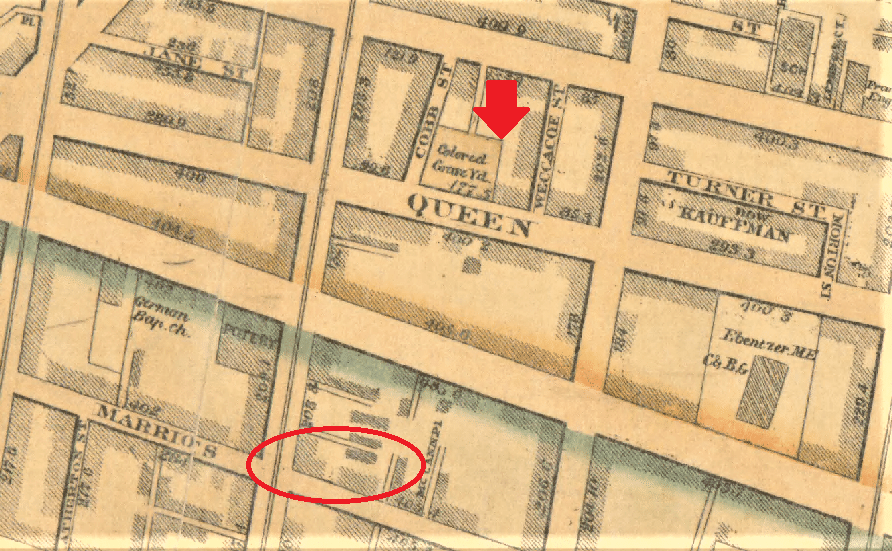
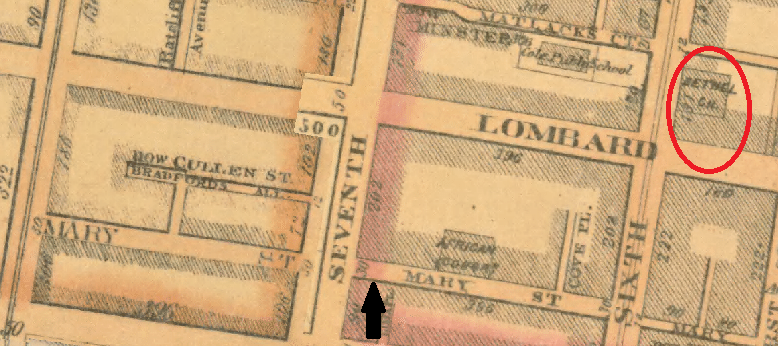
The black arrow indicates the approximate location of Ms. Purnell’s home at #26 St. Mary’s Street. The red circle indicates the location and proximity of Bethel A.M.E. Church.
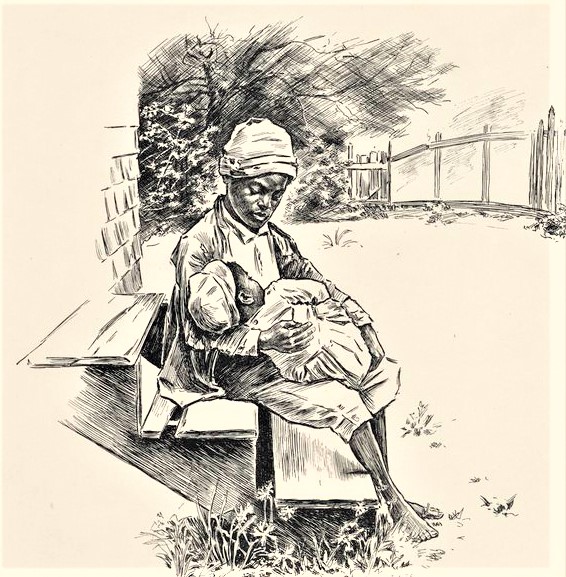
The lack of sanitation plans by city governments led to the situation in the above sketch. (2)

Philadelphia Board of Health records between 1848 and 1849 show that 1,681 Philadelphians died from Cholera. During that same time period, 847 died from “Diarrhea” as the cause of death.

Death brought an ending to her suffering (2)

Ms. Purnell died on a clear day in early August when the temperature rose to a high of eighty degrees by mid-day. She was buried, with dignity, by family and friends at Bethel Burying Ground.

(1) Sun, 9 June 1846, p.2.

(2) Both images are from the United Kingdom Science website

Fifty-three-year-old Frances Paul was buried on this date, May 27th, in 1853, at Bethel Burying Ground.

Posted by Terry Buckalew on May 27, 2022
Posted in: On This date. Leave a comment

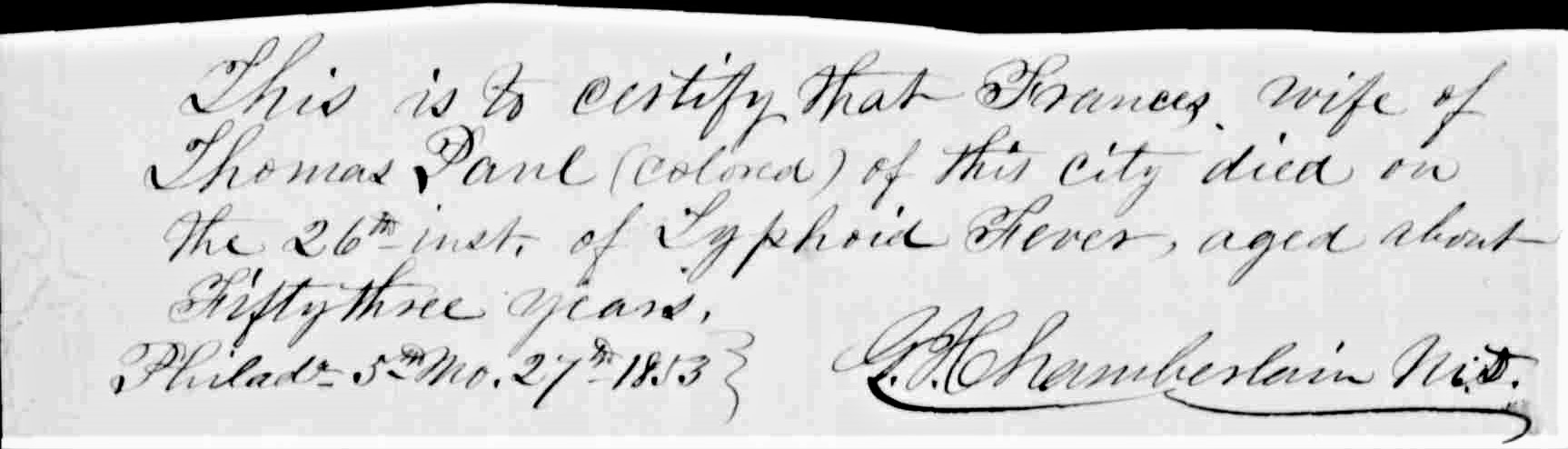
Fifty-three-year-old Frances Paul died on May 27th, 1853 of Typhoid Fever, and was buried at Bethel Burying Ground. Ms. Paul was born in New Jersey according to the 1850 United States Census and was the mother of two children according to the 1838 Philadelphia African American Census. According to the 1847 Philadelphia African American Census, she was employed as a cook.

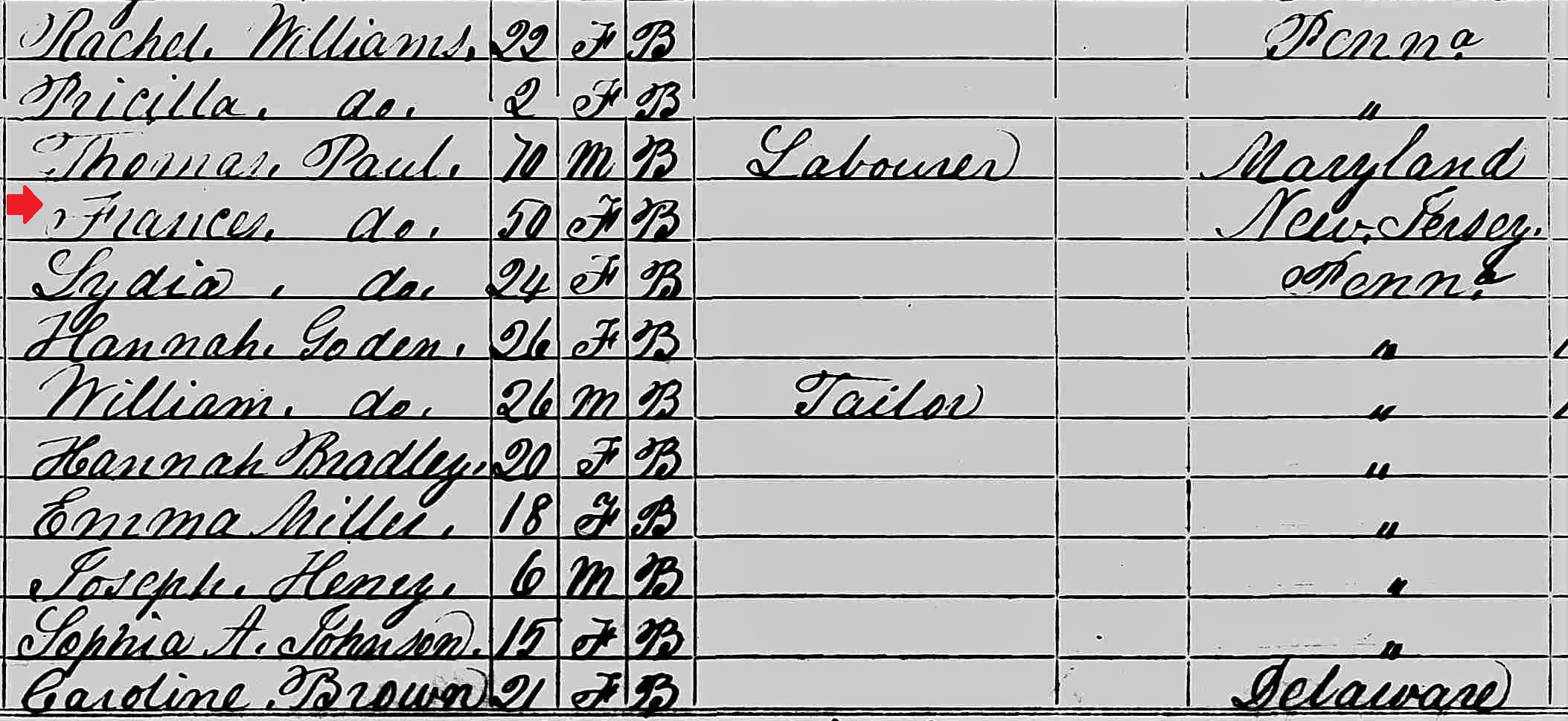
Thomas Paul was seventy-three years old when his spouse died. He was employed as a “laborer” according to the 1847 Census. The 1838 Philadelphia African American Census reports his occupation then as “cabinetmaker.” Mr. Paul was born enslaved in Maryland. He would outlive his spouse by fifteen years dying in 1868 at eighty-five years old of heart disease. He was buried at Lebanon Cemetery.

1850 United States Census

It appears from the 1847 Census and the 1850 U.S. Census that the Paul family in 1850 was Thomas, Lydia, and maybe a daughter named Lydia. The rest we likely boarders. The Pauls rented the first floor (and maybe the basement) of 245 South 7th Street for the hefty sum of $15 a month. That is the equivalent of approximately $530 in modern currency.

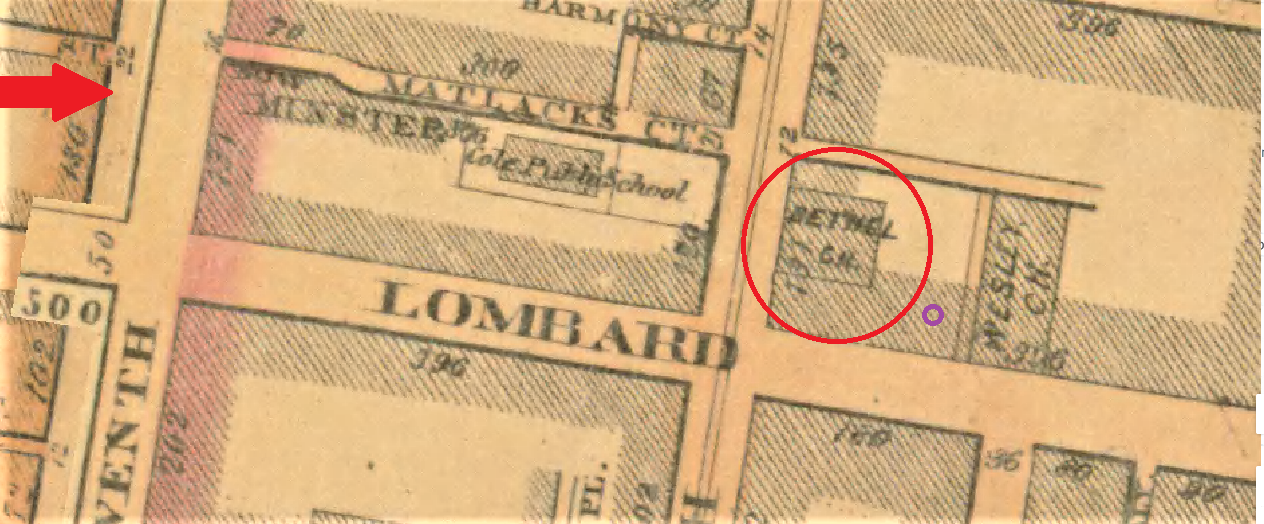
The red circle illustrates Bethel Church A.M.E. and the red arrow indicates the location of the Paul family’s home a block away on S. 7th Street

Sixth and Lombard Streets was ground zero for racial attacks by white Irish gangs. Black churches and businesses were prominent in the area and were regularly targeted. It was not uncommon to see groups of Black men and boys defending their neighborhood, especially on Sunday evenings. After late services at Bethel, the congregants would gather outside the church to share news and each other’s company. White gangs, fueled by alcohol courage, would prey on the parishioners. However, they were often met by Black defenders and driven away.

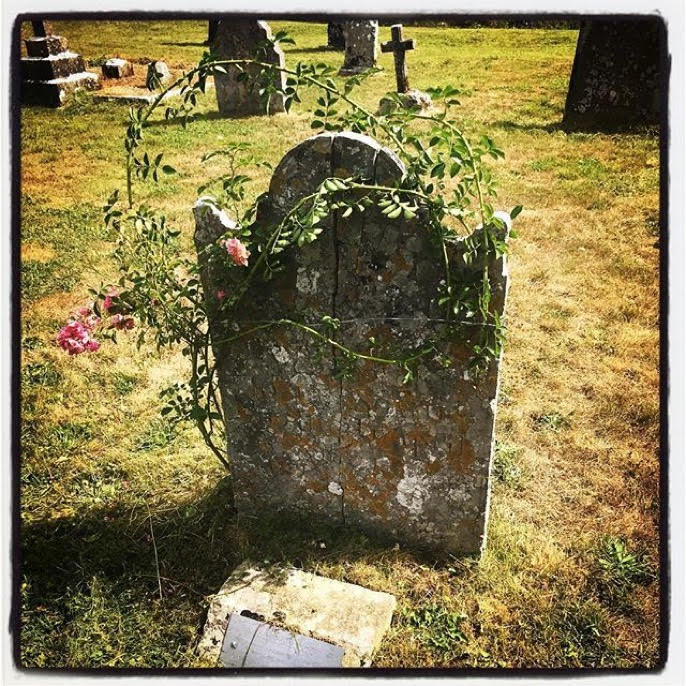
Ms. Francis Paul died on a clear day in late May when the temperature rose to seventy-two degrees. She was buried, with dignity, at bethel Burying Ground.

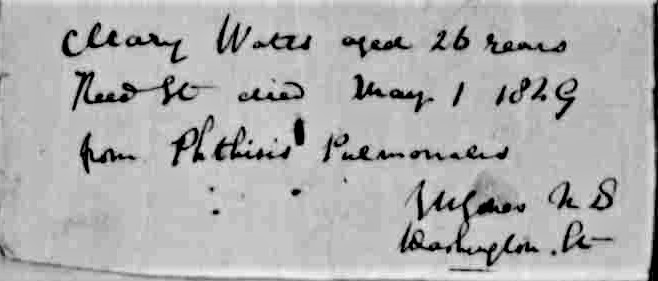
Twenty-six-year-old Cleary Watts died in May of 1849, and was buried at Bethel Burying Ground.

Posted by Terry Buckalew on May 12, 2022
Posted in: On This date. Tagged: African American burial grounds, African American cemeteries, African American History, African Methodist Episcopal Church, archaeology, Bethel Burying Ground, Mother Bethel, Mother Bethel African Methodist Episcopal Church, Philadelphia, Richard Allen. 1 Comment

Twenty-six-year-old Cleary Watts died on May 1st, in 1849 of Tuberculosis, and was buried at Bethel Burying Ground. The gender of this person was not recorded. “Cleary” is normally a male’s name. However, I noticed that in 19th Century African American culture, it is also used for a female’s name. Mr./Ms. Watts was a member of the large Watts clan that had lived near the Delaware River on Corn Street above Reed Street for at least a decade before his or her’s death.

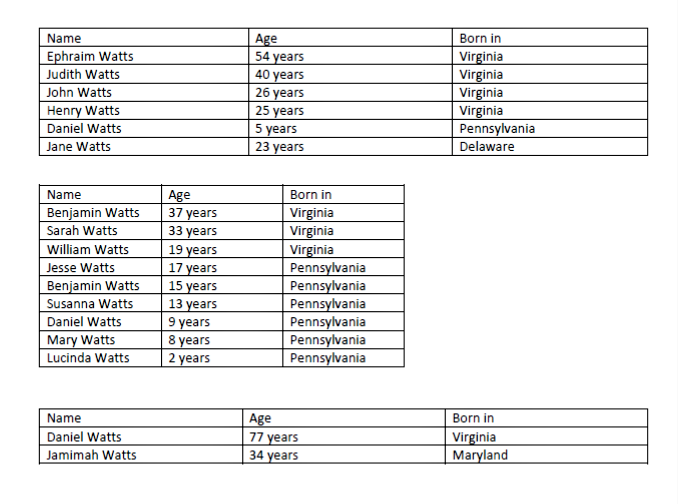
Below is the 1850 U.S. Census data on the Watts families on Corn Street. This was recorded one year after Cleary Watts’s death. The deceased may have been a member of Ephraim and Judith Watts’s family. It is likely that Judith was not Cleary’s biological mother.

The members of the Watts family were hard-working with the men employed as porters on the nearby Delaware River waterfront. The women were employed as laundresses, domestics, cooks, and dressmakers. The family attended services at Bethel A.M.E. Church and sent their young children to local private Black schools including the Lombard and St. Mary schools. They owned their own homes. Despite being model citizens, the color of their skin made them second-class citizens who were not allowed to vote or sit on juries. The family members still had to protect themselves from the white gangs who made a game out of “hunting the nig.” They escaped the whip and chains of the Virginia and Maryland plantations to be forced to live in an apartheid city with a different kind of slavery.

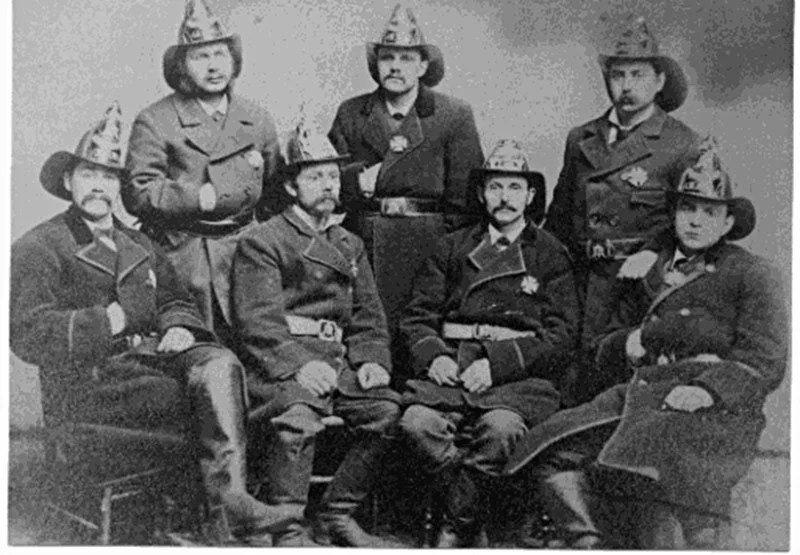
Nineteen Century firemen (Smithsonian)

There were two days during the year that were much more dangerous for African Americans to be out and about on the streets of Philadelphia. The first and most notorious is July 4th when there were all-day-long drunken rampages by white gangs in the Black neighborhoods. The other is the day that Cleary Watts died. May 1st was traditionally when the Firemen’s Parade was held. All of the volunteer fire companies would cover their fire fighting equipment with layers of flowers and march throughout the city all day long with flags flourishing and bands playing patriotic tunes. During this show of white power, the criminal gangs associated with the fire companies went hunting for African Americans to assault.

On the day that Cleary Watts died, there were major attacks in the Black communities at 6th & Fitzwater Streets, 8th and Catharine Streets, and 5th and Shippen Street (now Bainbridge Street). Even though there were many injured, the newspaper only reported an elderly Black man and woman admitted to Pennsylvania Hospital with skull fractures and cuts. One of those injured was Mr. Isaac Newkkins who was beaten down in front of his home on Bedford Street.

Cleary Watts died on a day that dawned clear but saw intermittent showers for the rest of the day. Mr. or Ms. Cleary Watts was buried, with dignity, at Bethel Burying Ground by his or her large family.

(1) It is often difficult to determine the maternal lineages of older, formerly enslaved individuals. Plantation owners demanded enslaved females start having children when they were thirteen years old. By twenty years old, they were expected to have five children. As an incentive, enslavers would promise freedom to those women who survived their younger years and gave birth to at least fifteen children.

(2)

(3)

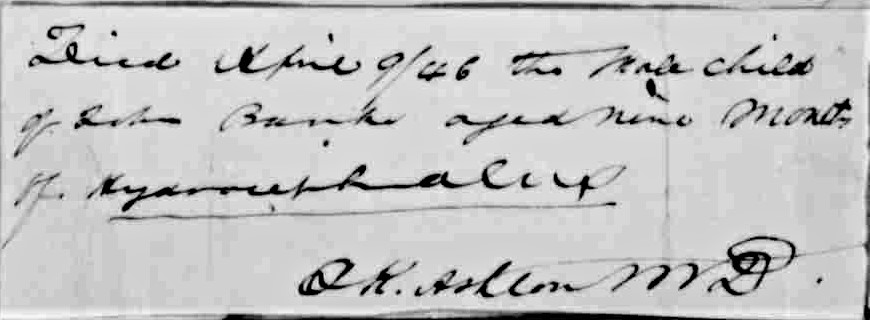
The nine-month-old son of Martha and John Burk died this date, April 9th, in 1846, and was buried at Bethel Burying Ground.

Posted by Terry Buckalew on April 9, 2022
Posted in: On This date. Tagged: African American burial grounds, African American cemeteries, African American History, African Methodist Episcopal Church, archaeology, Bethel Burying Ground, Mother Bethel, Mother Bethel African Methodist Episcopal Church, Philadelphia, Richard Allen. Leave a comment

The nine-month-old son of John and Martha F. Burk died this date, April 9th, in 1846 of Hydrocephalus and was buried at Bethel Burying Ground. The disease has two types: (1) congenital and (2) acquired after the birth which may have been premature. Other causes for the second category are meningitis, tumor, head injury, and stroke. The child develops an enlarged head with ever-increasing spinal fluid pressure on the brain. Commonly called “water on the brain,” the poor child was a victim of constant seizures, urinary incontinence, blindness, deafness, headaches, and severe lethargy. Death comes after the brain is crushed by the build-up pressure. Victims of the disease were subjected to various painful “cures” that were quackery. Ms. Burk was twenty-three years old at the time of her child’s death. Mr. Burk was twenty-four.

The 1847 Philadelphia African American Census shows Mr. and Ms. Burk without children and living at #12 Barley Street in the Moyamensing District of Philadelphia. He worked as a laborer and she was self-employed as a day worker. They were both born in Virginia.

The Burks paid $3.75 a month in rent or approximately $138.00 in modern currency. Interestingly, the family had $500 in personal property which is approximately $18,400 in modern currency – a small fortune for a Black family in 1847. The 1850 U.S. Census may show us how the funds were utilized.

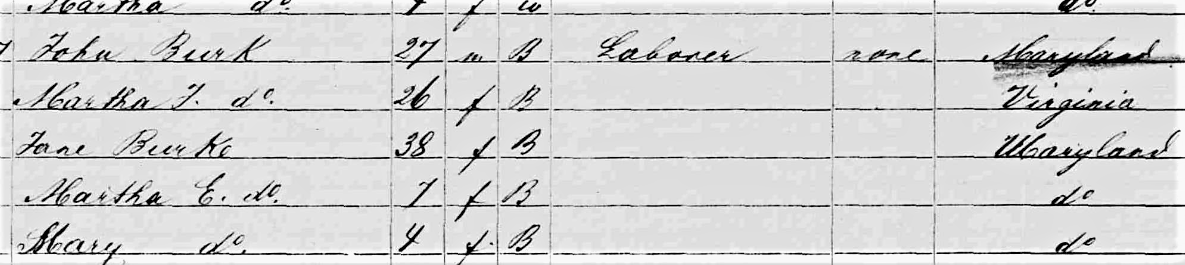
By 1850, the Burk family added three individuals. Jane Burke (38 years old), Martha F. Burke (7 years old), and Mary Burke (4 years old). They were all born in Maryland. The $500 may have been used to buy the freedom of the likely mother and daughters. The census taker took care to spell the last name of the new members differently. One possible scenario might be that Jane is the sister-in-law of Mr. John Burk.

1850 United States Census

By 1850 the large family lived in a room in Milton Street near the corner of 10th and Christian Streets. There is no mention of the family in Philadelphia in the 1860 U.S. Census. Philadelphia was not only a final destination for the recently liberated from slavery but also a stop on the way north to Canada.

The nine-month-old son of John and Martha Burk died on a clear day in early April when the temperature rose to a high of forty-nine degrees. He was buried, with dignity, at Bethel Burying Ground.

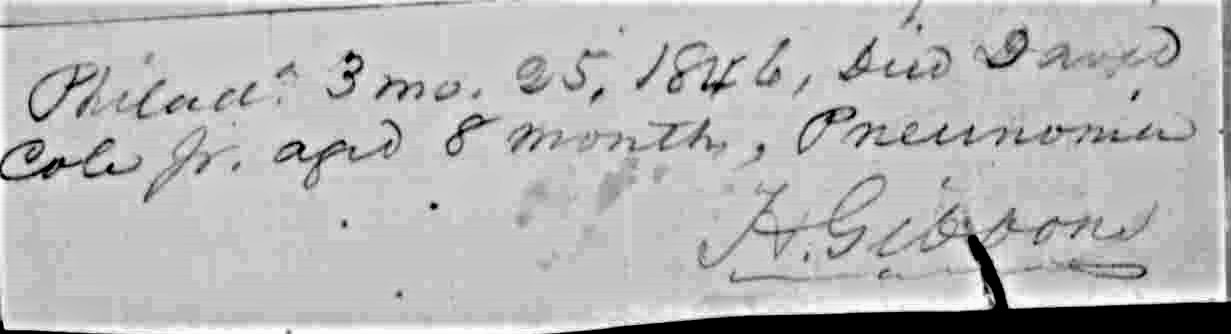
Eight-month-old David Cole, Jr. died March 25th, in 1846, and was buried at Bethel Burying Ground on today’s date March 28th.

Posted by Terry Buckalew on March 27, 2022
Posted in: On This date. Tagged: African American burial grounds, African American cemeteries, African American History, African Methodist Episcopal Church, archaeology, Bethel Burying Ground, Mother Bethel, Mother Bethel African Methodist Episcopal Church, Philadelphia, Richard Allen. Leave a comment

Eight-month-old David Cole, Jr. died this date, March 25th, in 1846 of Pneumonia and was buried at Bethel Burying Ground on the 28th according to the Philadelphia Board of Health Records. He lived with his mother (unnamed) and father David, Sr. in the rear of a building on Emeline Street. He had a sister who was under five years old, according to the 1847 African American Census. There was also a woman over fifty years old in the family. The three adults were not native to Pennsylvania and likely were all born in Virginia. A note by the census taker states “Manumitted by Sarah Crippen of Virginia.” It doesn’t state who in the family was manumitted.

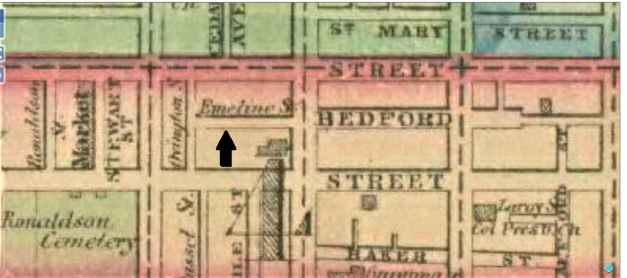
The 1847 Census has the Cole family living in the rear of a building on Emeline Street. There was only one thing worse than residing in one of the dilapidated wooden shells on the narrow thoroughfare; the worst place was living in a hovel in the rear of one of these horrible places. They tended to be originally built as a cow pen or pigpen. It had a roof and sides consisting of pieces of rugs and/or wood with a hole in the roof for smoke to try and rise from the dirt floor. The men, women, and children in these hell holes would freeze in the winter and bake in the summer. Deadly forms of Tuberculosis, Pneumonia, and Influenza were common. For the privilege of living like this, the family paid $6 a month or approximately $208.00 in modern currency. The $6 amount is double what it should have been compared with similar properties.

The black arrow indicates the small size of Emeline Street. In the illustration below, the red arrow indicates the location of Emeline Street in relationship to Bethel A.M.E. Church at 6th and Lombard Streets (yellow arrow).
This 1899 photograph of Kater Street (formerly Emeline) shows the new brick buildings that replaced the wood frame tenements.

Eight-month-old David Cole, Jr. died on a day in late March when a “storm of heavy rain, accompanied with thunder and lighting” hit the city coming from the southwest. (1) He was one of four hundred and seventy-nine Philadelphia children to die of lung diseases in 1846, according to Philadelphia Board of Health records. The Cole family buried their son, with dignity, at Bethel Burying Ground.

(1) This is likely the reason for the delay in the burial.

The one-year-old daughter of Southern and Julia Forten died this date, March 3rd, in 1852, and was buried at Bethel Burying Ground.

Posted by Terry Buckalew on March 3, 2022
Posted in: On This date. Tagged: African American burial grounds, African American cemeteries, African American History, African Methodist Episcopal Church, archaeology, Bethel Burying Ground, Mother Bethel, Mother Bethel African Methodist Episcopal Church, Philadelphia, Richard Allen. Leave a comment

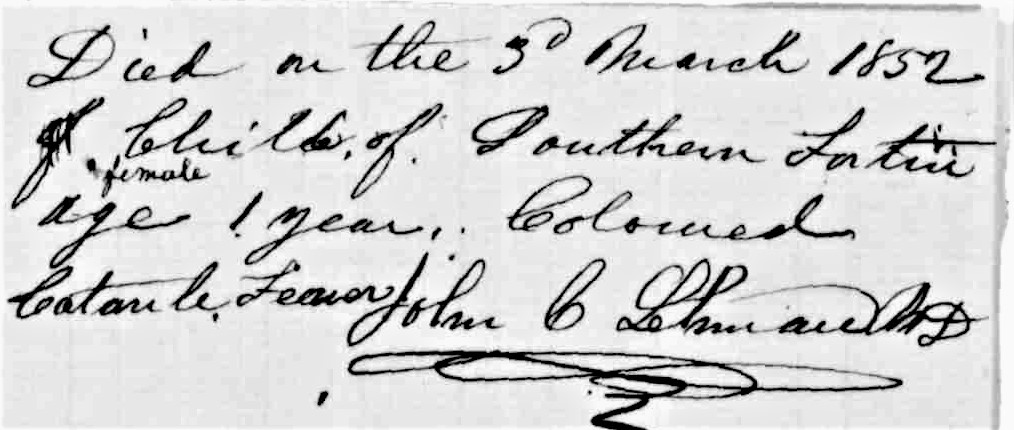
The one-year-old daughter of Southern and Julia Forten died this date, March 3rd, in 1852 of Catarrh Fever and was buried at Bethel Burying Ground. The diagnosis is an archaic term applied to several respiratory infections such as the flu, pneumonia, and even the common cold. The Forten child was one of 462 children to die of various respiratory illnesses in Philadelphia between 1852 and 1853, according to the Board of Health records.

According to the 1847 Philadelphia African American Census, the Fortens lived in Salem Alley near the intersection of 12th and Lombard Street. As the above map shows, it was a narrow thoroughfare with three-story tenements and warehouses. The family lived in one room for which they paid $3 a month or in modern currency approximately $111.00. The Fortens were one of nine Black families living in the alley. The families totaled thirty-two men, women, and children. The men worked as coachmen, laborers, seamen, and waiters. The women were self-employed as laundresses, domestics, and hucksters (aka peddlers).

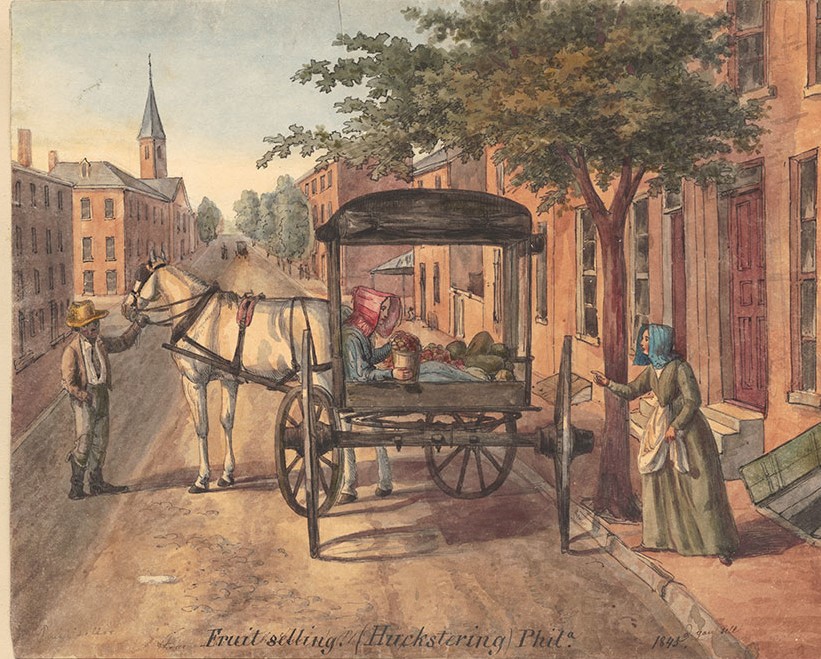
Vegetable street huckster
Huckstering

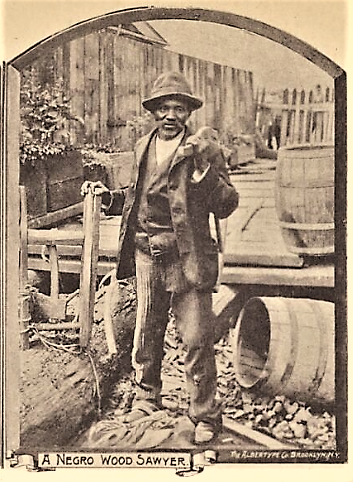
The 1847 Census records show twenty-four Black women were employed as hucksters, while eleven Black men were employed in the profession. These street vendors usually carried fresh vegetables and fruit. These peddlers meant that Black women do not have to hazard the harassment by drunk white thugs at the local outdoor markets. The top image is from the Emory University Collection and the other is from the Philadelphia Library Digital Collection.

Southern and Julia’s last name was spelled several ways during their lives. “Fortin” and “Fortune” were used and, in one instance, his first name was spelled “Southernland.” It is impossible to tell which spellings were accidental or intentional. It looks like the couple frequently would switch residences between Philadelphia and Burlington City, NJ. Julia died, a widow at 87 years old, in January of 1907 in Atlantic City, NJ. She would have several more children and, sadly, none lived to their teens.

The Forten baby girl died on an early day in March in 1852 and was buried, with dignity, by family and friends at Bethel Burying Ground.

Eighteen-month-old Joseph Middleton died this date, February 28th, in 1848, and was buried at Bethel Burying Ground.

Posted by Terry Buckalew on February 28, 2022
Posted in: On This date. Tagged: African American burial grounds, African American cemeteries, African American History, African Methodist Episcopal Church, archaeology, Bethel Burying Ground, Mother Bethel, Mother Bethel African Methodist Episcopal Church, Philadelphia, Richard Allen. 1 Comment

Eighteen-month-old Joseph Middleton died this date, February 28th, in 1848, due to Whooping Cough, and was buried at Bethel Burying Ground. I believe he was the grandson of Francis and Catherine Middleton. Comparing the 1847 Philadelphia African American Census and the 1850 U.S. Census, one could draw the conclusion that the child’s unnamed parents moved from the family’s residence shortly after their son’s death.

In 1850 the family contained Francis (60 y/o) and Catherine (50 y/o), both were free-born in New Jersey. Their four children included William (21 y/o), George (19 y/o), Alexander (15 y/o), and Tabitha (12 y/o). Tabitha was enrolled in Solomon Clarke’s private school. The four siblings were all born in Pennsylvania and could read and write.

Francis was employed as a porter, Catherine was self-employed as a laundress, doing wash and ironing. Both William and George were apprenticed to a bootmaker in 1847. By 1850, only George was listed as a bootmaker in the 1850 Census.

The red circle in the above map indicates the location of Stevens’ Court which was located in the rear of 917 South 5th Street in south Philadelphia. The red arrow illustrates the location of the Bethel Burying Ground and its proximity to the Middletons’ home.

The Middleton family paid $3 a month in rent or approximately $103 in modern currency. It appears they rented more than one room. According to the 1847 African American Census, Stevens’ Court was solidly working class. It was home to sixteen Black families with a total of eighty-six men, women, and children. All of the women in these families worked as laundresses while the men worked as laborers. There were two men who reported their occupation as “seaman.”

The historical records show that the Middletons were industrious and religious people who sought education for their children. They thrived, despite living through decades of persecution that included race riots, daily street violence from white gangs, and epidemics of Cholera, Yellow Fever, Malaria, Typhoid, Typhus, and Tuberculosis.

The Middletons worshiped at Richard Allen’s Bethel A.M.E. Church at 6th and Lombard Streets and paid into their beneficial society that acted like a bank’s savings account for emergencies. Some funds from this society were likely used for little Joseph’s burial expenses.

Emory University Digital Collection

Eighteen-month-old Joseph Middleton was one of Philadephia’s one hundred thirty-three children to have died of Whooping Cough between 1848 and 1849. He died on a day that started out sunny and clear but by late afternoon a storm hit the city bringing hail, snow, and rain. The child was buried, with dignity, by his family at Bethel Burying Ground.

Seventy-one-year-old John Wells died this date, February 4th, in 1848, and was buried at Bethel Burying Ground.

Posted by Terry Buckalew on February 4, 2022
Posted in: On This date. Tagged: African American burial grounds, African American cemeteries, African American History, African Methodist Episcopal Church, archaeology, Bethel Burying Ground, Mother Bethel, Mother Bethel African Methodist Episcopal Church, Philadelphia, Richard Allen. Leave a comment

Seventy-one-year-old John Wells died this date, February 4th, in 1848 of an inflammation of his lungs. The cause is not stated by the physician and could be one or a combination of viral and/or bacterial diseases.

In the 1838 Philadelphia Census, Mr. Wells reported he was employed as a porter. In the year before his death, Mr. Wells reported he worked as a woodsawyer earning $5 a week, according to the 1847 Philadelphia African American Census. He shared this occupation with whom appears to be his son, John D. Wells, who lived at the same address. The name of the spouse of the senior Mr. Wells was not recorded. The family moved a good deal between 1838 and 1847, finally residing at 114 South 9th Street where the senior Mr. Wells passed away.

Emory University Digital Collection

John D. Wells lived with his spouse and a daughter. There are no records that I was able to locate that reported the first names of either adult female. The women were self-employed as laundresses, according to the 1838 Census. It also reported that two of the adults were “free-born.” However, it did not state which two.

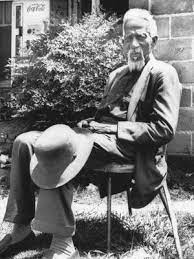
Mr. Wells was born in 1776. As a child, he walked the streets of Philadelphia with George Washington, Benjamin Franklin, and John Adams. He saw the exuberant colonists celebrate their newfound freedom from Great Britain and their written commitment to democracy and freedom for all. The young Mr. Wells would go on to realize that his rights had been stolen and sold away. His legacy is our legacy. Please say his name.

Mr. John Wells died on a clear cold day in February 1848 and was buried, with dignity, by his family and friends at Bethel Burying Ground.

Thirteen-year-old Joseph Cropper died this date, January 31st, in 1853, and was buried at Bethel Burying Ground.

Posted by Terry Buckalew on January 31, 2022
Posted in: On This date. Tagged: African American burial grounds, African American cemeteries, African American History, African Methodist Episcopal Church, archaeology, Bethel Burying Ground, Mother Bethel, Mother Bethel African Methodist Episcopal Church, Philadelphia, Richard Allen. Leave a comment

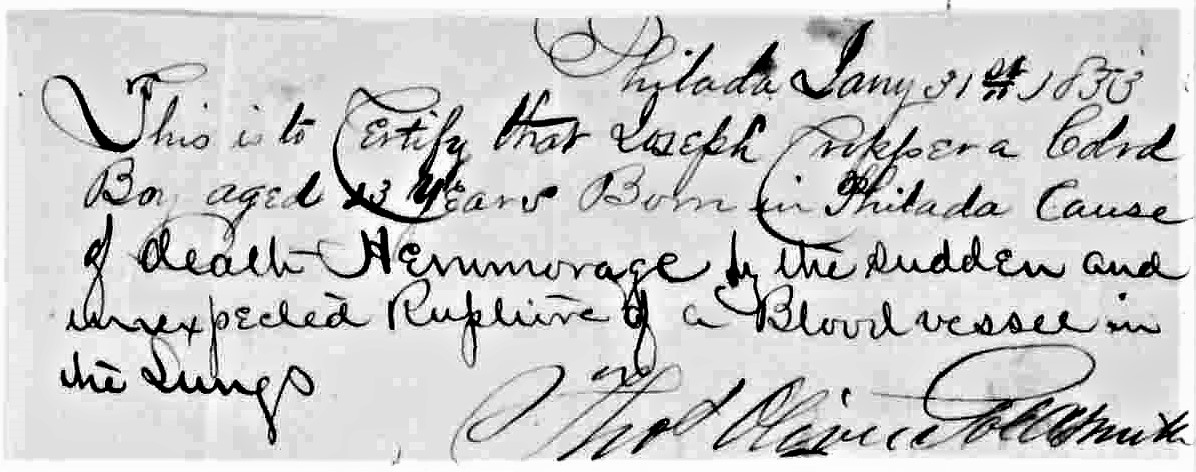
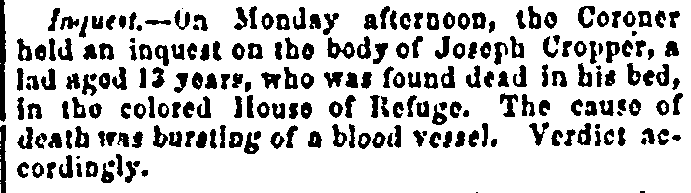
Thirteen-year-old Joseph Cropper died this date, January 31st, in 1853 of a “sudden and unexpected Rupture of a Blood vessel in the Lungs.”

At the time of his death, Joseph was an inmate in the Philadelphia Colored House of Refuge. Built only three years before his death, it housed youths under twenty-one-years-old that were convicted of minor crimes, such as theft or fighting. Besides those children who were convicted of a crime, it also gave shelter for up to a year to those who were abandoned or homeless. (1)

It is possible that the young Mr. Cropper was already suffering from a serious respiratory disease, such as Tuberculosis, prior to his death. If that were the case, then it is strange that the attending physician and the coroner did not mention that fact. Joseph would have been in the advanced stages of the disease and should have been in the infirmary, not in a dormitory. These institutions were violent places, often ruled by gangs and run by people willing to look the other way for the sake of their own personal gain.

Philadelphia Inquirer, 2 February 1853, p.1,

According to the 1850 U.S. Census, Joseph was the son of Daniel and Annie Maria Cropper. Mr. Cropper was forty years old at the time of his son’s death. Ms. Cropper was forty-two years old. Mr. Cropper was employed as a waiter and a porter, as the latter was usually seasonal.

Ms. Cropper was a stay-at-home mother caring for Joseph, his three sisters, and one brother. At the time of their brother’s death, Elizabeth was twenty-years-old, Sarah A. was twelve-years-old, Daniel, Jr. was nine-years-old, and Ann M. was seven-years-old. Mr. and Ms. Cropper were both born in Delaware, while the rest of the family members were born in Pennsylvania, according to the 1850 U.S. Census and Ms. Cropper’s obituary.

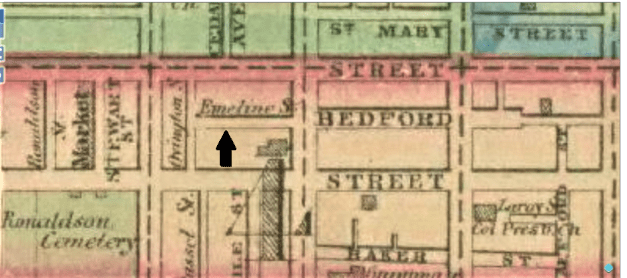
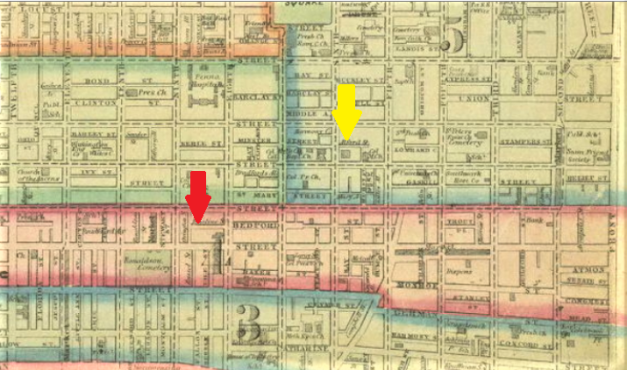
The family was not listed in the 1847 Philadelphia African American Census. Their home address was last reported in the 1850 Philadelphia City Directory. The family lived on Emeline Street, now Kater Street. It was a narrow thoroughfare between 8th and 9th Streets and South and Bainbridge Streets. The street was packed with Black families that supported themselves by being employed as laborers, blacksmiths, waiters, laundresses, cooks, and dressmakers.

Emeline 1
The black arrow indicates the small size of Emeline Street. In the illustration below, the red arrow indicates the location of Emeline Street in relationship to Bethel A.M.E. Church at 6th and Lombard Streets (yellow arrow).

The Philadelphia city directories for the 1850s do not contain any mentions of the Cropper family. The family does appear in the 1860 U.S. Census as having moved back to Delaware and living in the New Castle area. Still living with their parents are Daniel, Jr. and Anna.

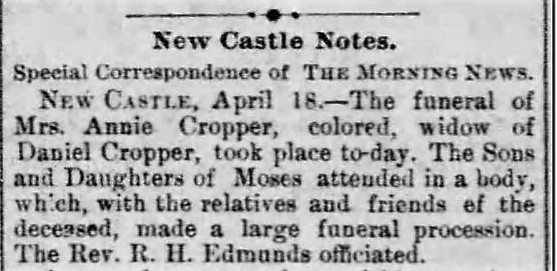
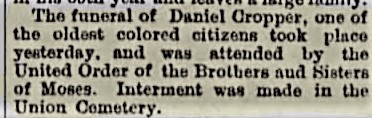
It appears that the family moved back to Delaware after the death of Joseph. Daniel Cropper died in December of 1886 and Annie Marie Cropper in 1889. (2)

Thirteen-year-old Joseph Cropper died on a clear and mild day at the end of January when the temperature rose to a high of forty-nine degrees. He was buried, with dignity, by his family at Bethel Burying Ground. There is the beginning of a family tree at Ancestry.com

(1) https://philadelphiaencyclopedia.org/archive/house-of-refuge/; E.P. Oherholtzer, Philadelphia: A History of the City and its People, p. 176.

(2) The Morning Sun (New Castle, DE), 13 April 1889.

Delaware Gazette, 16 Dec 1886.

Posts navigation

← Older Entries
Newer Entries →
  • Recent Posts

    • Three dead as church wall falls on this date, May 1st, in 1841.
    • The ten-month-old Baby Colgate died this date, June 20th, in 1847, and was buried at Bethel Burying Ground.
    • Fifty-eight-year-old Rachel Dawson died this date, May 3rd, in 1839, and was buried at Bethel Burying Ground.
    • Twenty-eight-year-old Robert Swails died on this date, March 31st in 1849, and was buried at Bethel Burying Ground.
    • Forty-year-old Jacob “Jesse” Howard died on this date, January 29th, in 1840, and was buried at Bethel Burying Ground.
  • Archives

    • May 2024
    • June 2023
    • May 2023
    • March 2023
    • January 2023
    • December 2022
    • November 2022
    • October 2022
    • September 2022
    • August 2022
    • May 2022
    • April 2022
    • March 2022
    • February 2022
    • January 2022
    • December 2021
    • November 2021
    • October 2021
    • September 2021
    • August 2021
    • July 2021
    • June 2021
    • May 2021
    • April 2021
    • March 2021
    • February 2021
    • January 2021
    • December 2020
    • November 2020
    • October 2020
    • September 2020
    • August 2020
    • July 2020
    • June 2020
    • May 2020
    • April 2020
    • March 2020
    • February 2020
    • January 2020
    • December 2019
    • November 2019
    • October 2019
    • September 2019
    • August 2019
    • July 2019
    • June 2019
    • May 2019
    • April 2019
    • March 2019
    • February 2019
    • January 2019
    • December 2018
    • November 2018
    • October 2018
    • September 2018
    • August 2018
    • July 2018
    • June 2018
    • May 2018
    • April 2018
    • March 2018
    • February 2018
    • January 2018
    • December 2017
    • November 2017
    • October 2017
    • September 2017
    • August 2017
    • July 2017
    • June 2017
    • May 2017
    • April 2017
    • March 2017
    • February 2017
    • January 2017
    • December 2016
    • November 2016
    • October 2016
    • September 2016
    • August 2016
    • July 2016
    • June 2016
    • May 2016
    • April 2016
    • March 2016
    • February 2016
    • January 2016
    • December 2015
    • November 2015
    • October 2015
    • September 2015
    • August 2015
    • July 2015
    • June 2015
    • May 2015
    • April 2015
    • March 2015
    • February 2015
    • January 2015
    • December 2014
    • November 2014
    • October 2014
  • Categories

    • Archaeology
    • BBG History
    • Bethel Burying Ground Name Directory
    • Bethel Burying Ground Timeline
    • Burial services
    • Diseases
    • Documents
    • Freemasonry
    • Ignatius Beck
    • It's a fact
    • Maps
    • Neighborhood
    • Newspaper Articles
    • On This date
    • Photographs
    • Uncategorized
    • Videos
  • Meta

    • Create account
    • Log in
    • Entries feed
    • Comments feed
    • WordPress.com
Blog at WordPress.com.
Bethel Burying Ground Project
Blog at WordPress.com.
  • Subscribe Subscribed
    • Bethel Burying Ground Project
    • Join 48 other subscribers
    • Already have a WordPress.com account? Log in now.
    • Bethel Burying Ground Project
    • Subscribe Subscribed
    • Sign up
    • Log in
    • Report this content
    • View site in Reader
    • Manage subscriptions
    • Collapse this bar
 

Loading Comments...