Bethel Burying Ground Project

Bethel Burying Ground Project

  • ABOUT THE BETHEL BURYING GROUND PROJECT

Fifty-three-year-old Mary George died this date, December 12th in 1847 and was buried at Bethel Burying Ground.

Posted by Terry Buckalew on December 12, 2019
Posted in: On This date. Tagged: African American burial grounds, African American cemeteries, African American History, African Methodist Episcopal Church, archaeology, Bethel Burying Ground, Mother Bethel, Mother Bethel African Methodist Episcopal Church, Philadelphia, Richard Allen. Leave a comment

MARY GEORGE

Fifty-year-old Mary George died this date, December 12th in 1847 of Typhus Fever and was buried at Bethel Burying Ground. There is not a great deal of specific information on Ms. George. There is a woman by this name whom I presume is this Ms. George in the 1847 Philadelphia African American Census. She was single, poor and cleaned houses for a living. 
Mary George Quince Map

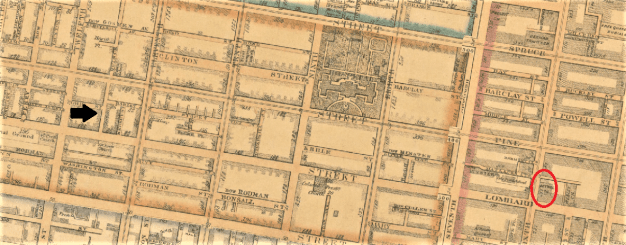
The black arrow illustrates the location of the Quince Street address and the red circle illustrates Bethel A.M.E. Church.

According to her death certificate, Ms. George resided at #32 Quince Street near the intersection of 10th and Lombard Street in center city Philadelphia. According to the 1847 census, that address was also occupied by the Julia Buck family. It appears that Ms. George was either a family member of Ms. Buck or that she just rented space in the one-room home. There were a total of four residents. The women all worked as laundresses and the only male was employed as a hod (brick) carrier. 

Approximately three weeks before Ms. George died, she was bitten by a flea that likely came from a rat. The bite transmitted a bacteria into Ms. George’s bloodstream. During the next 2-3 weeks, she experienced excruciating pain and a series of ever-increasing symptoms. These included high fever, vertigo, headaches, fatigue, blindness, loss of hearing, hallucinations, episodes of cold chills and hot flashes. As the end of her life neared, Ms. George would have been racked by vomiting, throat and lungs inflammation and unremitting pain in her legs, back, and groin. Finally, the bacteria would enter her central nervous system causing an even higher fever and deadly convulsions. 

Ms. George was one of the 254 Philadelphians to die of Typhus in 1847. The vast majority were destitute and lived in awful conditions. Many of the sick died alone and uncared for in desolate rooms, boarded shanties, and damp pitch-black cellars. The last epidemic of Typhus in Philadelphia occurred during the winter of 1835-36 among a large group of recent Irish immigrants. At that time, the Board of Health recorded 241 deaths. In 1847, the year that Ms. George died, a total of 254 Philadelphians succumbed to Typhus. Although the number who died from Typhus that year was very high, it was not declared an epidemic by the government. 

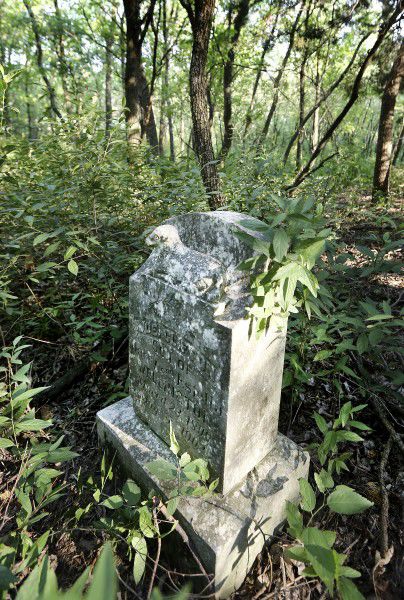
3 tombstone

Ms. George died during a week that saw a startling rise in temperatures that resembled more like “the first of April than December.” Daytime temperatures rose to the high 60s and low 70s. The city streets turned to mud and made walking and transportation difficult.

Official Border

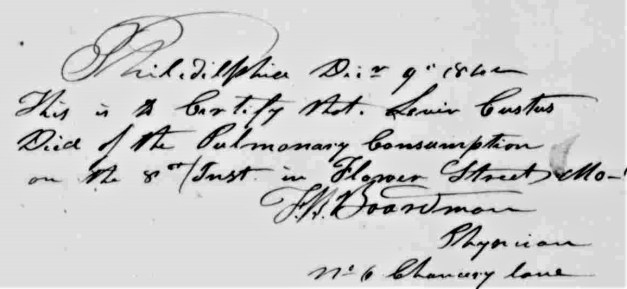
Forty-year-old Levin Custis died this date December 8th, in 1842 and was buried at Bethel Burying Ground.

Posted by Terry Buckalew on December 8, 2019
Posted in: On This date. Tagged: African American burial grounds, African American cemeteries, African American History, African Methodist Episcopal Church, archaeology, Bethel Burying Ground, Mother Bethel, Mother Bethel African Methodist Episcopal Church, Philadelphia, Richard Allen. Leave a comment

Levin Custis

Forty-year-old Levin Custis died this date December 8th, in 1842 and was buried at Bethel Burying Ground. Dr. Boardman did not see the corpse until the next day – if at all. He omitted Mr. Custis’s age which was eventually added to the weekly Board of Health Summary. According to the 1838 Philadelphia African American Census, the good doctor also misspelled the deceased last name.

Mr. Levin Custis was formerly enslaved and gained his freedom through manumission, as did his spouse, according to the 1838 Census. Mr. Custis was employed as a laborer, while Ms. Custis took in laundry.  I have not been able to identify her first name. The 1838 census also reports a third individual living with the family, possibly a child.

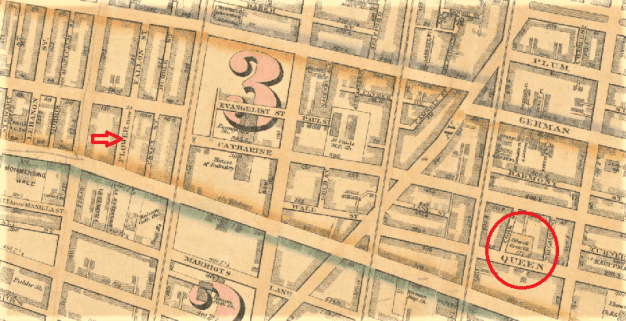
Custis map

The red arrow points to Mr. Custis’s home on Flower Street near Ninth and Christian Streets in South Philadelphia. The red circle illustrates the location of Bethel Burying Ground, only four blocks away.

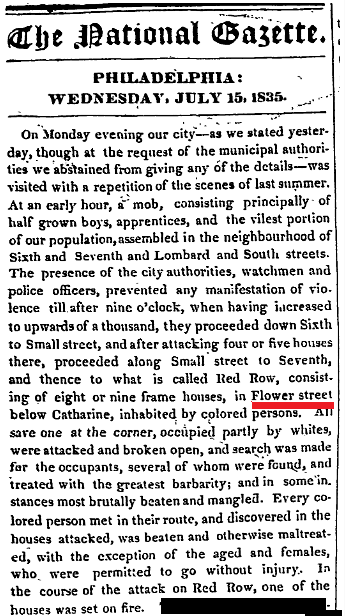
The Custis family lived in a room on Flower Street in the Moysmensing District of Philadelphia County. Through the 19th Century, Flower Street (now South Fallon Street) saw its tragedies, including starvation, exposure, riots, and epidemics. March was a cruel month for the poor in the city. Work was either slow or non-existent. Consequently, money for food and wood or coal for heat was a problem. In desperation, some would break up furniture to burn for heat. In March of 1835, even that couldn’t keep Flower Street resident Ms. Amy Grant and her baby son from freezing to death in their room. (1)
Flower Street was also the target of rampaging racist mobs in the summer of 1835 and in 1842.

Screenshot (24)

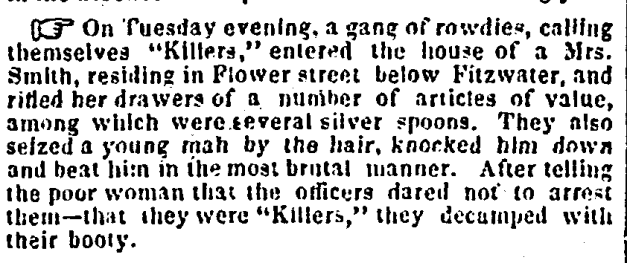
In addition to the seasonal rampages of white racist mobs, the residents of Flower Street also fell prey to the criminal gangs that daily roamed the neighborhood unchecked. (2)

Daily_Pennsylvanian_1848-11-09_2

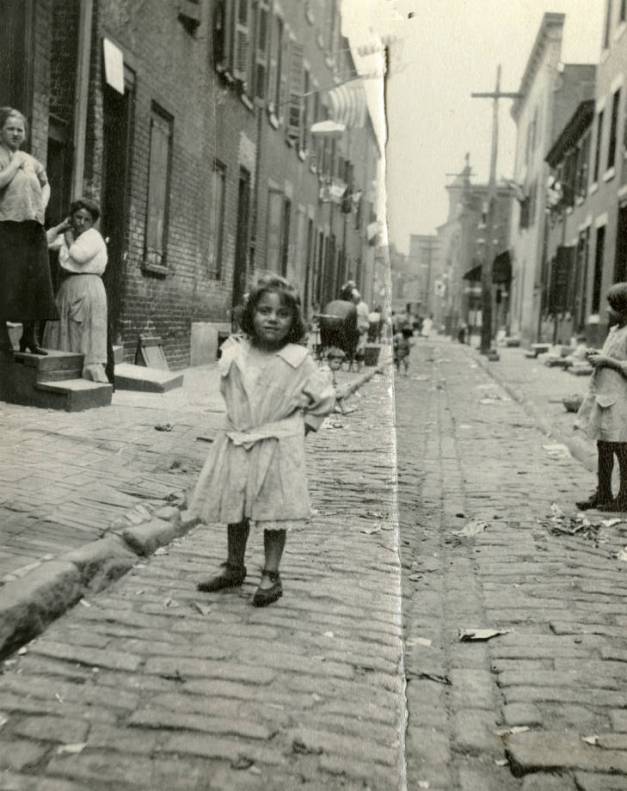
Mildred street 1920

Above is a 1920 photo of Flower Street now South Fallon Street. The majority of residents at this time are Italian Americans.

FALLON STREET

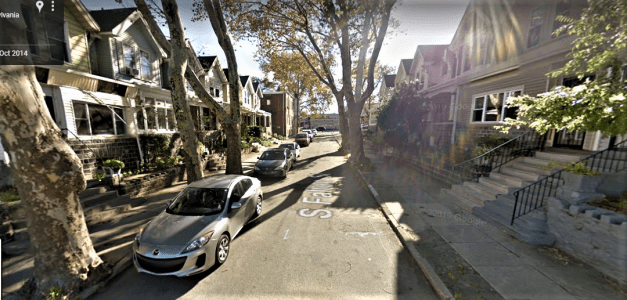
Current photo of South Fallon Street.

Mr. Levin Custis died on a cold December day that saw snow fall all day. It was especially heavy in the evening. This may have delayed the physician and may have been the reason why the death certificate is dated the day after he died.

Official Border

(1) Daily Pennsylvanian, 4 March 1835.

(2) Daily Pennsylvanian, 11 September 1848

December 2, 1889: Bethel Burying Ground Timeline

Posted by Terry Buckalew on December 2, 2019
Posted in: Bethel Burying Ground Timeline. Tagged: African American burial grounds, African American cemeteries, African American History, African Methodist Episcopal Church, archaeology, Bethel Burying Ground, Mother Bethel, Mother Bethel African Methodist Episcopal Church, Philadelphia, Richard Allen. Leave a comment
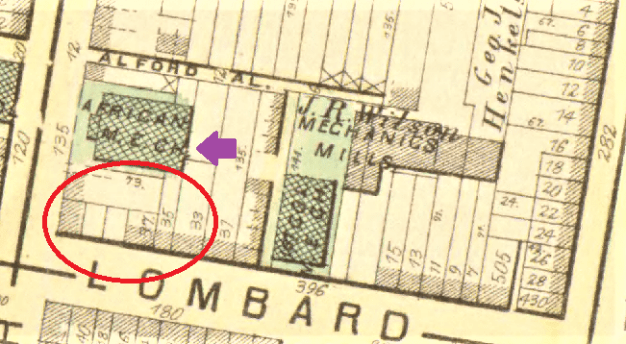
Dec 2nd Bethel map

The purple arrow illustrates the location of Bethel Church in relationship to the buildings (red circle) that they owned as investment properties.

On December 2, 1889, the trustees of Bethel A.M.E. Church were called to a special meeting. President D.W. Parvis informed them that the City of Philadelphia has “ordained” that the Bethel Burying Ground now is to be used for a city park. To accomplish this sale, it is necessary for the A.M.E. corporate leaders to vote to empower the trustees to sell the cemetery to the City for $10,000. President Parvis told them that the money from the sale would be used for the renovation and improvement of the Sixth and Lombard Streets properties owned by the Church. The Bethel trustees voted unanimously 20-0 in favor of the sale. (Minutes of the Bethel Trustees)

Bethel 1916

The above 1916 photo shows the new church as well as two buildings that were able to be renovated because of the sale of Bethel Burying Ground.

The numerous investment properties of the Church likely assisted in paying the mortgage for the new 1889 church that stands today.

Official Border

From the official records of Mother Bethel Church archives. The trustee minutes are available on microfilm at the Historical Society of Pennsylvania and the University of Pennsylvania.

“2 December 1889”

“A called meeting of the Corporation of Bethel AME Church was held on the above date. ….President Bro D.W. Parvis stated that the Municipal Government of the City of Philadelphia had ordained the burial lot belonging to our church (Bethel AME) situated on Queen Street between 4th and 5th Sts to be used as a public Park it was necessary for this corporation to pass a resolution empowering the Trustees to sell the said property. The following motion was made by Bro Fielding Ford & seconded by Bros Solomon Bright & Robt America – whereas the Municipal Government of the City of Philadelphia having ordained Burial lot Bethel AME Church, situated on Queen St. between 4th & 5th Sts to be used as a Public Park therefore be it resolved by the Corporation of Bethel AME Church assembled for the said purpose, That the Trustees be empowered to sell to City the said lot for the sum of Ten Thousand Dollars $10,000 After a general discussion upon the resolution it was carried. …“

“On Motion by Bro Wm. L Gomott & seconded by Bro R.J. Holland that the money accurring (sic) from the sale of said lot be used for the improvement of properties on Lombard & Sixth (6th) St. around the church amended by Bro Geo W. P. Custis and seconded by Bro. H. Brown that the money be deposited in the same bank or saving fund for the purpose specified (in the motion). …”

Four-months-old Surry Valentine died on November 29th, in 1853 and was buried at Bethel Burying Ground.

Posted by Terry Buckalew on November 29, 2019
Posted in: On This date. Tagged: African American burial grounds, African American cemeteries, African American History, African Methodist Episcopal Church, archaeology, Bethel Burying Ground, Mother Bethel, Mother Bethel African Methodist Episcopal Church, Philadelphia, Richard Allen. Leave a comment

Valentine

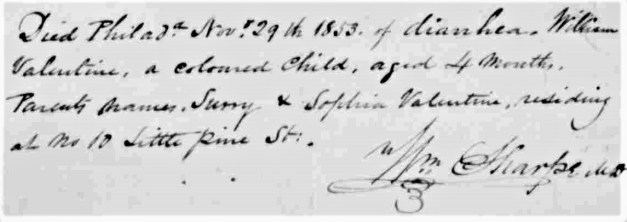
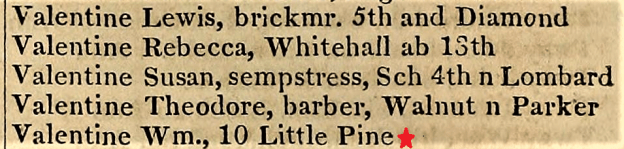
The death certificate is in error. The deceased was not William Valentine. I believe it was Surry Valentine. William was Surry’s father and Sophia Valentine was Surry’s mother. The image below is from the 1853 Philadelphia City Directory. It states that William Valentine is the head of a household at #10 Little Pine Street. The same address that is on the death certificate.

1853 CD

Consequently, I believe the actual deceased family member was four-month-old Surry Valentine, a girl, who died of an illness that had as a symptom uncontrolled diarrhea. She was buried at Bethel Burying Ground. 

At the time of the death of their daughter, William Valentine was thirty-years-old and Sophia Valentine was eighteen-years-old, according to the 1850 U.S. Census. Both parents were born in Virginia. Ms. Valentine worked taking in laundry and ironing, while Mr. Valentine was employed as a waiter earning $3 a week. The family lived in a room at #10 Little Pine, paying $3 a month in rent, according to the 1847 Philadelphia African American Census. 

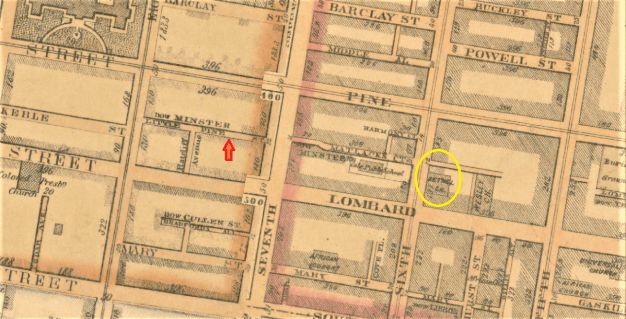
Little Pine Map

The red arrow illustrates the location of the Valentines’ home at #10 Little Pine Street. Later it would be renamed Minster Street. The yellow circle illustrates the location of Bethel A.M.E. Church.

Official Border

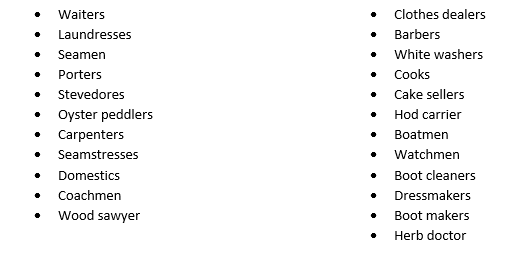
Screenshot (15)

In 1847, Little Pine Street was home to an industrious fifty-two families with a total of one hundred seventy-nine individuals who held a wide variety of occupations. The 1847 Philadelphia African American Census also shows that nineteen of the residents reported that they were formerly enslaved.

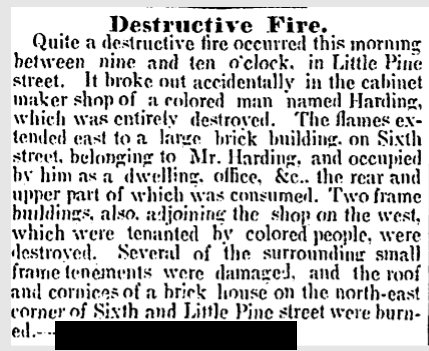
All the residents of the crowded Philadelphia streets, courts, and alleys lived in fear of fire. The thousands of old wood-frame buildings were all possible sources of fuel for a configuration. On a cold day in late January in 1848, the Valentine family and the rest of the residents of Little Pine Street heard the cry of FIRE! 

Little pine street fire

Philadelphia Inquirer, 31 January 1848.

The Valentines’ home escaped the blaze this time but the fear must have always remained.

Official Border

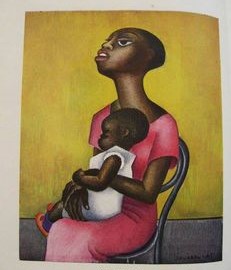
Mother and child (art)

Four-month-old Surry Valentine died on a late November day in 1853 and was buried at Bethel Burying Ground.


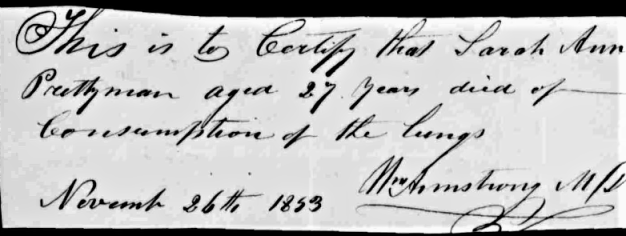
Twenty-seven-year-old Sarah Ann Prettyman died this date, November 26th in 1853 and was buried at Bethel Burying Ground.

Posted by Terry Buckalew on November 26, 2019
Posted in: On This date. Tagged: African American burial grounds, African American cemeteries, African American History, African Methodist Episcopal Church, archaeology, Bethel Burying Ground, Mother Bethel, Mother Bethel African Methodist Episcopal Church, Philadelphia, Richard Allen. Leave a comment

Sarah Ann Prettyman

Twenty-seven-year-old Sarah Ann Prettyman died this date, November 26th in 1853 of Tuberculosis and was buried at Bethel Burying Ground. Information is limited on Ms. Prettyman. She appears in the 1850 U.S. Census, three years before her death. 

Prettyman family 1850

Sixty-two-year-old Louisa Prettyman was the head of the family. She was born in Delaware, as were all the family members. Ms. Prettyman was blind, according to the Census. Sarah Ann was not employed and may have taken care of the elder Ms. Prettyman at home. Brother James was twenty-two-years-old and was employed as a seaman. Lot Prettyman was twenty-years-old and worked as a laborer. Additionally, the Census reports that eighteen-year-old Elisha Prettyman was employed as a laborer. I could not find any information on the spouse of Louisa Prettyman.

Official Border

WILSON'S COURT

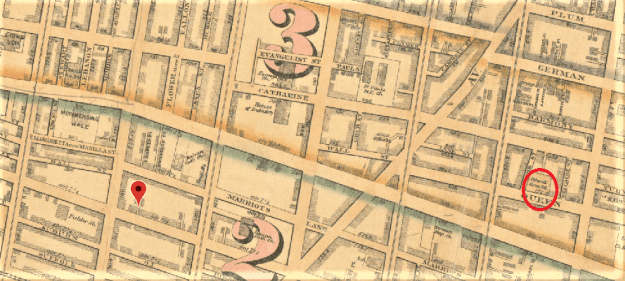
The 1851 Philadelphia City Directory shows Sarah Ann and Louisa Prettyman resided in Wilson’s Court (red pin). The location of Bethel A.M.E. Church is encircled in red.

Wilson’s Court was a small out-of-the-way alley on Carpenter Street between 8th and 9th Streets in the Moyamensing district of the county. The name of the thoroughfare was changed in 1858 to Gramment.  

Official Border

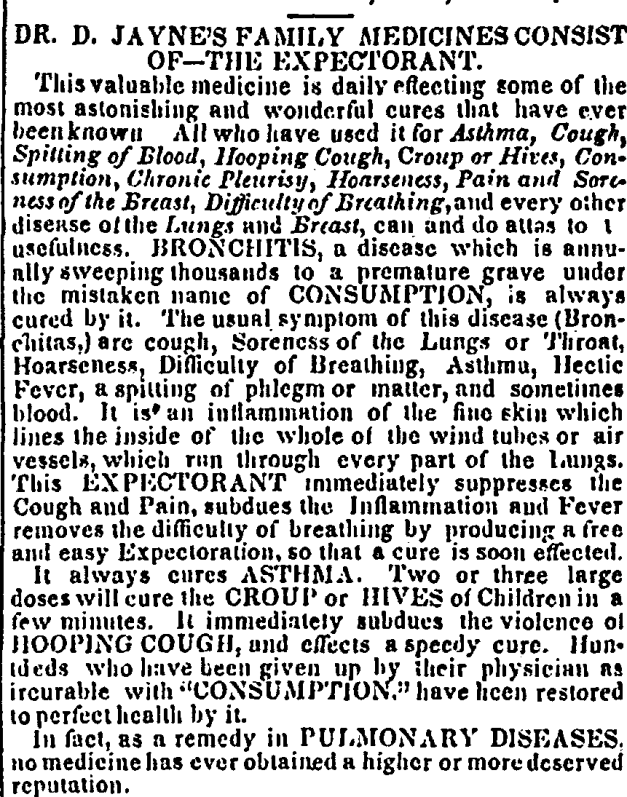
The wonder cure for “Spitting of Blood

Catholic_Herald_1852-02-05_3 bb

The Catholic Herald, 5 February 1853

Ms. Prettyman was inflicted with Tuberculosis. A disease that was described by the ancient Greeks and known also as Consumption and Phthisis. It was a cruel disease that often took years to kill its victim while he or she coughed up blood from hemorrhaging lungs. The rich could ease some of the sufferings by “taking the waters” at a resort or at a mountain top spa with its clean dry air. The poor were stuck in smokey, soot-filled rooms that only ascerbated their misery. But they did have the dozens of “snake oil” concoctions like the one above that promised a cure from their sickness.

Sarah Ann Prettyman died on a late November day in 1853 and was buried at Bethel Burying Ground.

Official Border

Note: The Census record above is somewhat confusing on the names of “Louisa” and “Lot.” I have confirmed this spelling through other documents. 

The Field Family

Posted by Terry Buckalew on November 22, 2019
Posted in: BBG History. Tagged: African American burial grounds, African American cemeteries, African American History, African Methodist Episcopal Church, archaeology, Bethel Burying Ground, Mother Bethel, Mother Bethel African Methodist Episcopal Church, Philadelphia, Richard Allen. Leave a comment

Forty-nine-year-old Sarah Field is buried at Bethel Burying Ground with four of her babies.

Ms. Field took in wash and ironing, while her spouse Abraham Field worked as a waiter. They lived on Christian Street between 8th and 9th Street in the Moyamensing District of the county. Both attended church services and belonged to a beneficial society, per the 1847 African American Census.

Official Border

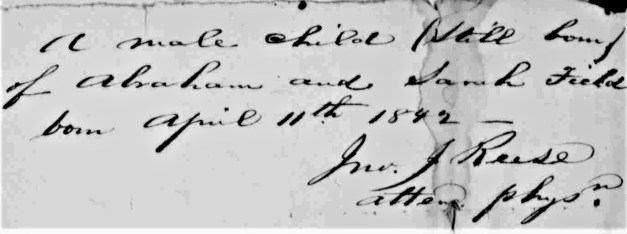
Male Fields child

Ms. Field was forty-years-old when she delivered a stillborn son on April 11th in 1842. The child was buried at Bethel Burying Ground. There were 385 stillborn births in 1842 Philadelphia, according to the Board of Health. 

Official Border

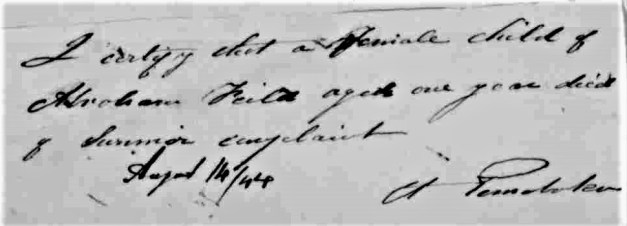
Female Fields child

The Fields lost a one-year-old daughter on August 14th in 1844. She was buried at Bethel Burying Ground. The child died of “Summer Complaint,” also known as Cholera Infantum which was severe diarrhea in young children that occurred during the warm and hot months of the year. The bacterial disease was transmitted through human feces in water, milk or unwashed hands. Death frequently occurred in three to five days. According to the Philadelphia Board of Health records, 262 children succumbed to the disease in 1844.
Official Border

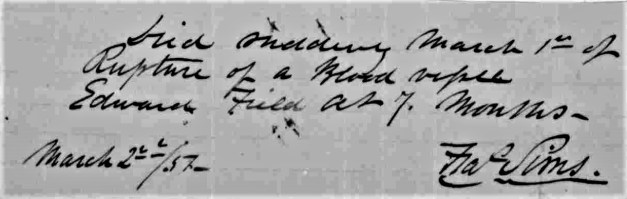
Edward Fields

Seven-month-old Edward Field died on March 1st in 1851 of a ruptured blood vessel and was buried at Bethel Burying Ground with his brother and sister. 

Official Border

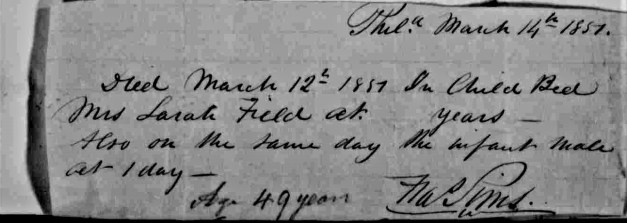
Sarah Fields

On March 12th in 1851, at forty-nine-years of age, Sarah Field died of “Bed Fever.” She had given birth to a son the day before who died the same day as his mother. Both were buried at Bethel Burying Ground with the other Field children. “Bed Fever,” also known as Puerperal Fever, was a bacterial infection contracted by a woman who has given birth. Consequently, “blood poisoning” or septicemia sets in and takes the life of the woman. Board of Health records show that forty-one Philadelphia women died of Puerperal Fever in 1851. The number seems low.

The high rate of stillbirths in this era is attributed to the lack of proper maternal nutrition and the possible infection of the fetus with Tetanus or lockjaw. This is transmitted by the mother through an infected umbilical cord. (A Biohistory of 19th-Century Afro-American by Lesley M. Rankin-Hill, p. 77.)

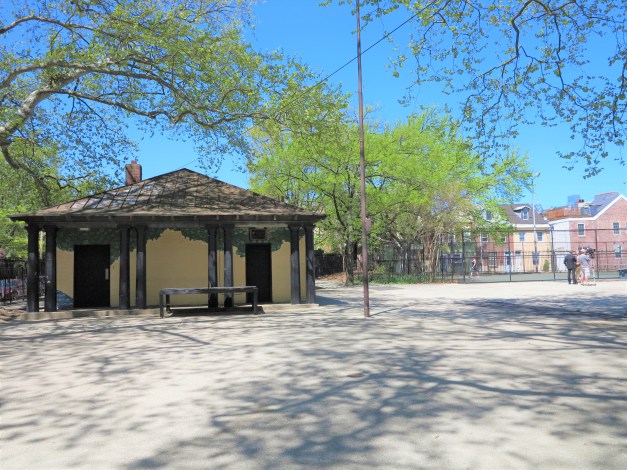
weccacoe-playground-may-2014-2.original

The human remains of Ms. Sarah Field and her four children continue to be interred at Bethel Burying Ground under the Weccacoe Playground. (Photo by WHYY)

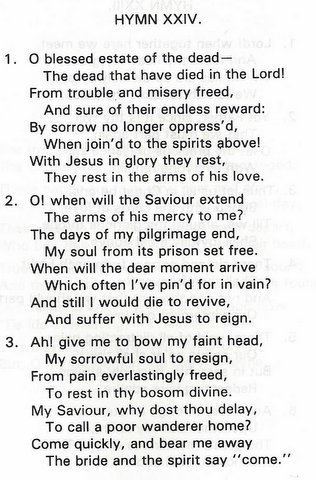
scan-1

Rev. Richard Allen’s Song Book

Official Border

Thirty-three-year-old Eliza Gale died this date, November 12th, in 1853 and was buried at Bethel Burying Ground.

Posted by Terry Buckalew on November 12, 2019
Posted in: On This date. Tagged: African American burial grounds, African American cemeteries, African American History, African Methodist Episcopal Church, archaeology, Bethel Burying Ground, Mother Bethel, Mother Bethel African Methodist Episcopal Church, Philadelphia, Richard Allen. Leave a comment

Eliza Gale

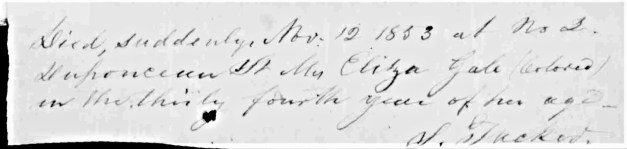
Thirty-three-year-old Eliza Gale died this date, November 12th, in 1853 and was buried at Bethel Burying Ground. Dr. Samuel Tucker assigned Ms. Gale’s cause of death as “Sudden Death.” It appears that the doctor did not take the time nor the care to investigate her medical history with her family. Dr. Tucker had a prestigious address at 212 Walnut Street and likely volunteered at the Southern Dispensary, a clinic for the poor. It could be that Tucker never saw Ms. Gale and simply signed a vague death certificate. 

There is very little information on the Gales. The 1853 City Directory reports an Edward Gale living at the same address as Eliza Gale. He was employed as a drayman. A drayman was historically the driver of a dray, a flat-bed wagon pulled by horses or mules, that was used for transport of all kinds of goods. There is no information on any employment for Ms. Gale. It appears that the Gales may have been recent residents of the city. They lived on Duponceau Street – an infamous location.

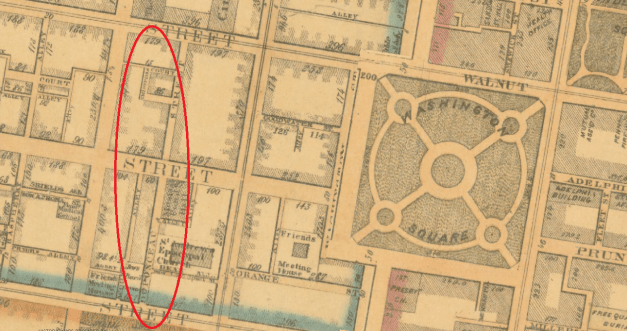
Screenshot (9)

Duponceau Street was located between Spruce and Walnut Streets and 8th and 9th Streets, very near Washington Square. For decades, the street was home to numerous bordellos or houses of prostitution. In addition to the local clientele, it was popular with traveling merchants, salesmen, and freight wagon drivers. (1) The previous name of the narrow thoroughfare was Blackberry Alley. In 1849, the city fathers thought that, by the act of changing the name, the Alley would somehow magically erase the problem. This was not the first nor the last time that this was attempted. It never worked and certainly did not work this time.

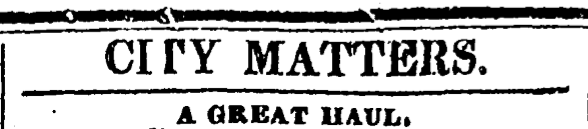
Great Haul

“Dollar Newspaper,” 6 September 1854, p. 2.

The police were always being called to Duponceau Street the “shame and disgrace of the city.”(2) At all times of the day and night, there were screaming, drunken brawls that spilled out on to the street from the brothels at #3, #4, #5, #6, #8, and #24 Duponceau Street. The Gales lived at #2 Duponceau! With the disturbances, the police would come and arrest a couple of the participants and leave the street to business as usual. 

Young AA couple

According to the Philadelphia Board of Health records, there were 214 deaths in 1853 attributed to “Sudden Death” or cause of death “Unknown.” Forty out of the 2, 486 so far identified at BBG have the cause of death as “Unknown” or “Sudden Death.”

Eliza Gale died on a cold, wet day in November and was buried at Bethel Burying Ground. I could not locate any further information on Mr. Gale.

Official Border

(1) Philadelphia Inquirer, 7 April 1852.

(2) Philadelphia Inquirer, 6 September 1854, p.1.

For further reading, please go to – Ill-Fame on Blackberry Alley

Sixty-one-year-old Moses Macklin died this date, November 6th, in 1848 and was buried at Bethel Burying Ground.

Posted by Terry Buckalew on November 6, 2019
Posted in: On This date. Tagged: African American burial grounds, African American cemeteries, African American History, African Methodist Episcopal Church, archaeology, Bethel Burying Ground, Mother Bethel, Mother Bethel African Methodist Episcopal Church, Philadelphia, Richard Allen. 1 Comment

Moses Macline

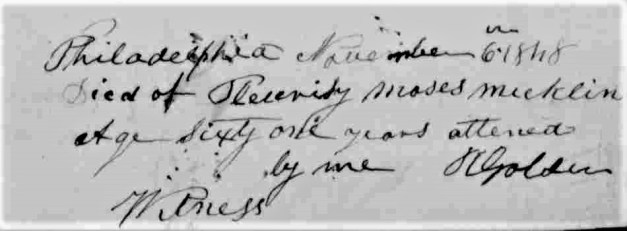
Sixty-one-year-old Moses Macklin died this date, November 6th, in 1848 of Pleurisy* and was buried at Bethel Burying Ground. Mr. Macklin was married to forty-seven-year-old Elizabeth Macklin who was a native of Delaware, according to the 1847 African American Census and the 1850 U.S. Census. Mr. Macklin was employed as a wood sawyer, while Ms. Macklin labored taking in washing and ironing. It appears that the Macklins had at least two adult children, William who was twenty-six-years old at the time of his father’s death and Isaac who was twenty-four. Both were born in Pennsylvania. 

Moses Map

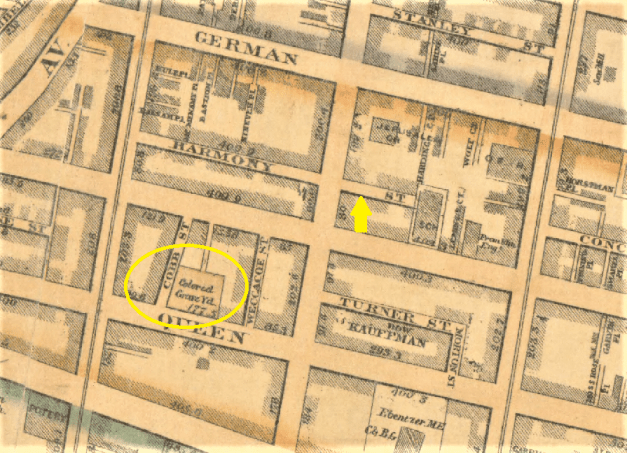
The yellow arrow illustrates the location of the Macklins’ home in the 300 block of Harmony Street. The Bethel Burying Ground is nearby, as illustrated by the yellow circle. The Macklin family owned their home, according to the 1847 Census. The value of the home in modern currency is approximately $22,250.

The 1847 Census shows the fifteen Black families on Harmony Street were industrious. The forty-nine residents were employed as:

  • cooks
  • sailmakers
  • draymen
  • oyster cellar worker
  • dressmakers
  • waiters
  • porters
  • clothes seller
  • seamen
  • laundresses 
  • domestic workers
  • a steward of a steamboat

*************************************************************************************

Hannah moses

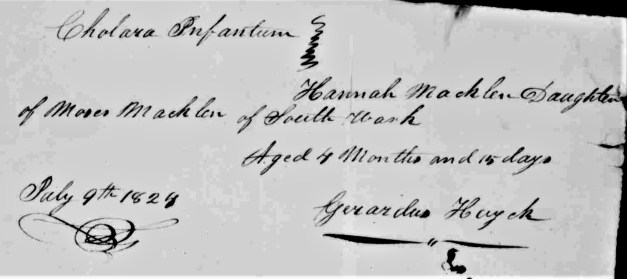
Tragically, Moses and Elizabeth Macklin lost a four-month-old daughter, Hannah, twenty years before Mr. Macklin passed away. She died of Cholera in 1828 and was buried at Bethel Burying Ground.

Moses Macklin died on a day where the sun rose to a temperature of 32°, a thirty-degree drop from the day before. The temperature rose to 56° by 2 pm. Mr. Macklin was buried at Bethel Burying Ground next to his daughter.

Official Border

*Pleurisy is severe chest pains caused by a bacterial infection. It also can be caused by a virus, such as the flu or by a fungus.

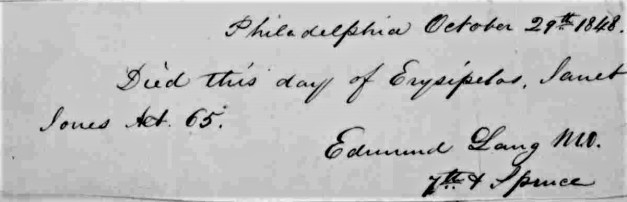
Sixty-five-year-old Janet Jones died this date, October 29th, in 1848 and was buried at Bethel Burying Ground.

Posted by Terry Buckalew on October 29, 2019
Posted in: On This date. Tagged: African American burial grounds, African American cemeteries, African American History, African Methodist Episcopal Church, archaeology, Bethel Burying Ground, Mother Bethel, Mother Bethel African Methodist Episcopal Church, Philadelphia, Richard Allen. Leave a comment

JANET JONES

Sixty-five-year-old Janet Jones died this date, October 29th, in 1848 of Erysipelas and was buried at Bethel Burying Ground. It appears Ms. Jones chose not to participate in the U.S. Census or the Philadelphia city directories. However, she is recorded in the 1838 Philadelphia African American Census. Ms. Jones reported she was a widow who worked as a seamstress. In addition, she stated she formerly was enslaved and gained her freedom through manumission. Ms. Jones worshipped at Bethel AME Church. 

Janey Jones map II

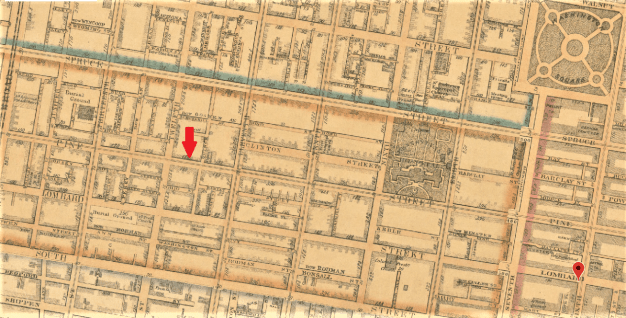
The red arrow illustrates the location of Ms. Jones’s residence on the 1100 block of Pine Street near Quince Street. The red pin in the lower-right corner illustrates the location of Bethel AME Church.

The last known address for Ms. Jones was for a room in a building on the 1100 block of Pine Street for which she paid $2 a month. She may have been able to make that amount in a week as a seamstress. The 1838 Census reported that she only owned $15 in personal property. 

Quince 1917

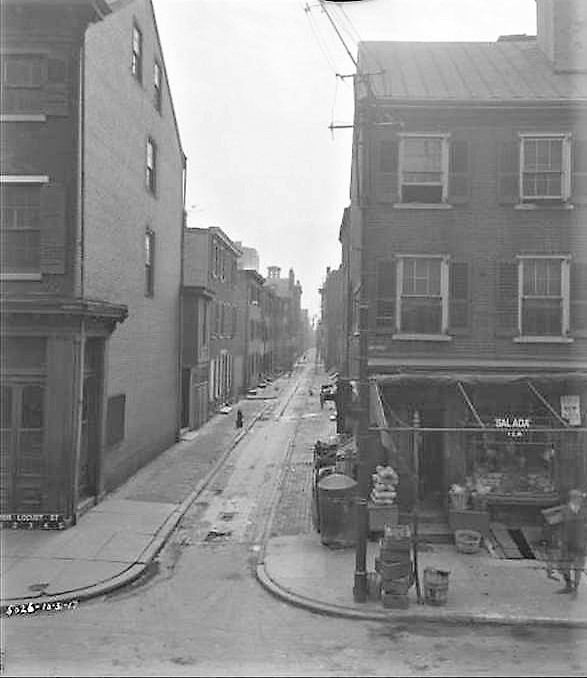
The 1917 photo above is taken from Pine Street very near Ms. Jones’ residence. The long view is looking down Quince Street.

Ms. Janet Jones died of Erysipelas. The disease starts out as a skin rash but can spread quickly to vital organs. Since the availability of antibiotics in 1944, the disease is easily cured simply with penicillin. However, the disease has been known since ancient times as a deadly illness. There are dozens of strains of this streptococcus bacteria, some more deadly than others. It is likely that the strain that killed Ms. Jones took 1-3 days to incubate. It would have entered her body through anything from a small scrape to a large wound or surgical incision. She would have been hit with a painful body rash and blistering, high fevers, chills, vomiting, and delirium. Eventual death from a heart attack would come anywhere from a few days to three weeks. Nineteenth-century physicians did not yet understand the concept of germs and the necessity of sterile conditions. (1)  

22222222

Ms. Jones died on a “pleasant day” in late October where the temperature rose to sixty-five degrees. She was laid to rest at Bethel Burying Ground.

Official Border

(1) The Butchering Art by Lindsey Fitzharris; The Merck Manuel.


Current Bethel Burying Ground Name Directory

Posted by Terry Buckalew on October 24, 2019
Posted in: Bethel Burying Ground Name Directory. Tagged: African American burial grounds, African American cemeteries, African American History, African Methodist Episcopal Church, archaeology, Bethel Burying Ground, Mother Bethel, Mother Bethel African Methodist Episcopal Church, Philadelphia, Richard Allen. Leave a comment

For current Bethel Burying Ground Name Directory: Please click on BBG Name Directory

Posts navigation

← Older Entries
Newer Entries →
  • Recent Posts

    • Three dead as church wall falls on this date, May 1st, in 1841.
    • The ten-month-old Baby Colgate died this date, June 20th, in 1847, and was buried at Bethel Burying Ground.
    • Fifty-eight-year-old Rachel Dawson died this date, May 3rd, in 1839, and was buried at Bethel Burying Ground.
    • Twenty-eight-year-old Robert Swails died on this date, March 31st in 1849, and was buried at Bethel Burying Ground.
    • Forty-year-old Jacob “Jesse” Howard died on this date, January 29th, in 1840, and was buried at Bethel Burying Ground.
  • Archives

    • May 2024
    • June 2023
    • May 2023
    • March 2023
    • January 2023
    • December 2022
    • November 2022
    • October 2022
    • September 2022
    • August 2022
    • May 2022
    • April 2022
    • March 2022
    • February 2022
    • January 2022
    • December 2021
    • November 2021
    • October 2021
    • September 2021
    • August 2021
    • July 2021
    • June 2021
    • May 2021
    • April 2021
    • March 2021
    • February 2021
    • January 2021
    • December 2020
    • November 2020
    • October 2020
    • September 2020
    • August 2020
    • July 2020
    • June 2020
    • May 2020
    • April 2020
    • March 2020
    • February 2020
    • January 2020
    • December 2019
    • November 2019
    • October 2019
    • September 2019
    • August 2019
    • July 2019
    • June 2019
    • May 2019
    • April 2019
    • March 2019
    • February 2019
    • January 2019
    • December 2018
    • November 2018
    • October 2018
    • September 2018
    • August 2018
    • July 2018
    • June 2018
    • May 2018
    • April 2018
    • March 2018
    • February 2018
    • January 2018
    • December 2017
    • November 2017
    • October 2017
    • September 2017
    • August 2017
    • July 2017
    • June 2017
    • May 2017
    • April 2017
    • March 2017
    • February 2017
    • January 2017
    • December 2016
    • November 2016
    • October 2016
    • September 2016
    • August 2016
    • July 2016
    • June 2016
    • May 2016
    • April 2016
    • March 2016
    • February 2016
    • January 2016
    • December 2015
    • November 2015
    • October 2015
    • September 2015
    • August 2015
    • July 2015
    • June 2015
    • May 2015
    • April 2015
    • March 2015
    • February 2015
    • January 2015
    • December 2014
    • November 2014
    • October 2014
  • Categories

    • Archaeology
    • BBG History
    • Bethel Burying Ground Name Directory
    • Bethel Burying Ground Timeline
    • Burial services
    • Diseases
    • Documents
    • Freemasonry
    • Ignatius Beck
    • It's a fact
    • Maps
    • Neighborhood
    • Newspaper Articles
    • On This date
    • Photographs
    • Uncategorized
    • Videos
  • Meta

    • Create account
    • Log in
    • Entries feed
    • Comments feed
    • WordPress.com
Blog at WordPress.com.
Bethel Burying Ground Project
Blog at WordPress.com.
  • Subscribe Subscribed
    • Bethel Burying Ground Project
    • Join 48 other subscribers
    • Already have a WordPress.com account? Log in now.
    • Bethel Burying Ground Project
    • Subscribe Subscribed
    • Sign up
    • Log in
    • Report this content
    • View site in Reader
    • Manage subscriptions
    • Collapse this bar
 

Loading Comments...