Ms. Sarah Bacon gave birth to a stillborn female child on this date, January 9th, in 1848 who was buried at Bethel Burying Ground. According to a combination of the 1847 Philadelphia African American Census and the 1850 U.S. Census, Ms. Bacon was forty-one-year old at the time of her daughter’s birth. She had been born in Maryland and was self-employed as a laundress. The baby’s father was Dennis Bacon, forty-three years old, who was employed as a “hog carrier” or brick carrier. He also was born in Maryland. It appears that the couple did not have any children.
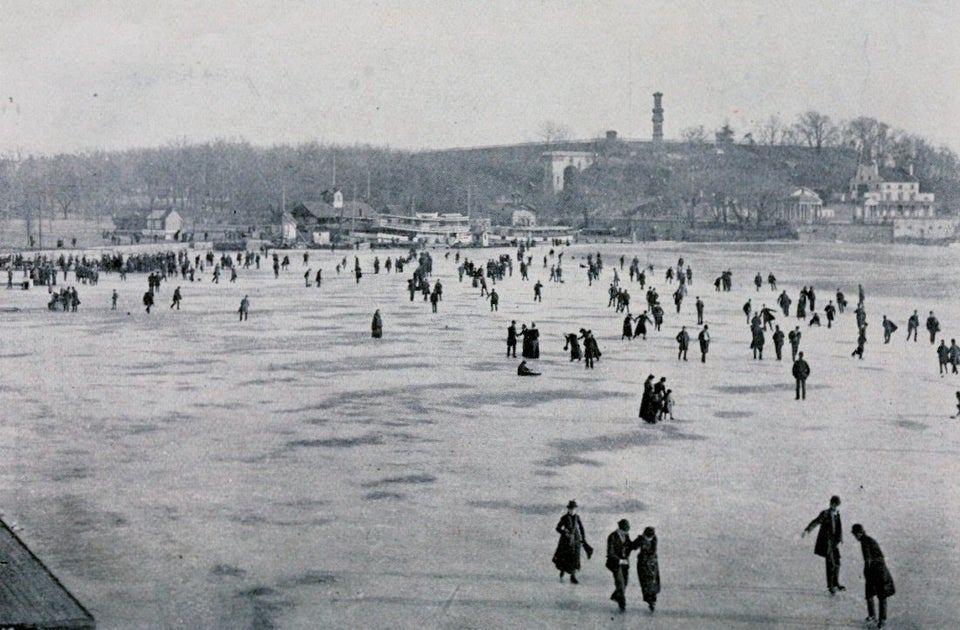
In the winter of 1848, both the Delaware and Schuylkill Rivers froze and were used by skaters. The above undated photograph shows skaters on the Schuylkill above the dam and behind the Museum of Art. Boathouse row is in the background.
Ms. Bacon was one of four hundred fifty seven Philadelphia women who suffered a stillbirth in 1848, according to Board of Health records. Malnutrition robbed poor pregnant women of the necessary diet to carry healthy babies to term. Winters especially were harsh and the winter of 1848 in Philadelphia was exceptionally so. The Delaware and Schuylkill Rivers had frozen over earlier than usual, halting ship traffic and the work that comes with loading and unloading the giant sailing ships. Snow and rain made the roads a quagmire that buried delivery wagons up to their axles. (1) Any outdoor construction work would have been difficult, if not impossible. It is likely that Mr. Bacon was out of work and the couple may have been relying on charity soup kitchens for their one meal a day. Hopefully, they were able to receive relief from the beneficial societies to which they belonged through their church. (2)
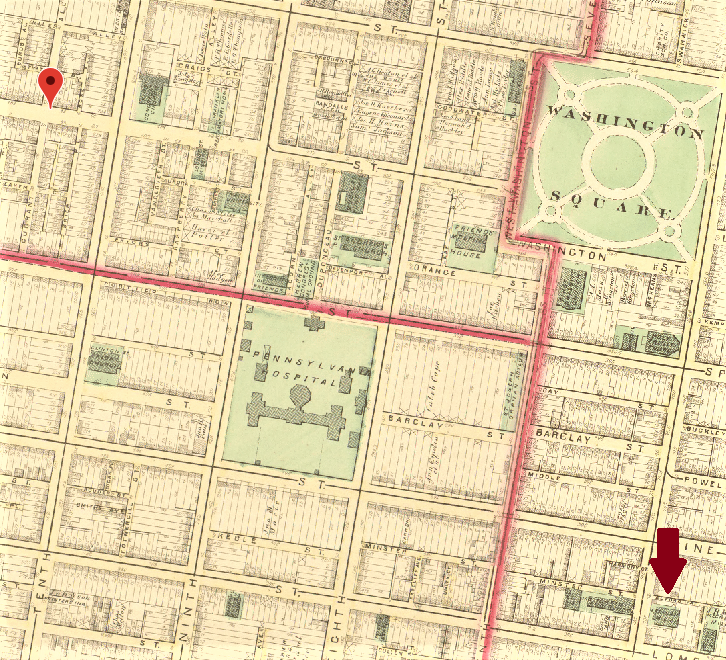
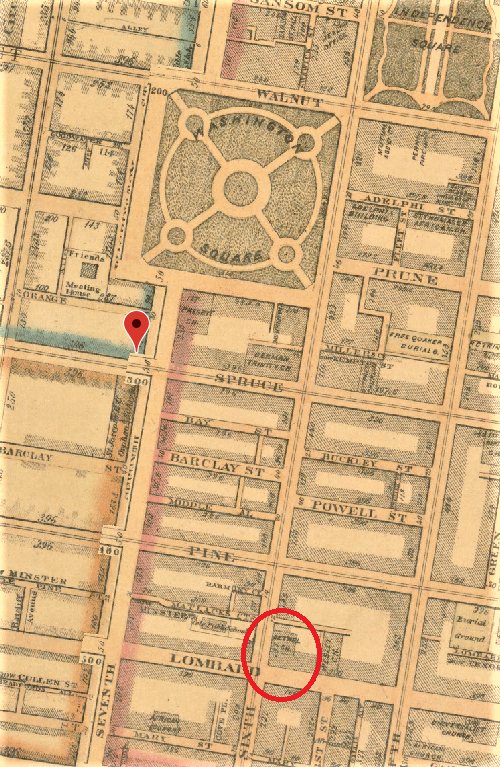
Mary and Dennis Bacon lived in a room at #2 Eagle Court located near the intersection of 10th and Locust Streets, illustrated by the red pin on the above map. The red arrow indicates the location and proximity of Bethel African Methodist Episcopal Church at 6th and Lombard Streets. In 1847 Eagle Court was a small, dead end alley. It was home to thirty-seven Black families with a total of one hundred thirty four men, women, and children. The women were employed as dressmakers, laundresses, and domestic workers. The men were employed as waiters, porters, and white washers (painters). These quarters were perfectly designed to spread deadly diseases, such as tuberculosis and small pox.
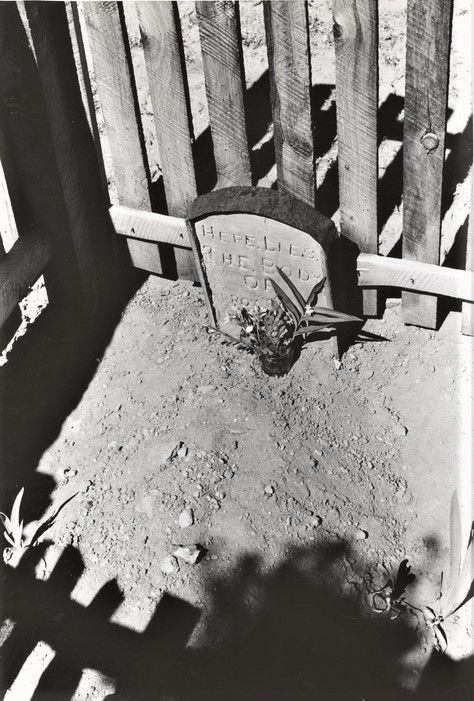
On a bitterly cold day in January, Ms. Sarah Bacon suffered the delivery of her stillborn daughter who was buried, with dignity, at Bethel Burying Ground.
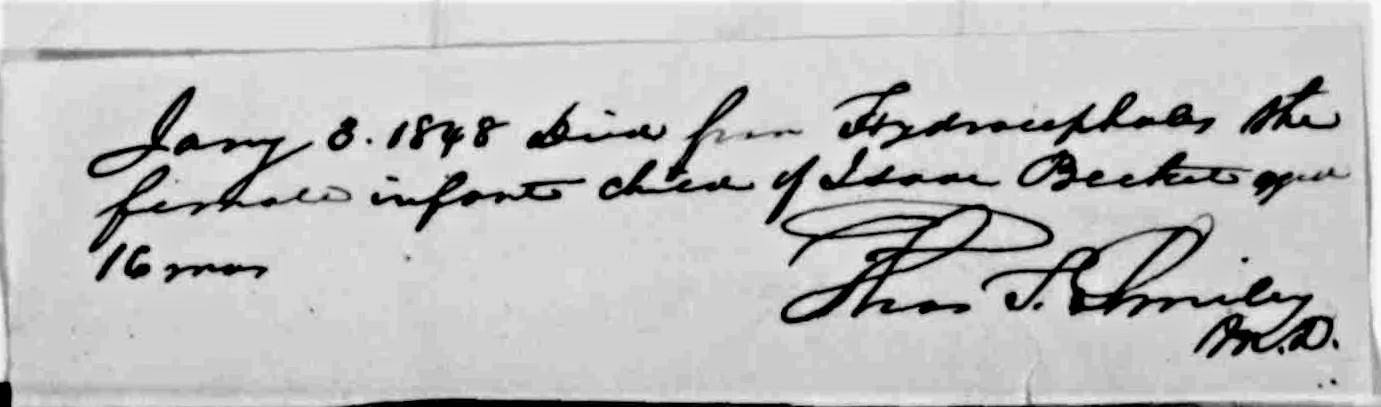
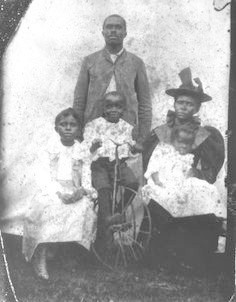
The sixteen-month-old daughter of Mary and Isaac Beckett died this date, January 3rd, in 1848 of Hydrocephalous (1) and was buried at Bethel Burying Ground. The Becketts are an example of a family that would flip flop between working poor and desperately poor. The census taker for the 1847 African American Census noted the intemperance of Mr. Beckett and its effect on his inability to keep a steady job.
In the 1847 Census, the family lived in a room or two at #2 Warren Street. Mary Beckett was 26 years old at the time of her daughter’s death. Tragically, Ms. Beckett would die six months later of Tuberculosis. Horribly, five days before her death, she and her husband would lose a three month old daughter to a “fever.”
The 1850 U.S. Census (below ) shows the twenty-eight year old widower and father of nine-year-old Julia and six-year-old Isaac, Jr. working as a porter. Ms. Ann Armstrong, 49, who now is taking care of the children, is possibly Mary Beckett’s mother.
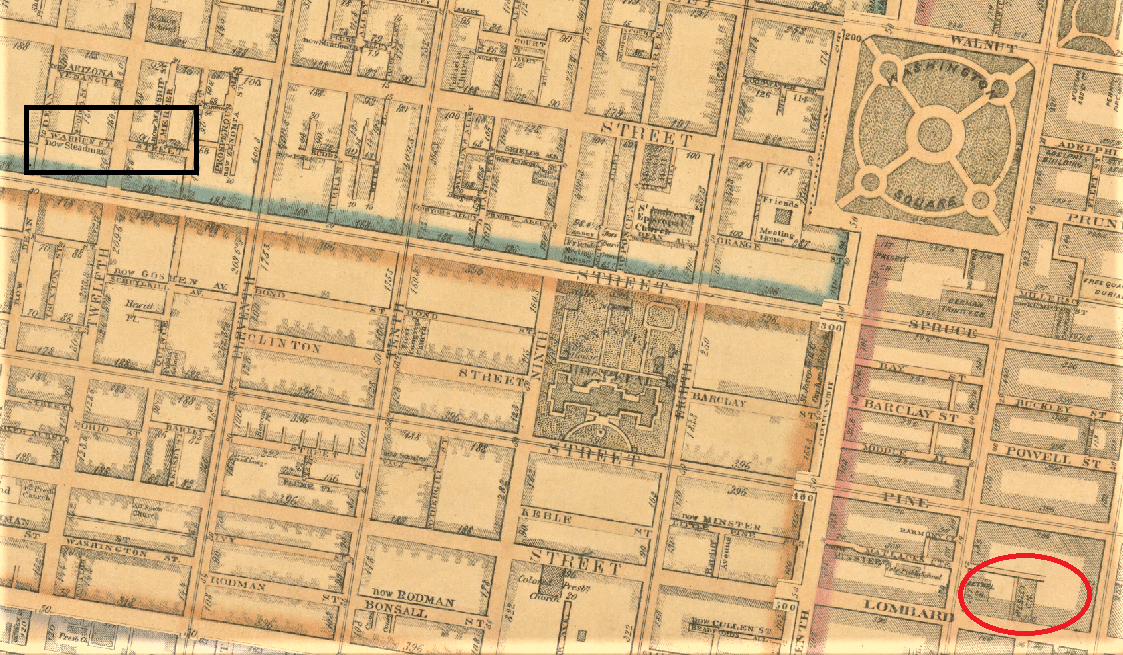
Warren Street was a narrow two-block thoroughfare near the intersection of 12th and Spruce Streets in center city. In 1847, it was home to fifteen Black families with a total of sixty-two men, women, and children. The women were employed as teacher, shirt maker, and domestic. The men labored as wood sawyer, brick carrier, brick maker, and coal hauler.
The black box indicates the location of Warren Street near 12th and Spruce Streets. The red circle represents the location of Bethel A.M.E. Church seven blocks away.
Schomburg Center NY Public Library Digital Collection
Baby Beckett died on a clear January day where the temperature rose to fifty degrees. She was buried by her family at Bethel Burying Ground. She would should be joined by her mother and a sister.
(1) Hydrocephalus literally means water or fluid on the brain. The condition could have been caused by many neurological diseases including meningitis, malaria, or scarlet fever. It also could have been congenital. The Philadelphia Board of Health recorded that the Beckett baby was one of two hundred thirteen children to die of the disease in 1848.
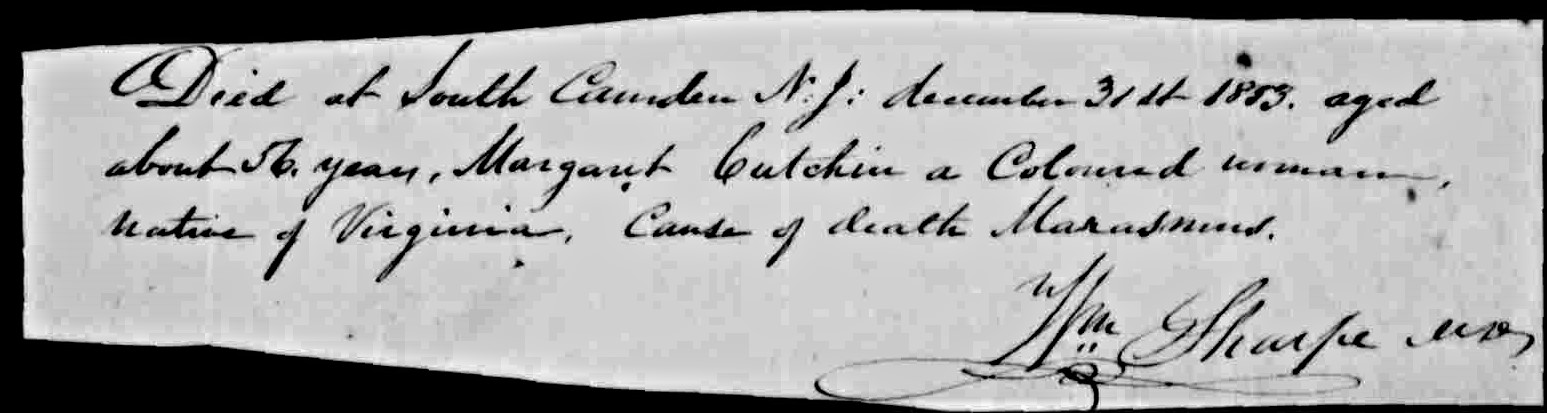
Margaret Cutchins* died this date, December 31st, in 1853 of Marasmus** and was buried at Bethel Burying Ground. Ms. Cutchins was visiting Camden, New Jersey when she passed away. The local attending physician placed her age at fifty-six years old. In the self reported censuses of 1847 and 1850, she would have been only forty-three years old. Her spouse, Miles Cutchins, was forty-seven years old at the time of her death. He was employed as a porter, making $25 a month (“sometimes”). Ms. Cutchins was self-employed as a laundress and seamstress. Both Margaret and Miles were born enslaved in Virginia. In addition, there was a fifteen year old girl, Maria F. Cutchins, residing in the home. She was born in Tennessee, according to the 1850 U.S. Census, and she was a student at David Ware’s school.
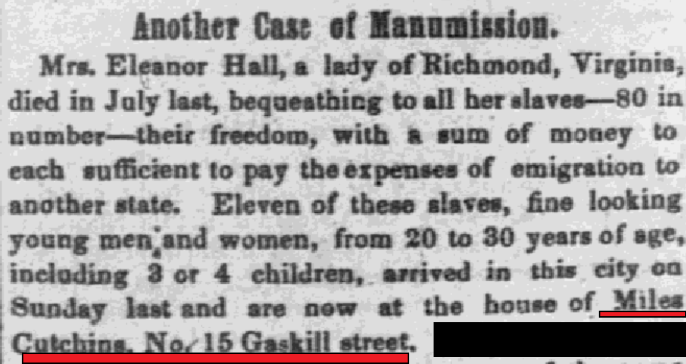
The Cutchins family lived on one floor of a two-story wood frame house at #15 Gaskill Street near the Delaware River wharves in the southern part of the city. They paid $5 a month in rent or approximately $170 in modern currency. In 1847, the value of the family’s personal property was estimated at $1,100 or approximately $32,500 in modern currency. The family belonged to two beneficial societies and attended church services on a regular basis, according to the 1847 Philadelphia African American Census.
An 1847 census taker noted: “After being freed by his (Mr. Cutchins) master, he bought his wife for $250 and he has paid $875.00 for three other persons to save them all within 20 years.”
Pennsylvania Freeman, 18 Feb 1846, p. 5.
Mr. and Ms. Cutchins obviously were active in the abolition movement and cared for newly liberated Black men, women and children in their home. It is very likely the Cutchins residence was a stop on the Underground Railroad, helping those being tracked by fugitive slave catchers. Ms. Cutchins may have been on an Underground-related trip to Camden when she suddenly died. Surely an unsung heroine!
New York Public Library Digital Collection
Margaret Cutchins died on New Years Eve in 1853 where it snowed heavily all day. She was buried, with dignity, by her family at Bethel Burying Ground .
*The physician incorrectly spelled the family’s last name. All census and city directories have the “s” on the end.
**Marasmus was more of an observation than a cause of death. Ms. Cutchins looked debilitated or “wasting.” She could have been suffering a period of time from cancer, heart disease, diabetes, etc.
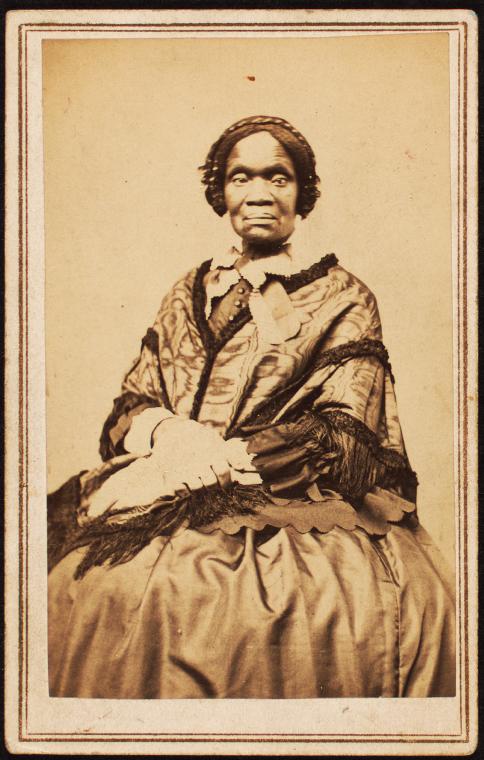
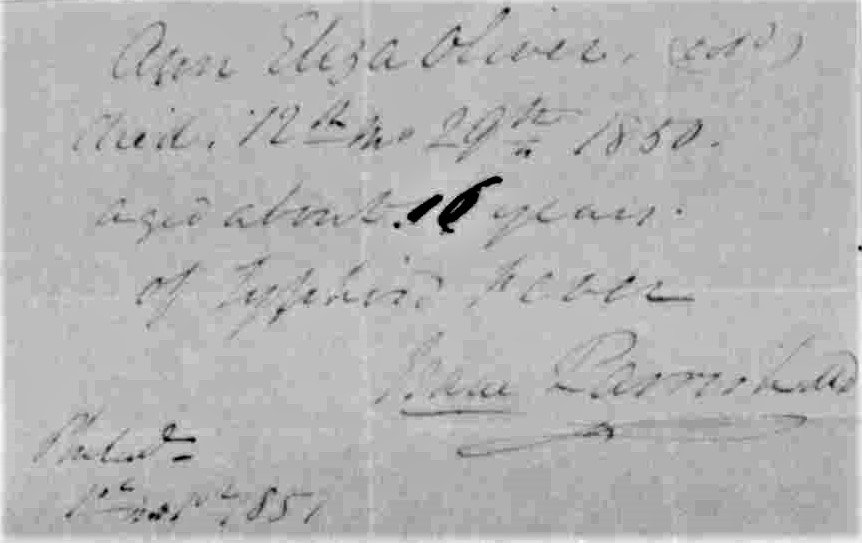
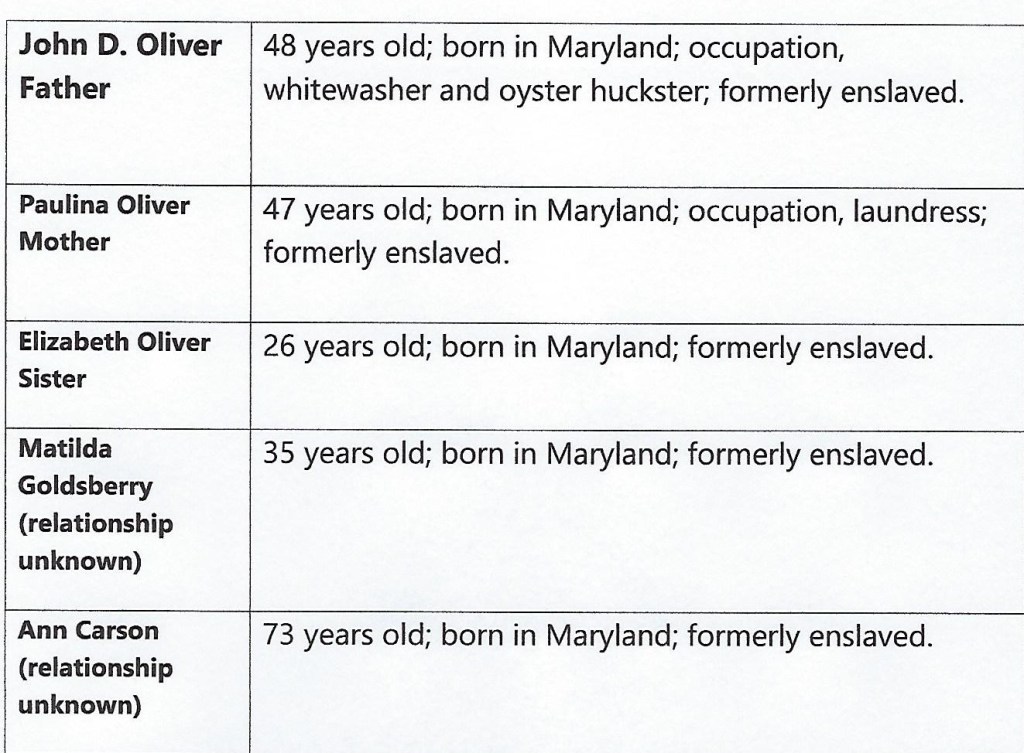
Sixteen-year-old Ann Eliza Oliver died this date, December 29th in 1850 of Typhoid Fever and was buried at Bethel Burying Ground. She was born in Philadelphia. Three years before her death, she was a student at the 6th and Lombard School. The following is a combination of information from the 1847 Philadelphia African American Census and the 1850 U.S. Census on Ann Eliza’s family.
Acccording to the 1847 Philadelphia African American Census, three members of the family bought their freedom for $700. It is not clear whether that amount was for all of them or if it were $700 for each.
Mr. Oliver, on occasion, also would be listed as an oyster seller. In 1847, he reported his yearly income as a whitewasher as $350. This would be approximately $11,984 in modern currency.
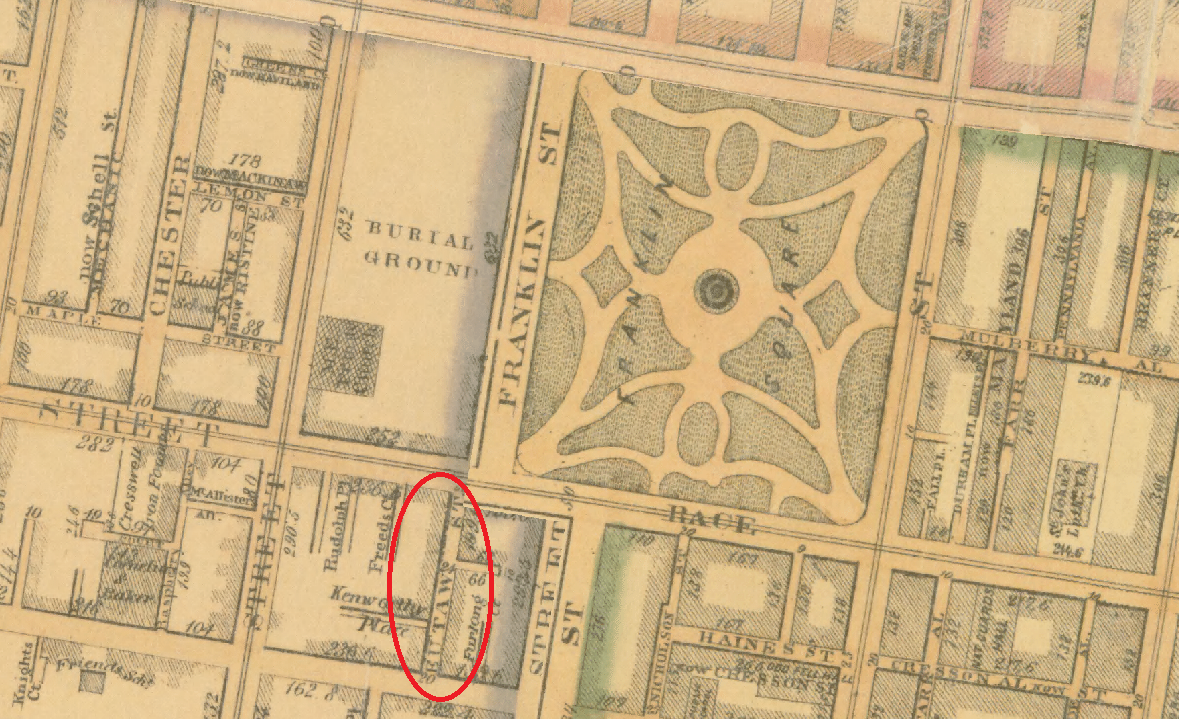
The Oliver family lived on Eutaw Street near Franklin Square. Originally named North East Publick Square by William Penn, it was renamed in 1812 to honor Benjamin Franklin. It currently is located in the Center City area, between North 6th and 7th Streets, and between Race Street and the Vine Street Expressway. Eutaw Street no longer exists.
The 1847 Census reports that the Oliver family paid the sum of $8.00 a month in rent or approximately $240 in modern currency. This is double the price that would be paid for a couple of rooms or even an entire two-story house. The Olivers likely took in boarders. Mr. Oliver reported $350 in personal property or approximately $11,984 in modern currency. It also was reported that the family owned property in Wilmington, Delaware, valued at $400 or approximately $13,735.
Living on Eutaw Street, in addition to the Oliver family, were thirteen other Black families with a total of sixty-four men, women, and children. The men worked as coachmen, teachers, seamen, and porters. The women were employed as cake bakers, domestics, and laundresses.
Ms. Oliver’s fatal illness, Typhoid, was caused by a Salmonella bacteria she consumed in contaminated food or water. She would have suffered a high fever, fatigue, headache, nausea, abdominal pain, and diarrhea. After approximately a month of suffering, the intestines perforate and septicemia take the victim’s life. Ann Eliza was one of 107 Philadelphians to die of Typhoid in 1850, according to Board of Health records.
Ann Eliza Oliver died on a cold clear day in late December where the temperature only rose to 34 degrees. She was buried at Bethel Burying Ground, with dignity, by her family.
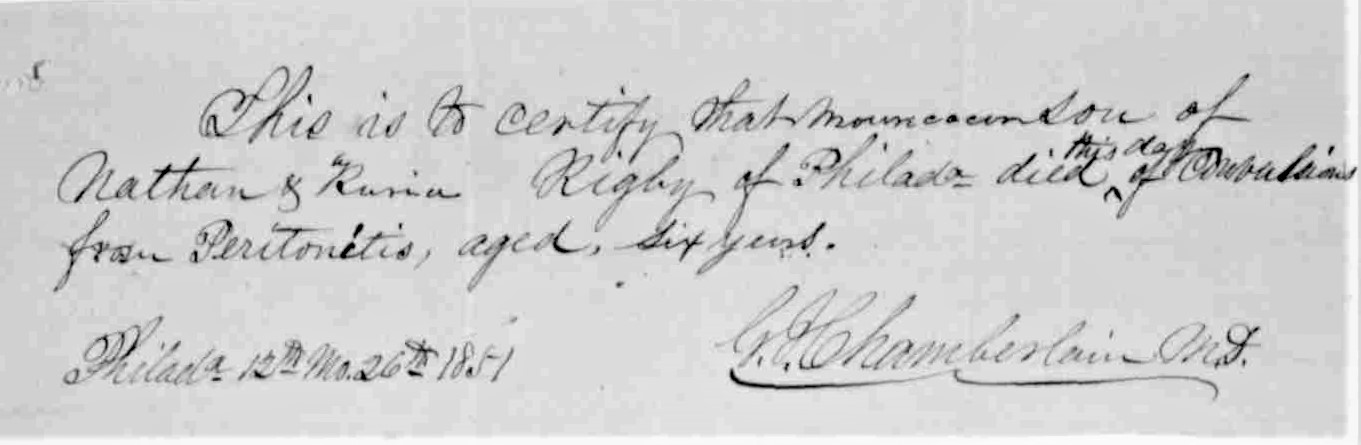
Six-year-old Monneacem Rigby died this date, December 26th, in 1851 of Peritonitis and was buried at Bethel Burying Ground. A ruptured appendix or a wound could have caused the septic infection. He was the son of Nathan (24 years old), Kuria his mother (21 y/o), and his two-year-old brother Francis F. Rigby. All the family members were born in Pennsylvania, according to the 1850 U.S. Census.
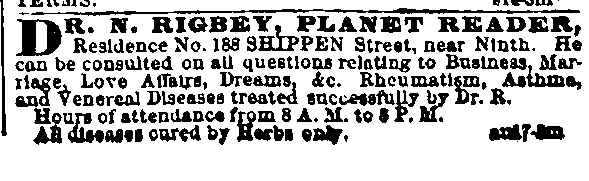
In the 1850, Census Nathan Rigby reported his occupation as “Docteur” which is French for doctor. He worked out of his home at #188 Shippen Street (now Bainbridge Street) where he used herbs to create powder, pills, and potions for some of the ailments listed below. He was one of ten Black men in the 1847 Philadelphia African American Census that are listed as an “herb doctor.” Ms. Rigby was a homemaker and was pregnant at the time of her son’s death.(1)
Sunday Dispatch, 19 Oct 1851, p. 3.
According to the 1847 Census, the Rigby family were boarders at #118 Shippen. The family of three (pre-Francis’s birth) lived in one room or only part of a room. They likely paid ~ $0.50 a week in rent. Mr. Rigby reported his annual income as $200/ ~$3.85 a week. (2) They lived with five other boarders, possibly on the first floor of a house that consisted of three rooms.
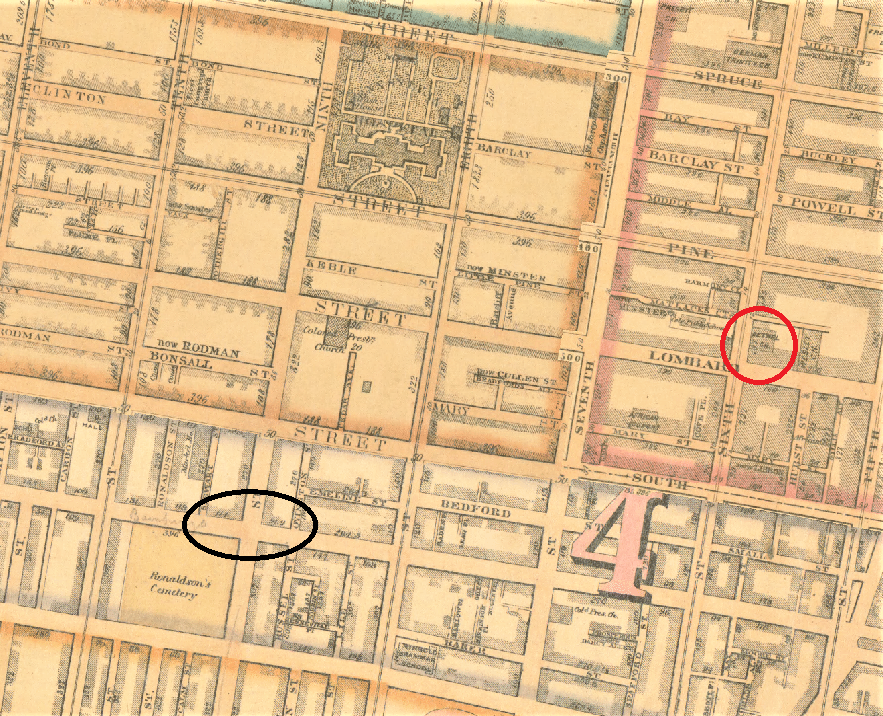
On the above map, the black circle illustrates the location of the Rigby’s home at #118 Shippen Street (now Bainbridge). The red circle indicates the location and proximity of Bethel A.M.E. Church.
Also within the black circle on the map was the Moyamensing Soup House, a charitable organization, where the destitute of the Moyamensing District could get a wholesome meal at least once a day. It appears that the Rigby family, given their financial situation, may have taken advantage of this service. Additionally, in the same block was the renowned school, the Institute for Colored Youth. Maybe Monneacem would have attended this school if his young life was not cut short.
The six-year-old son of Kuria and Nathan Rigby died on a day after a heavy snowfall and was buried, with dignity, at Bethel Burying Ground. The newspaper reported that the snow created excellent conditions for sleighing and that it appeared it was going to be “one of our old fashion winters.” (Philadelphia Inquirer, 27 December 1851, p.1.)
(1) Ms. Rigby lost a nine day old daughter on June 30, 1848 to an undiagnosed ailment. The infant was buried in the “Colored” section of Union Cemetery.
(2) Two hundred dollars equates to approximately $6,147 in modern currency.
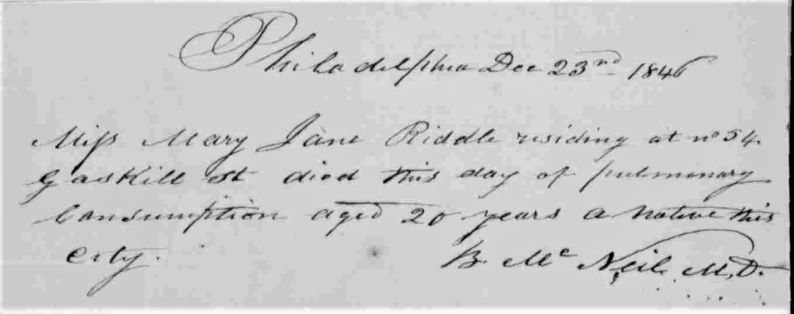
Twenty-year-old Mary Jane Riddell, a white woman, died this date December 23rd in 1846 of Tuberculosis and was buried at Bethel Burying Ground. Not married, Ms. Riddell (1) was born in Philadelphia. During my numerous years of research on those buried at Bethel Burying Ground I have found only one other white person buried at the cemetery. She is Diana Potts who was married to a Black man, therefore her interment can be easily understood.
Ms. Riddell lived with her family at #54 Gaskill Street. The head of the household was Crawford Riddell a prominent furniture maker who was born in Ireland. Currently his works are prized by collectors and museums around the world. Also living at the Gaskill address was Crawford’s brother Christopher who was a cabinet maker according to the 1846 City Directory.
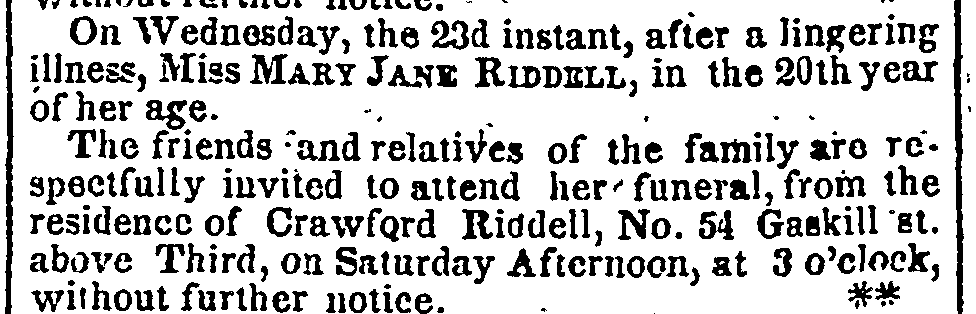
It was at the Gaskill address that Mary Jane Riddell’s funeral service was held. Gaskill Street is now Naudain Street
Sun, 24 December 1846, p. 2.
In the week before Ms. Riddell’s death the weather was very wet. It was seven days of heavy rain, freezing rain, and six inches of snow that quickly melted. The local newspaper characterized the results as “The streets presented a muddy appearances.” (2) The city’s cemeteries would have be in terrible shape. It may just be that there was a grave already open at Bethel Burying Ground and it served as a temporary resting place for the young woman’s corpse. The Riddell family had a history of Quakerism and the idea of being buried in a cemetery for African Americans albeit temporary was not out of the question.
Research is ongoing.
NOTES
(1) Crawford Riddell filled out a passport application in 1849 and spelled his name “Riddell.” He needed the passport to travel to the Caribbean to presumably purchase quality hardwoods for his furniture company. On his return trip he contracted Cholera and died aboard the steamship Falcon. He was buried at sea in September of 1850 off the coast of Cuba.
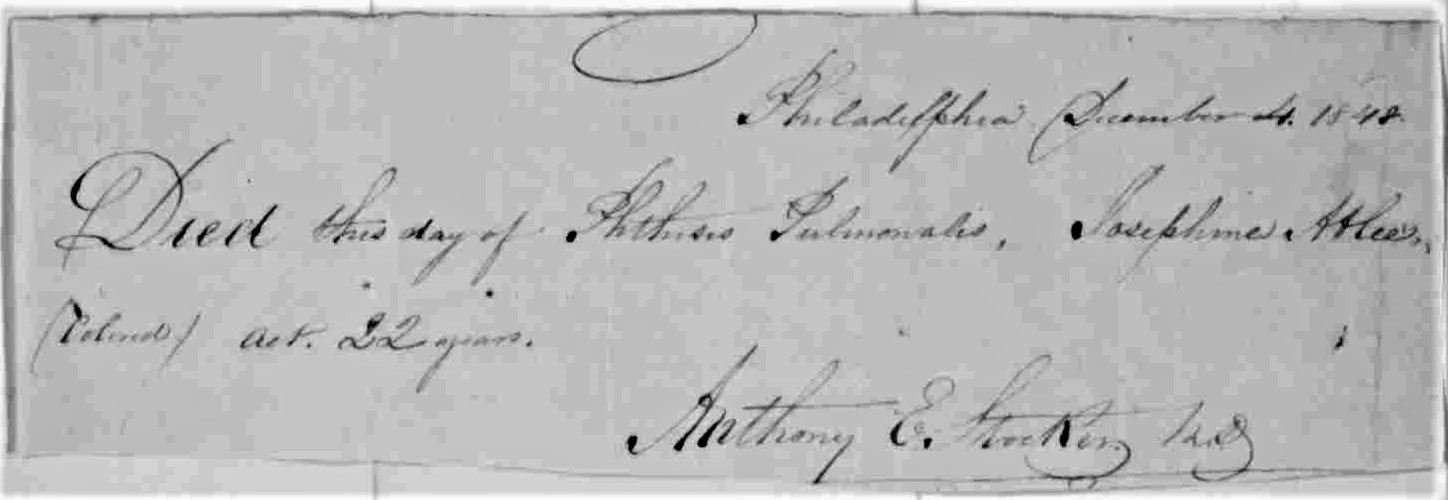
Twenty-two-year-old Josephine Atlee died this date, December 4th, in 1848 of Tuberculosis and was buried at Bethel Burying Ground. It appears from census records that she was the daughter of Adam and Lucinda Atlee and the sister of John and Hannah Atlee. At the time of Josephine’s death, Adam was ~56 years old, Lucinda ~55, John ~22, who may have been a twin of Josephine. Hannah was approximately 17 years old. All family members were born in Pennsylvania, according to the 1847 Philadelphia African American Census and the 1850 U.S. Census. (1)
Adam Atlee was employed as a cart driver in 1847 and a shingle maker in 1850. It appears Lucinda was a homemaker. John worked as a waiter and young Hannah was “at service.” The 1847 Census reports Josephine’s employment as “day worker.” (2)
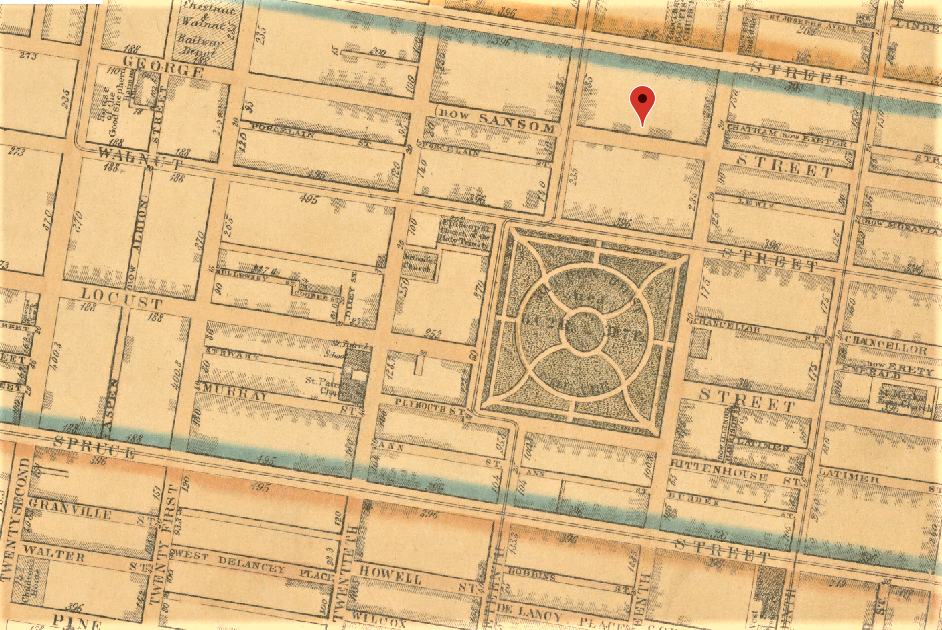
The Atlee family lived in a room in the 1800 block of George Street, now Samson Street (red pin). The residence was a half a block north of Rittenhouse Square. It was one of the original squares planned by William Penn in the 17th century. The Atlee family lived in one or two rooms for which they paid $3 a month which equates to $100 in modern currency. They reported $50 in personal property, which equates to approximately $1,600 in modern currency.
The Black residents of George Street lived where the white establishment permitted them. They were employed in professions that supported the lifestyle of the wealthy who lived around Rittenhouse Square. Over a dozen Black families lived on the same block as the Atlee family, according to the 1847 Census. Those families consisted of over seventy men, women, and children. The men were employed as coachmen, waiters, barbers, and livery stable workers. The children attended the Adelphia School and the private schools of Sarah Douglas and John Mitchell. It is worth mentioning that not only could three members of the Atlee family read but also two could write. It is likely that young Josephine attended one of the schools mentioned.
Josephine Atlee died on a remarkably warm day in December where the temperature rose to over 70°. Her family buried her, with dignity, at Bethel Burying Ground.
(1) The 1850 U.S. Census spells the family name as “Atley.”
(2) Josephine Atlee was one of 323 Black girls and women who were “at service” or “in-service” in 1847, according to the Philadelphia African American Census. These domestic workers would either live full-time in their employee’s home, or just during the work week, or not at all and live at their home.
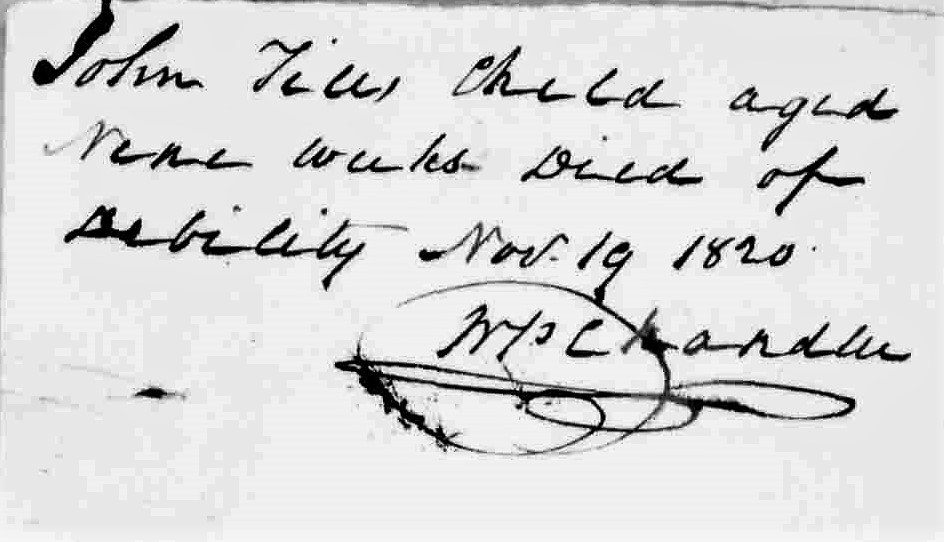
Dr. William P. Chandler did not make the effort to ascertain the baby’s name. It was provided by the Bethel gravedigger in the document below. The physician also put an “s” at the end of the family’s name. All other documents show the family’s name as “Till.”
Nine-week-old Sarah Ann Till died this date, November 19th, in 1820 of “Debility” and was buried at Bethel Burying Ground. Little Sarah Ann may have starved to death. Her mother’s breast milk may not have come in or she may have been too sick to breastfeed and there may not have been a wet nurse available. In 1820, Sarah Ann was one of ninety-five children in the city reported to have died with the same diagnosis. In reality, it likely was closer to double that number.
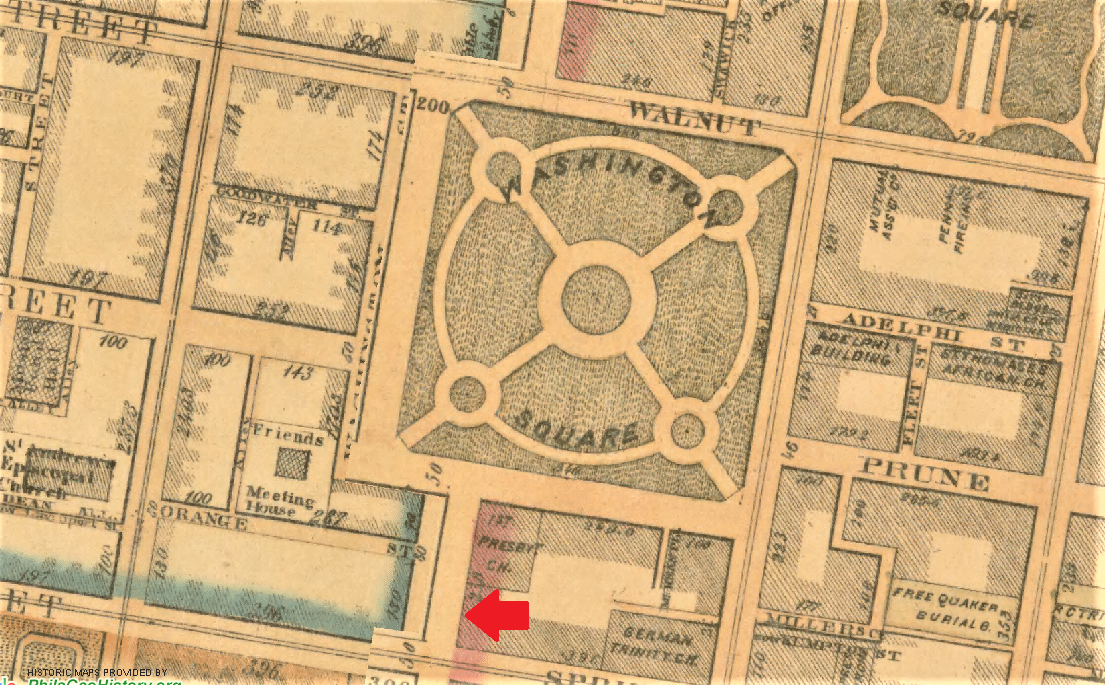
The red arrow indicates the location of the Till home at 272 South 7th Street, a half a block south of Washington Square, according to the 1820 City Directory. The red circle illustrates the location of Bethel A.M.E. and its proximity to the Till residence.
The 1820 Philadelphia City Directory shows Mr. Till’s occupation as “boot cleaner.” He likely had been employed in one of the hotels in the old city area. He was one of twenty-five Black men in the Directory that reported their occupation as boot cleaner. Mr. Till was no longer reported in the city directory after 1822. However, eighteen years after Sarah Ann died, there is a John Till and family reported in the 1838 Philadelphia African American Census.
This John Till lived with his spouse and two other females. One appears to be school age. Three of the adults are not native to Pennsylvania. The child is a native. Two of the adults were formerly enslaved and, reportedly, gained their freedom through manumission. Mr. Till was employed as a porter and Ms. Till as a laundress. They resided in Eagles Court. I suspect that Mr. and Ms. Till were runaways and, after establishing a home in Philadelphia, they were able to bring a relative up from the South. The enacting of the 1820 Fugitive Slave Law may explain why Mr. Till no longer had himself listed in the city directories. But this is just conjucture.
Nine-week-old Sarah Ann Till died on a cold day in late November of 1820 and was buried, with dignity, at Bethel Burying Ground.
It is likely that Reverend Richard Allen, pastor of Bethel A.M.E., presided over the funeral service for the infant. He may have recited the hymn he wrote for the death of a child.
The tyrant, Death, came rushing in. Last night his power did shew, Out of this world this child did take, Death laid low. No more the pleasant child is seen To please the parent’s eye. The tender plant, so fresh and green, Is in eternity.
“A Collection of Hymns and Spiritual Songs,” by Rev. Richard Allen. Hymn XLI, p. 64.
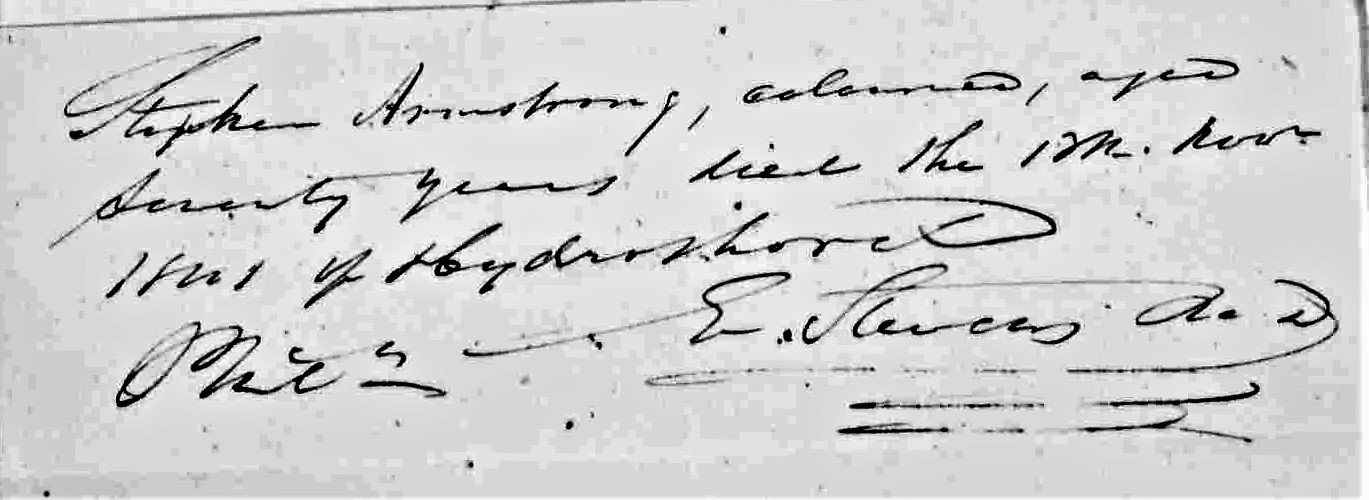
Seventy-year-old Stephen Armstrong died this date, November 11th, in 1841 due to Hydrocephalus and was buried at Bethel Burying Ground. Hydrocephalus is a condition in which fluid accumulates on the brain. Mr. Armstrong’s symptoms could have included headaches, double vision, vomiting and seizures. The causes of this painful illness includes meningitis, brain tumor, and head trauma.
Mr. Armstrong was self-employed as a porter. He owned his own wheelbarrow to transport materials or goods from one point to another. Because of this, he was considered a private business owner. In 1838, three years before he died, he paid $2.50 in business taxes. This amount would be approximately $75 in modern currency.
Although not explicitly stated, I believe, after examining census records following Mr. Armstrong’s death, his spouse was Ann Armstrong.* Both were born enslaved in Maryland and paid a total of $715 for their manumission. In modern currency, the amount would be approximately $21,000. Ms. Armstrong was employed as a laundress.
According to the 1838 Census, Ann and Stephen Armstrong lived with four other individuals in two rooms at 245 South 7th Street, very close to Washington Square, in the older part of the city. The ages and the relationship of the four to the Armstrong couple was not recorded. All four were born in Pennsylvania.
The building at 245 South 7th was a three-story wood frame structure that was home to three separate African American families. The Armstrongs paid $6 a month in rent or approximately $167 in modern currency.
1841 was a bad year for the citizens of Philadelphia. They saw a 400% increase in Small Pox deaths and an increase of 2,000+ patients at the city’s clinics (Dispensaries). However, the congregants of Bethel A.M.E. saw their old church replaced by a new larger structure to accommodate the large influx of free African Americans from the southern states. The fear of slave rebellions aided by free Blacks spurred the creation of stricter laws governing the lives of these men and women who fled north.
Mr. Armstrong died on a near freezing day in November that saw showers all day. He was buried by his family, with dignity, at Bethel Burying Ground.
(1) Ann Armstrong was 54-55 years old when her spouse died. She continued to live near Washington Square and make her living by washing clothes. She passed away in October of 1852 at sixty-nine years old and was buried at Lebanon Cemetery.
Twenty-five-year-old Henry Proctor died this date, October 26th, in 1847 of “Fever” and was buried at Bethel Burying Ground. It appears that Dr. John Mitchell took little time seeking out Mr. Proctor’s cause of death. In reviewing Philadelphia Board of Health records for 1847, it appears that the citizens were being plagued by a serious outbreak of Scarlet Fever. Mr. Proctor may have succumbed to this bacterial disease that is usually seen in children. He may have contracted it from a child in his family.
According to the 1847 Philadelphia African American Census, Mr. Proctor lived in Stevens’ Court with two children and four adult women. Three of the women served as “in-service” domestics and may have been staying at their employer’s home during the week. Mr. Proctor worked as a laborer earning $6 a week. The woman who stayed at home with the children was also employed as a laundress who also did ironing! For every dozen shirts finished, she would have made upwards of 10 cents. Everyone in the family was born in Pennsylvania.
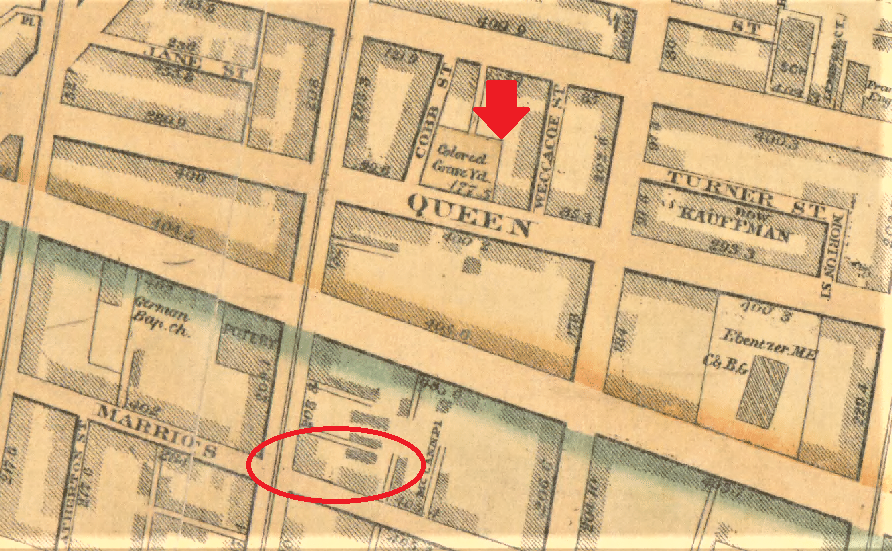
The red circle in the above map indicates the location of Stevens’ Court which was located in the rear of 917 South 5th Street in south Philadelphia. The red arrow illustrates the location of the Bethel Burying Ground and its proximity to the Proctors’ home.
The Proctor family likely lived in two rooms for which they paid $2.50 a month, according to the 1847 Census. At the time of Mr. Proctor’s death, Stevens’ Court was home to 16 Black families with a total of 86 members. All of the women in these families worked as laundresses while the men worked as laborers. There were two men who reported their occupation as “seaman.”
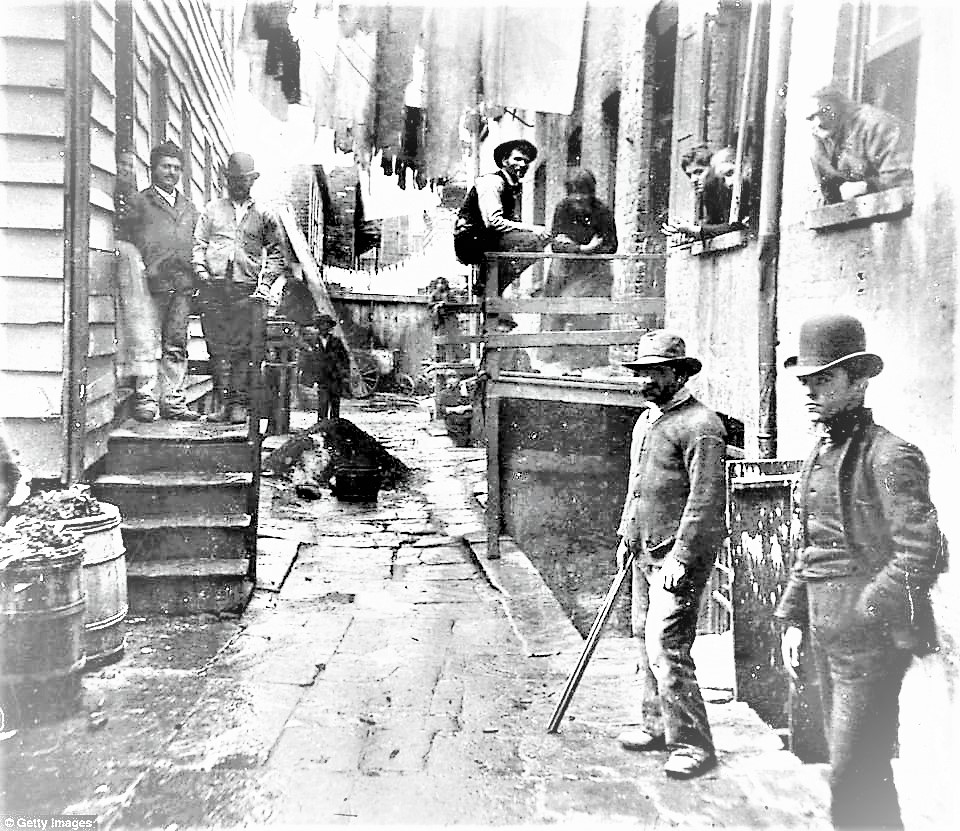
Nineteenth century street gang
Old Philadelphia was traditionally a mob town. Generations of white citizens daily roamed the city’s streets looking to beat down anyone of a different race, religion, or political party. The police force was small and afraid of the gangs. For many years, the policemen refused to wear their uniforms for fear of being identified and assaulted by gang members. The citizenry would not be surprised to hear that federal troops had to be used to quell a riot initiated by a white mob.
The residents of Stevens’ Court lived in a very dangerous neighborhood for African Americans. Blacks were denied access to public transportation which forced many to live near their place of employment. Some locations were worst then others. In this case, Stevens’ Court was only several blocks away from the home of the Moyamensing Hose Company (aka “The Rowdy Boys of Moyamensing”) and the “Killers” – their murderous enforcers. Their sole goal was to rid Philadelphia of Blacks and Protestants. To this end, no form of violence was ruled out. Guns, knives, clubs, cobblestones, and arson were all utilized. (1)
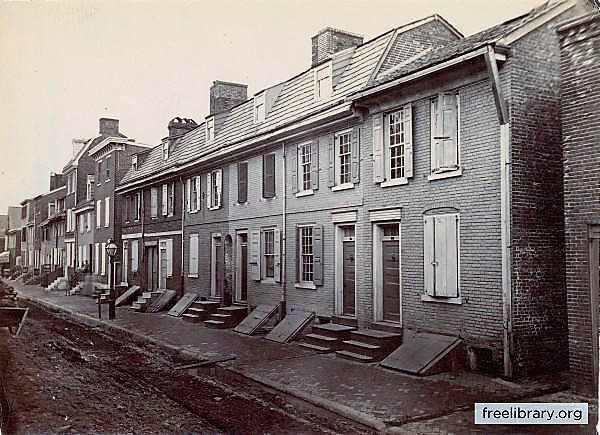
Wood frame rowhouses similar to those on “Red Row.”
Many in Stevens’ Court likely remember the destruction of “Red Row” and feared the same might happen to them. In July of 1835, a Black man stabbed a white man with whom he was fighting on South 2nd Street. Also a Black man working as a butler assaulted his employer. The white gangs in the city used these incidents to mount rampages through the African American neighborhoods. “Red Row” was a block long row of nine wood frame houses located on Christian Street between 8th and 9th Streets. All were occupied by Black families. The origin of the term “Red Row” isn’t clear. It has been used as a disparaging term for a small community of African Americans or a neighborhood of poor whites.
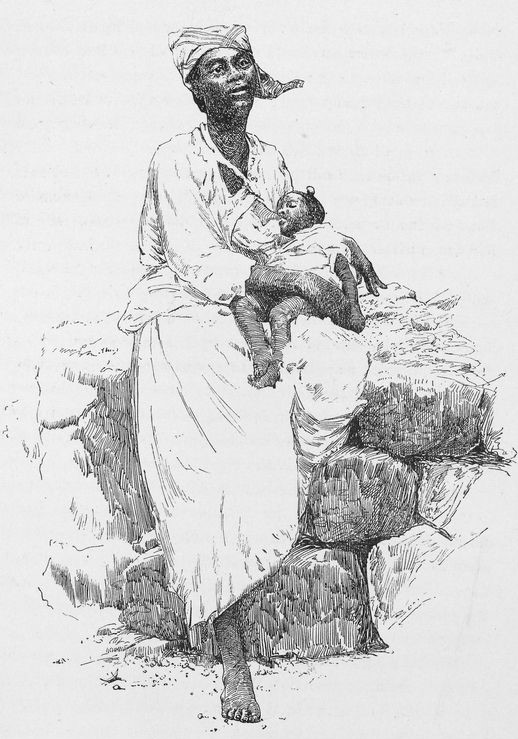
On the night of July 27, 1835, a mob of 1,500 white men and boys broke into and destroyed the homes of Black families on Red Row. Most of the African American adults were able to grab their children and escape through their back doors into the alleys and backyards of their neighbors. However “several men were concealed in a chimney in one of these houses, a torch was applied to burn them out, and the house was quickly in flames.” All the houses on the row were destroyed by fire. All the furniture was destroyed and the families’ valuables and food were stolen. A Black women who had given birth four days before was able to successfully escape with her newborn. She had no where to go and hid in the grass of a vacant lot. (2)
A group of armed Black men were eventually able to engage in a running gun battle which killed and wounded approximately ten white men, according to newspaper reports. But the torture, beatings, and arson were accomplished. The Black men and women of Stevens’ Court lived with the memory of the savagery that could occur any minute of any day to them.
Mr. Proctor died on a day in late October in 1847 and was buried by his family, with dignity, at Bethel Burying Ground.
(1) Harry C. Silcox, Philadelphia Politics from the Bottom Up: The life of Irishman William McMullen, 1824-1901.










 Bethel Burying Ground Project